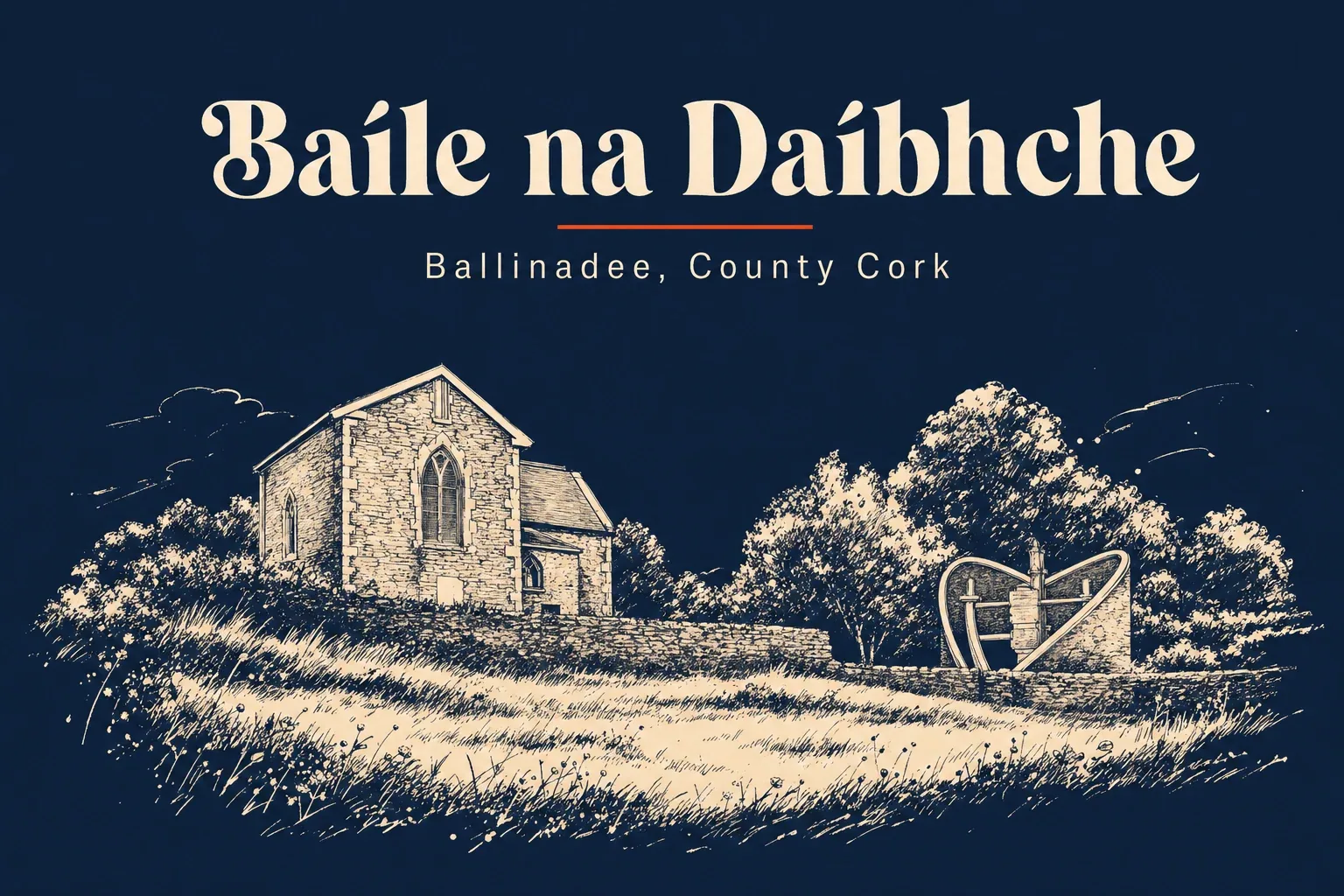
Baile na Daibhche · Co. Cork
A farming village in the parish of Courceys, between Bandon and Kinsale, with a Georgian church, two pubs and a sing-song.
Ballinadee is a quiet agricultural village in the parish of Courceys, the corner of land south of the Bandon River that runs out toward the Old Head of Kinsale. It sits on the River Pound, a small stream that joins the Bandon, twelve kilometres west of Kinsale and nine south-east of Bandon. The roads here are the narrow kind where one car pulls into the ditch to let the other pass.
What it has: a school, two churches and two pubs. The Church of Ireland church has stood in the middle of the village since 1759, and its crenellated tower is the thing you actually stop for. There was a substantial flour mill near the river around 1800 - Samuel Lewis called it in 1837 a mill of great power - and on the lands of Kilgoban there is the ruined stump of a McCarthy castle, beneath which a hoard of gold and silver coins and rings was reportedly dug up in 1824. None of it is signposted or set up for visitors. You take it as you find it.
Don't come expecting much in the way of infrastructure. Kinsale is fifteen minutes south if you want a proper meal or a hotel bed; Bandon is a similar run north for a supermarket and a market town. What Ballinadee offers is two genuine country pubs, a Georgian church, river-valley lanes for walking, and Cork Airport twenty-five minutes up the road if you are using the area as a base. The food capital of Ireland is close enough that the village can stay exactly what it is.