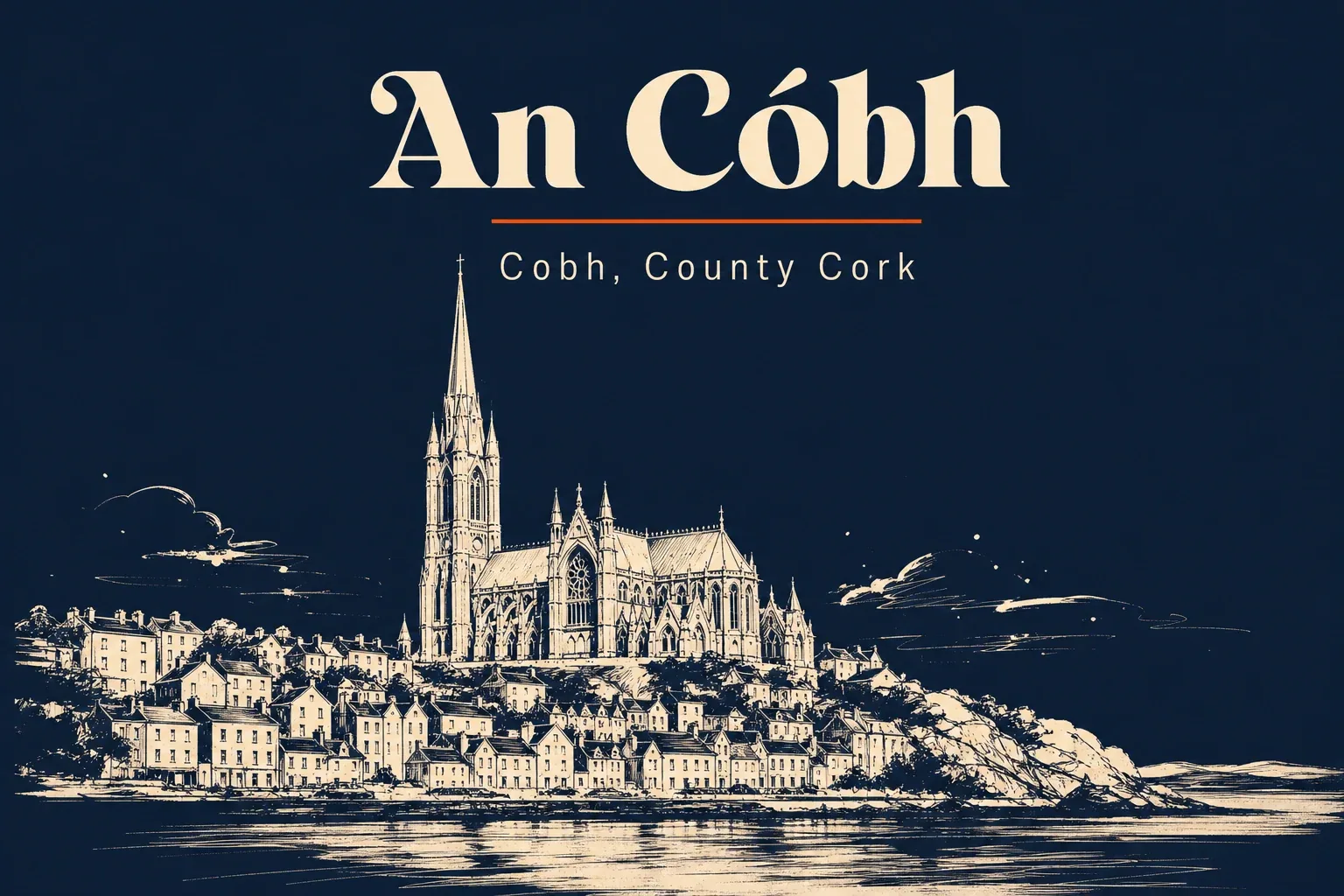
An Cóbh · Co. Cork
A deepwater harbour, a cathedral on a hill, and three million goodbyes.
Cobh sits on the south side of Great Island, a few kilometres of bridge and causeway out from Cork city. The harbour in front of it is the second-largest natural harbour in the world, depending on who's counting, and deep enough to take anything afloat. That fact made the town. It also broke a lot of hearts here.
Between 1848 and 1950, two and a half million people walked down to these piers and got on a boat. Most of them never came back. The Titanic stopped here on her way out in 1912. The Lusitania survivors and dead were brought in here in 1915 and buried up at the Old Church Cemetery. Annie Moore, fourteen years old, sailed from this harbour on the 20th of December 1891 and became the first immigrant processed at Ellis Island ten days later. There's a statue of her on the prom and a copy of the same statue on the New York side. Both are looking the wrong way.
The town climbs in painted Victorian terraces from the waterfront up to the cathedral, and the photograph everyone takes - the one with the coloured houses below the spire - is called the Deck of Cards. It is, briefly, postcard Ireland. But Cobh is also a working commuter town with a 25-minute train into Cork, a cruise terminal that lands two thousand passengers off a single ship, and a tight, salty community of a few thousand people who have heard the carillon every quarter-hour of their lives and stopped noticing.
Come for a day if all you want is the Titanic Experience and a chowder. Stay a night if you want to be on the prom at six in the morning when the light comes up over the harbour and there's nobody else out except the joggers and the gulls.