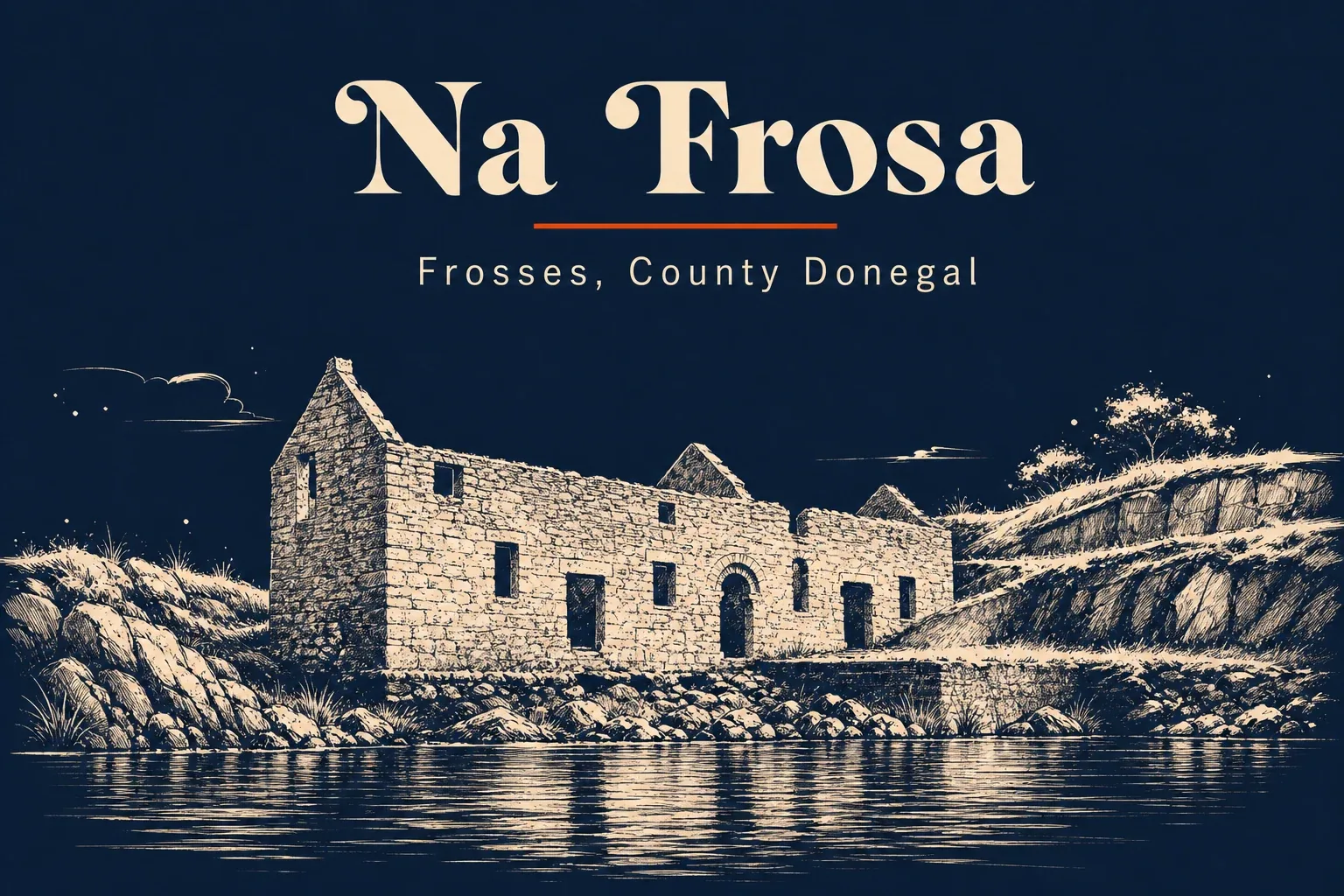
Na Frosa · Co. Donegal
A glen village on the Donegal-Glenties road whose name means showers - and the showers, the story goes, once fell as food.
Frosses sits in a glen surrounded by mountains, about eleven kilometres west of Donegal Town on the R262, the road that runs inland toward Glenties. It is not on the coast road - the N56 and the Wild Atlantic Way traffic pass a little to the south through Mountcharles and Inver - so Frosses keeps the quiet of a place the tour buses skip. Inver Bay is about a mile away over the fields. The village belongs to the Parish of Inver, in the old Barony of Banagh.
The name is the thing people remember. In Irish it is Na Frosa, which means the showers. The local story, recorded by schoolchildren in the 1930s for the folklore collection, says the name came from food that fell from the sky as showers and saved the people during a famine. Whether you take that literally or as the kind of tale a hard country tells itself, it is the sort of name that sticks to a place.
It is a working village, not a tourist one, and a busier one than its size suggests - a primary school, a montessori, a community hall, a couple of hairdressers, a coffee stall, even a printing shop, a basketball court and a tennis court. There is a church on the main street and a bar that does food. If you need something here, somebody local can point you to it. If you do not, the honest answer is there is little to make you stop - but the people who do live here have built more of a village than most places this size manage.