The sacred lake
Loch an Iúir
The yew tree gave the lake its name - ancient Irish marked sacred water. The yew is gone, but the name stayed. The Rosses remembers in Irish first, forgets the English version. That's how it works here.
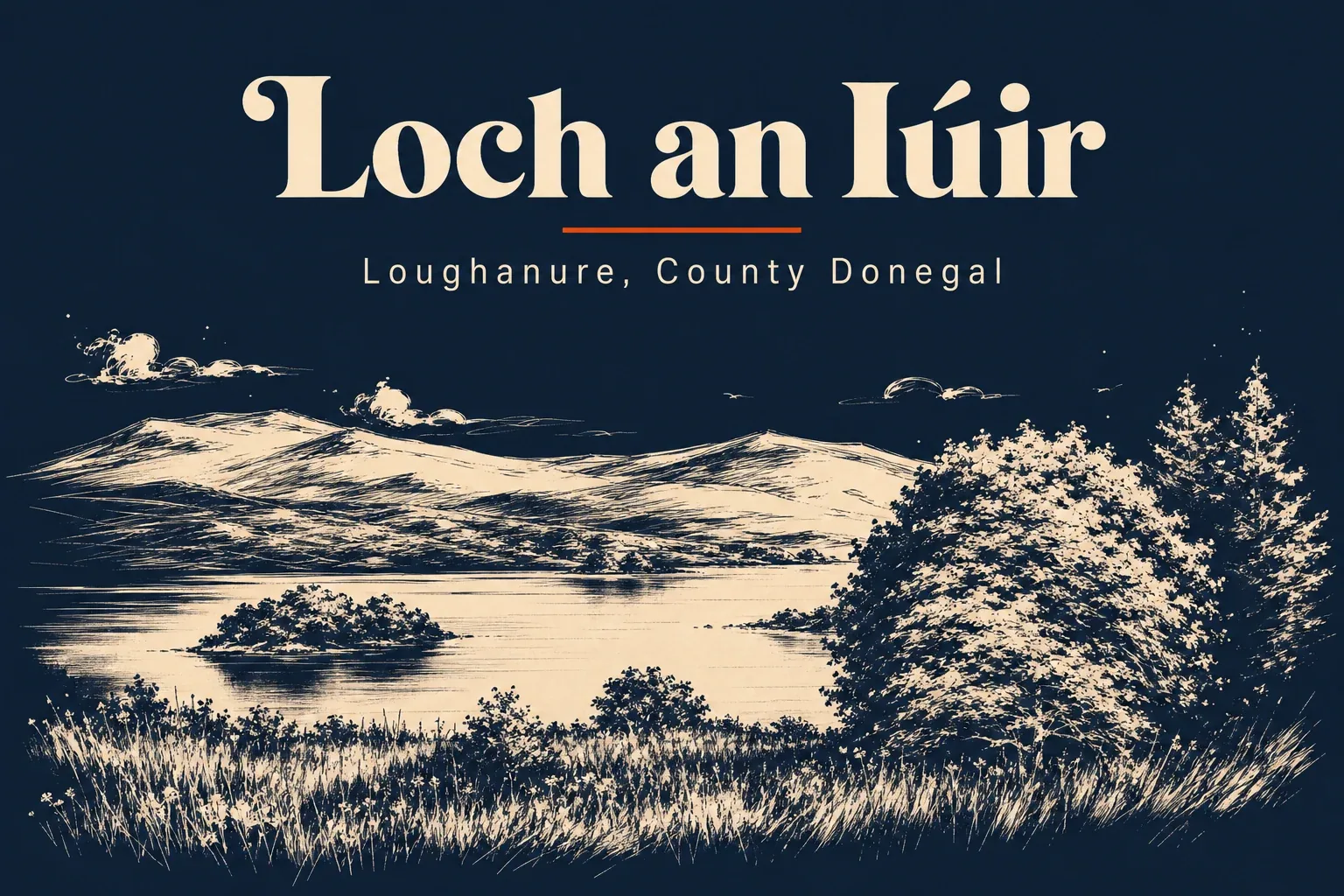
Loughanure sits beside Lough Anure - 360 acres of brown trout and quiet - in the heart of the Rosses, the bog country west of Dungloe. The name means "lake of the yew," and the Irish still runs through this place like the River Crolly, not as a museum piece but as the language of the post office, the playground, and the pub. Thirty-seven percent of the 400 residents speak it daily. Walk here and you'll hear it more than English.
Coláiste Mhuire, the Irish college, opened in 1945. Nearly a thousand students arrive each Easter, June, July, and August - young people from across Ireland and beyond who come to live Irish, not study it. They stay in host homes, fish the lake, play in the village, and the whole place comes alive. When they leave, the quiet returns, and the village remembers itself.
The landscape tells older stories. Limestone quarries and lime kilns scar the hillsides - remnants of the industry that employed most of the village until World War II. The kiln ruins are stone, precise, human-made architecture born from labor. They sit beside Gaeltacht life like two different histories occupying the same ground.
Three things every local will eventually mention. Read these and you've already understood more than most day-trippers do.
Three hundred sixty acres of cold water reflecting the Donegal sky. Fish average half a pound. In July, sea trout and salmon run. The lake connects to the sea via the Crolly River. In winter it's grey. In spring it remembers green.
Stories & lore → 02 The languageTalk to the shopkeeper in Irish or English - both work. The children at the school learn in Irish first. When the college students arrive in summer, the whole village hums in Irish. It's not performed. It's lived.
Stories & lore → 03 The kilnsLimestone quarries and kiln ruins. Built with precision, burned at 1000°C, made the stone that built rural Ireland. The Rosses landscape carries this industrial mark - beautiful and strange at once.
Getting there →The reason to come back. The things every local will eventually tell you about, usually after the second pint.
Dungloe is 5 miles south on the N56. Letterkenny is 45 minutes. Donegal Airport (Carrickfinn) is 20 minutes.
Bus Éireann services from Dungloe and Letterkenny. Check timetables - rural routes don't run hourly.
Nearest station is Letterkenny (45 min). Then bus.
Donegal Airport (Carrickfinn), 20 minutes. Aer Lingus to Dublin daily. Loganair to Glasgow four times weekly.