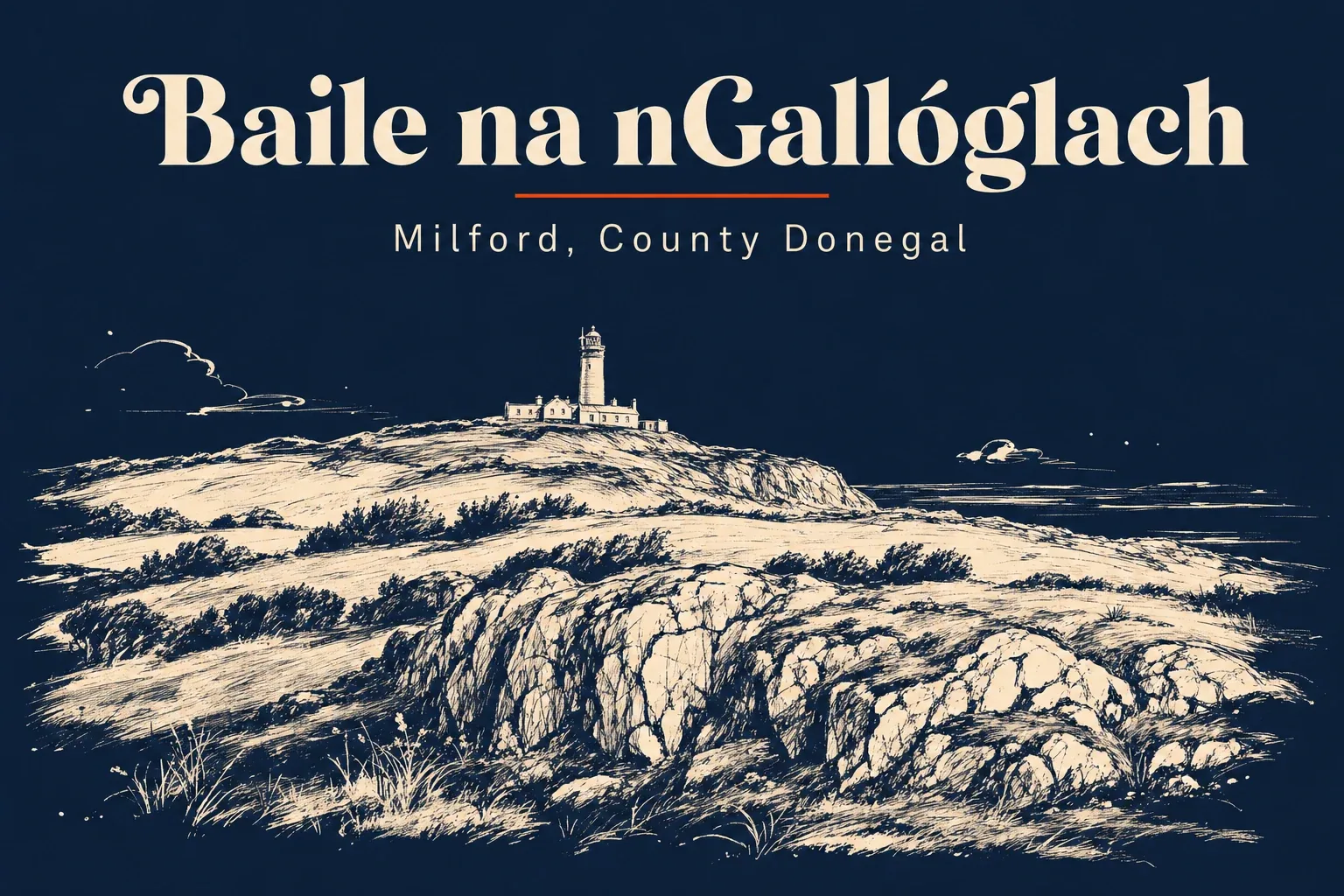
Baile na nGallóglach · Co. Donegal
Where the Fanad Peninsula starts. A market town that still functions as one.
Milford is not the famous Fanad stop. That is Fanad Head Lighthouse, perched on a cliff forty-five minutes north. Milford is the junction where the bridge crosses, the road splits, and the peninsula either begins or ends depending on which direction you are facing. The town proper is small - around a thousand people - and built on the assumption that you need a place to stop for lunch or fuel before heading elsewhere.
What matters about Milford is that it still works. The market town functions. Fishermen use the pier. Farmers come in on Fridays. Tourists come for the peninsula but they stop here for coffee and information and sometimes for dinner. The Harry Blaney Bridge made Milford the gate. The town decided not to sell the gate - it just opened it.
The medieval name - Baile na nGallóglach, the town of the galloglass warriors - tells a story most market towns do not carry. The galloglass were not merchants. They were professional soldiers, Norse-Gaelic, who recognized Mulroy Bay as defensible and worth keeping. From military settlement to market town is a jump. But the place name survives five hundred years. That suggests the community cares about where it came from.