Medieval pilgrimage, unbroken for 1,500 years
St. Patrick's Purgatory
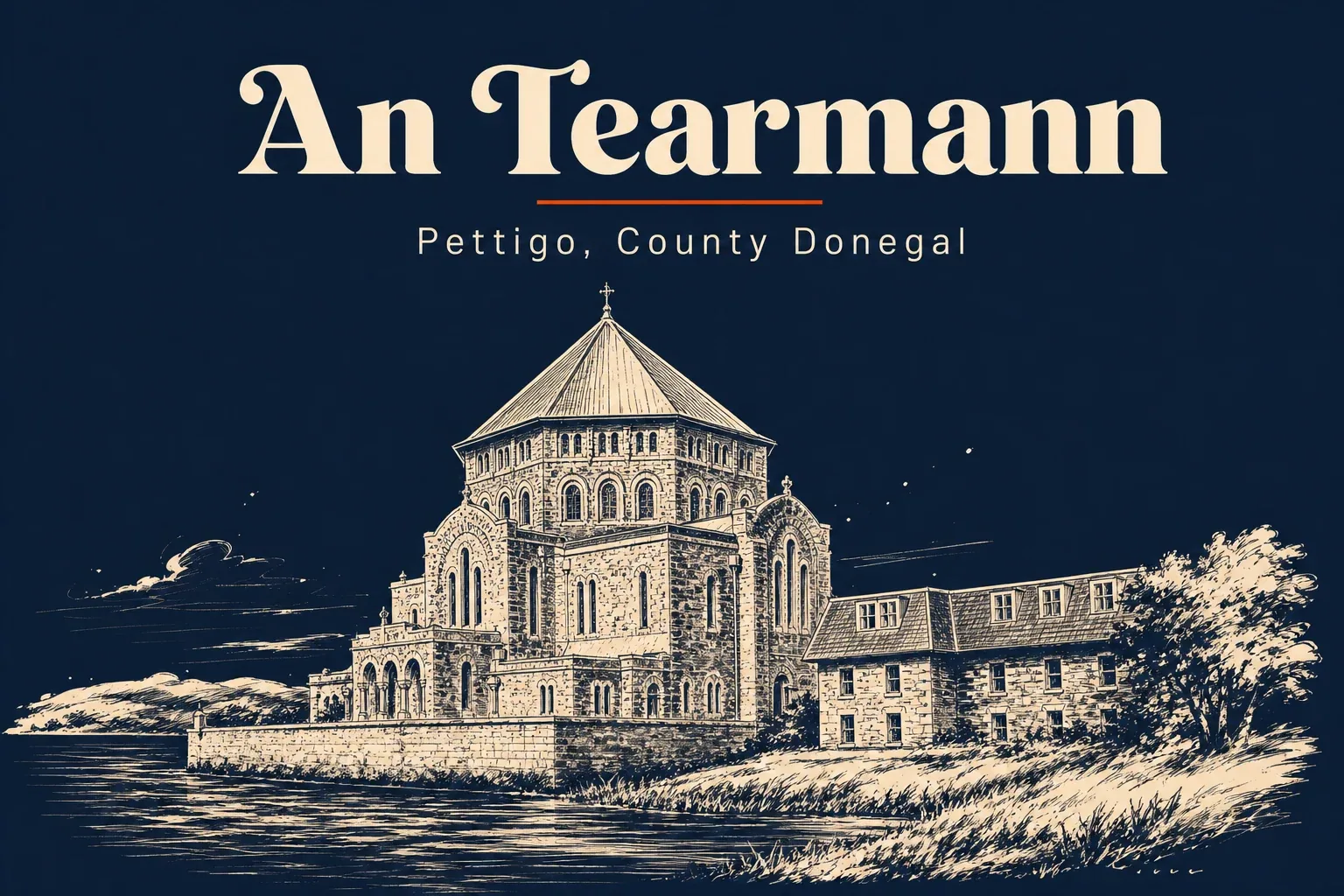
Station Island on Lough Derg has been a pilgrimage site since at least the 12th century, though local tradition places St. Patrick himself here in the 5th century experiencing visions of Purgatory. Medieval pilgrims traveled from across Europe — kings, nobles, peasants, criminals seeking absolution — to undertake a three-day vigil of prayer, fasting, and barefoot walking on sharp penitential stones. The Reformation tried to suppress it. The pilgrimage survived. The Basilica was built in 1931. Today, thousands of pilgrims arrive in June through August to participate in a ritual unchanged in its essentials. They arrive by boat. They fast. They walk barefoot. They maintain all-night vigils. They leave spiritually exhausted. Pettigo is their final preparation.
Partition created by a river
The Border
In 1921, the River Termon became an international frontier. Families who had been neighbors became citizens of different countries overnight. What had been internal ecclesiastical boundary became the line between two nations. The town adapted. Main Street stayed in the Republic. High Street became Northern Ireland. Bridges span the Termon at multiple points. People cross daily to shop, work, visit family, for no particular reason. During the Troubles, road closures devastated the economy. The good agreements normalized cross-border movement. Now the border is Pettigo's primary attraction — visitors come to experience what partition looks like when it's just water.
Place of sanctuary
An Tearmann
The Irish name derives from "tearmann" — sanctuary. Medieval law recognized certain places as protected refuges where even criminals could claim asylum. The approach to St. Patrick's Purgatory naturally developed this character. Pilgrims arrived from great distances carrying valuables and facing medieval travel's uncertainties. The town provided protection, accommodation, supplies, spiritual guidance. Families specialized in pilgrimage support — their livelihood depended on it. This tradition shaped Pettigo's identity. Even today, visitors comment on the peaceful atmosphere, the genuine welcome, the sense that this remains a place set apart for spiritual purposes.
Industrial heritage and famine relief
The Termon Mill
The Leslie family's mill, documented from 1767, harnessed the River Termon's power to create economic foundation. During the Irish Famine (1845–1846), the mill ground maize and Indian meal for distribution "to the poor through the port of Ballyshannon." Infrastructure built for commerce served humanitarian need. The mill operated for nearly 200 years. Its remnants remain, connecting contemporary visitors to the practical realities of historical life.