County Galway Ireland · Co. Galway · Carraroe Save · Share
POSTED FROM
CARRAROE
CO. GALWAY · IE

Carraroe
An Cheathrú Rua

The Wild Atlantic Way
STOP 04 / 06
An Cheathrú Rua · Co. Galway

Ireland's strongest Gaeltacht village. Irish is the working language. Every summer, a thousand teenagers arrive to learn it.

Carraroe is a working Irish-speaking village in south Connemara, 45 kilometres west of Galway city. The name means An Cheathrú Rua — "The Red Quarter" — a reference lost to time but kept in the name. What matters now: Irish is the day-to-day language of the pub, the shop, the school. The road signs are in Irish first. The shop signs assume you know it. The evening news is what two old men at the bar decide it is.

What brings people here: the Coral Strand — Trá an Dóilín — a maerl beach ten minutes south, pink and white shell-sand that shifts with winter storms. The coláiste samhraidh — summer language colleges — where Irish teenagers come every July and August to immerse themselves. Galway hooker boats, the black-sailed fishing craft iconic to this coast, still exist here, still sail. The village itself is not trying. The point is the language, the coast, and the fact that nobody is performing any of it.

Come for a week if you want to hear Irish spoken faster than you can follow. The pubs are real pubs. The music happens when someone feels like playing. Book the summer colleges well ahead — they fill entire villages with students. Come in September when the students leave and the village is itself again.

Population
~2,500
Walk score
Village and coast in 15 minutes
Coords
53.2278° N, 9.9667° W
01 / 07

The pubs.

None of these are themed Irish pubs, because they don't need to be. A few that earn the trip:

Tigh Ghil

Irish first
Local pub

The pub in the village. Trad on weekends. The conversation is in Irish. English arrives when someone new sits down. This is not a performance; it is how people talk.

02 / 07

Where to eat.

PlaceTypeLocal note
Carraroe Café Café Simple café. Coffee, soup, sandwich. The kind of place where locals land between the boat and the shop. Closes early.
03 / 07

Stories & lore.

The reason to come back. The things every local will eventually tell you about, usually after the second pint.

Irish is the first language

An Ghaeltacht

Carraroe is in the heart of Connemara Gaeltacht — an Irish-speaking area where Irish is not a subject in school but the language you hear at the bar. The shop signs favour Irish. The road signs are bilingual by law but everyone uses the Irish one. On a Friday night, English is the foreign language.

A thousand teenagers, July and August

Summer colleges

Coláiste samhraidh — Irish summer colleges — bring a thousand teenagers to Carraroe and nearby villages every summer. They come to immerse themselves in the language. Host families take them in. The villages double in population. In September, they leave and the villages breathe again.

Trá an Dóilín — pink and white maerl

Coral Strand

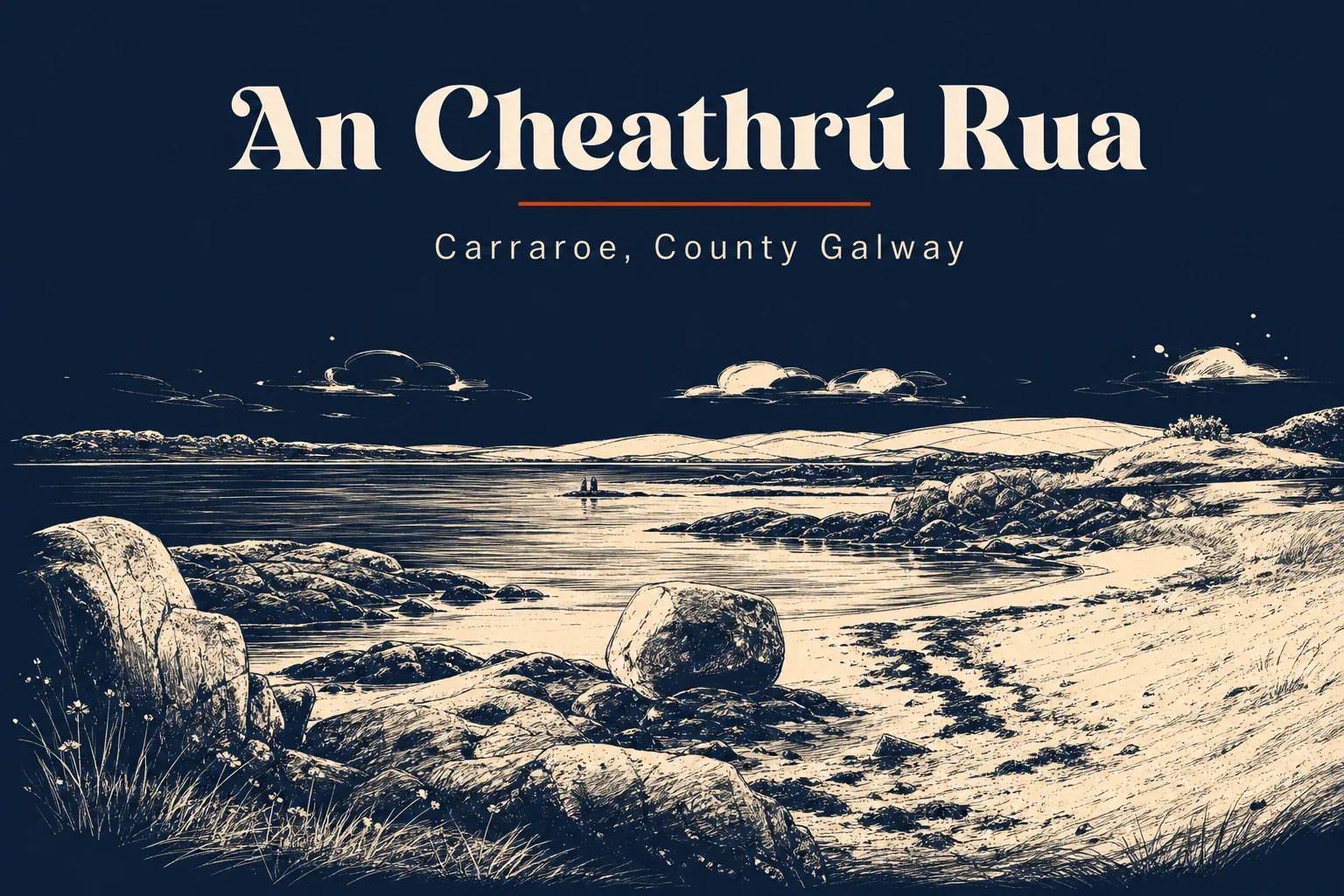
The Coral Strand, ten minutes south, is a beach made of maerl — the skeletons of coralline red algae that wash ashore in winter. It is one of only a handful of maerl beaches in Europe. The sand is pink and white, shifts with the storms, and stays soft underfoot. The water is cold and Atlantic.

Black-sailed boats, still sailing

Galway hookers

Galway hooker boats — the iconic black-sailed fishing craft — are associated with this coast. Built to fish these waters and survive Atlantic weather, they are still built, still sailed. The design is centuries old. The boats are still working.

04 / 07

Things to do outside.

Wear waterproofs. Bring a sandwich. Tell someone where you're going if it's the mountain.

Coral Strand South from the village. Pink and white maerl, sheltered on calm days, dramatic when the Atlantic storms arrive. Walk it at low tide for the hard sand. Do not enter the water unless you know what you are doing.
2 km of beachdistance
However long you havetime
Coast road west West along the narrow coast road into deeper Connemara. The road gets narrower. The views do not improve — they just get different. Come back the same way or keep going if you have the time.
~5 km one waydistance
1.5 hourstime
05 / 07

When to go.

There is no bad time. There are different times.

Spring
Mar–May

Quiet, the light is low and true. The villages are themselves. Most places open by mid-March.

◉ Go
Summer
Jun–Aug

The summer colleges fill the villages. Book accommodation months ahead if you want to come during coláiste season. The atmosphere changes entirely.

◐ Mind yourself
Autumn
Sep–Oct

After the students leave. The locals favour it. The light is unreasonable. The trad sessions start up again.

◉ Go
Winter
Nov–Feb

The weather is serious. The Coral Strand is at its most dramatic. Some smaller places shut. The village is more itself than ever.

◐ Mind yourself
06 / 07

What to skip.

Honestly? Don't bother.

If a local was sitting beside you, this is the bit where they'd lean in.

×
Expecting a tourist experience

Carraroe is not a museum village. The Irish is real. The pubs are for people who live here. Come to listen, not to perform.

×
The Coral Strand in a Atlantic storm

The beach faces north into the open ocean. Calm summer days are fine. Any other day the water is either very cold or very angry — often both.

×
Coming during summer without booking accommodation

The coláiste samhraidh brings a thousand teenagers to the area. Everything fills up. Book well ahead if July and August are your only option.

+

Getting there.

By car

Spiddal to Carraroe is 20 min on the coast road. Galway is 45 min east via Spiddal. The road is narrow but works.

By bus

Connemara buses run services from Galway to Ros Muc and beyond, stopping in the villages. Check schedules — they run to ferry times and school times, not regular timetables.

By train

No train. Nearest station is Galway. From Galway, bus or car west.

By air

Ireland West Airport (Knock) is 2h by car. Shannon is 2h 45m. Galway is 45min.