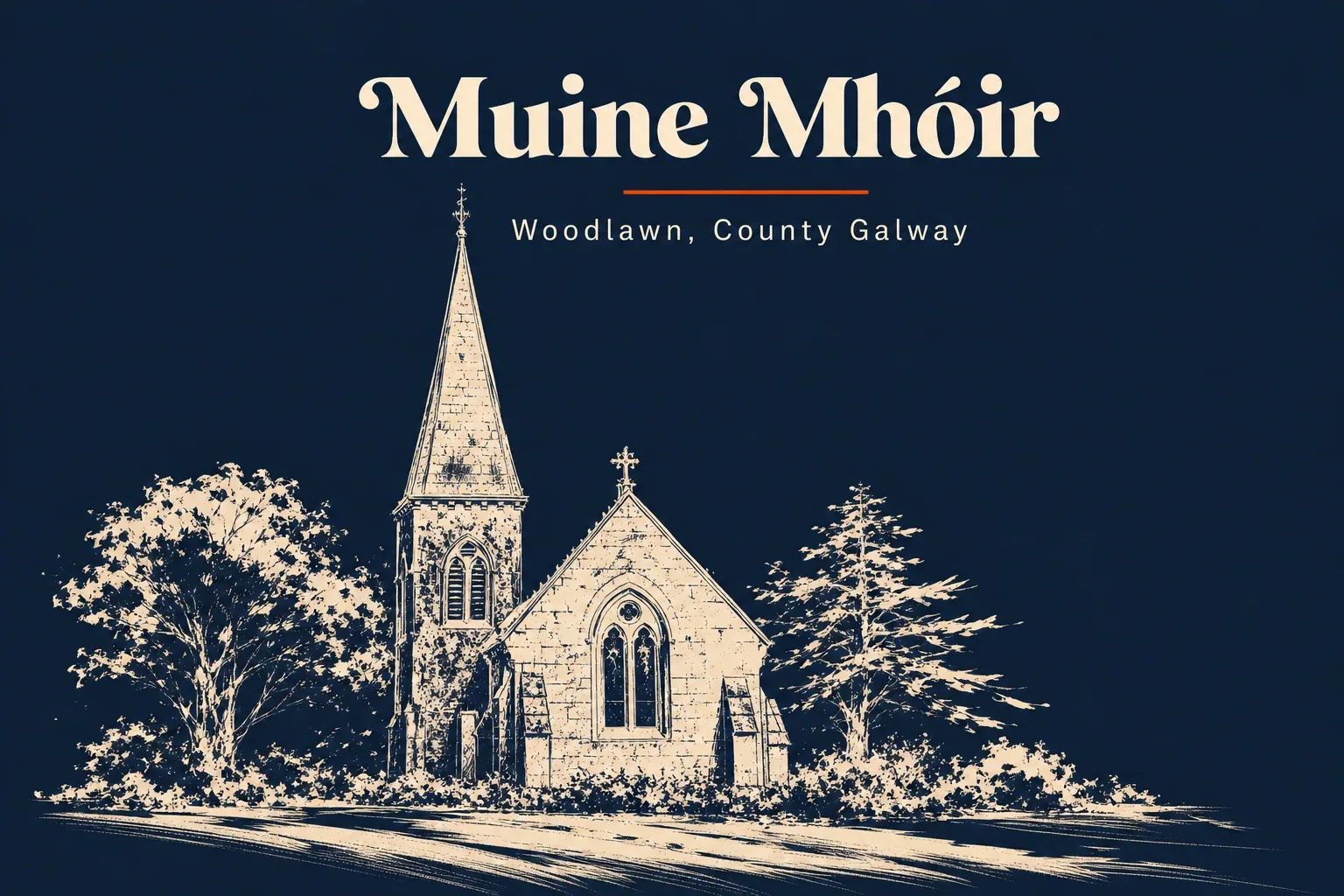
Muine Mhóir · Co. Galway
A railway village. One of the few intermediate stops between Dublin and Galway. The trains still run.
Woodlawn is small - a cluster of buildings on the Dublin-Galway line, the kind of place that exists because the railway decided to stop here. The station is the real landmark. It is still in use. Trains to Dublin, trains to Galway, trains on the time they keep. East Galway has few services. This is one of them.
The village itself is quiet. A handful of houses, the railway line cutting through, the land on either side open fields and limestone. Woodlawn House - a Georgian mansion - sits in the townland nearby, though the village is not the house. The house is a separate order of thing: stone, stable, looking back from the 18th century. The village looks forward from the 1850s, when the railway arrived.
There is a rhythm here that the railway makes real. Morning trains carry people out. Evening trains bring them back. Friday and Saturday, different traffic. The rest of the week, the land is what it is - quiet, open, the kind of agricultural landscape that stops mattering once you are looking at it.