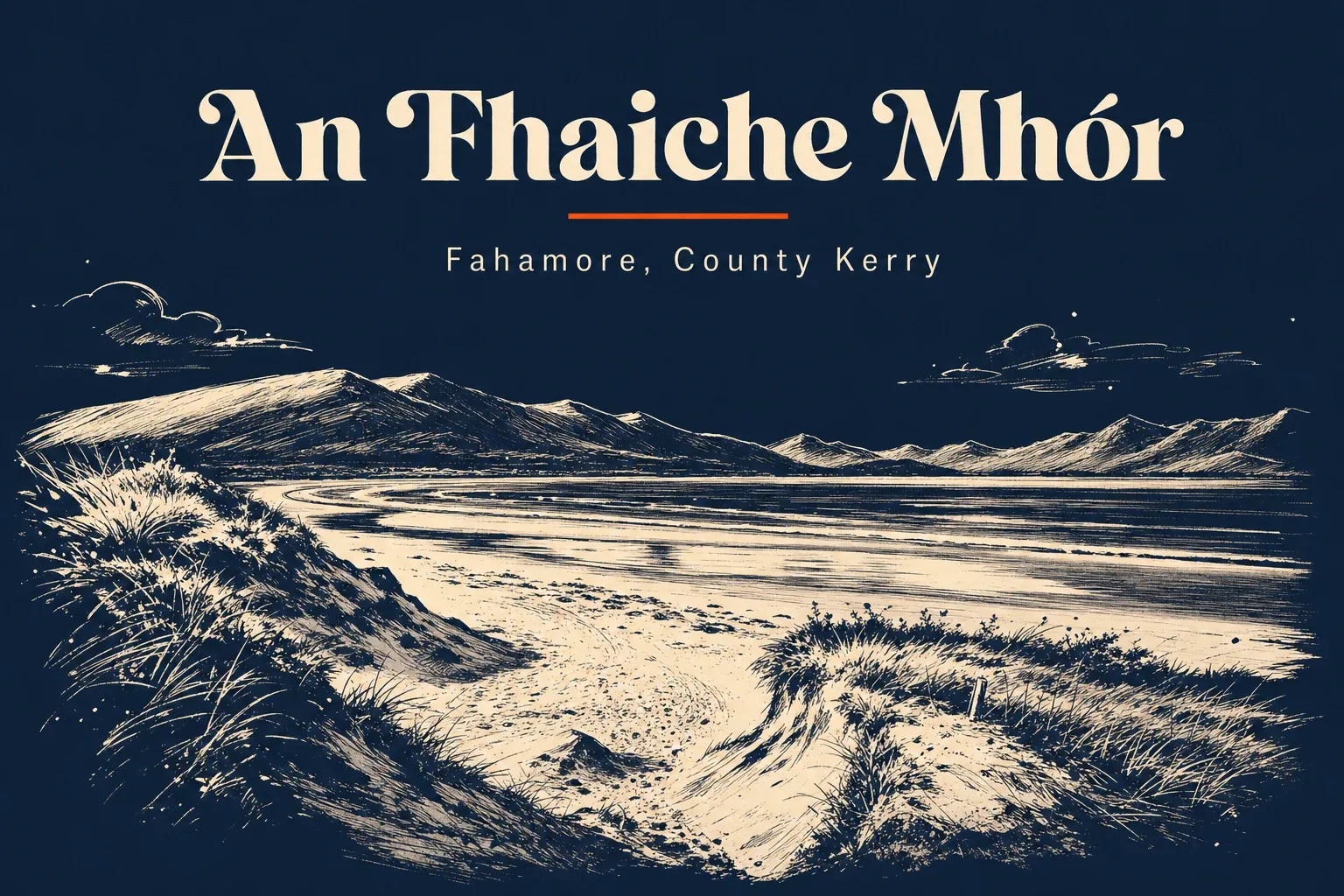
An Fhaiche Mhór · Co. Kerry
Last village on the sand spit. A working pier and a pub looking at seven islands.
Fahamore is the last village on the Maharees, the thin sand spit that reaches north out of Castlegregory and runs out of land at a small fishing pier looking at seven islands. Brandon Bay is on its west side, Tralee Bay on its east, and there is sometimes more dune than road between them. Around fifty houses, one pub, and a fleet of small boats that still works the bay for lobster and crab. The 1946 census counted three hundred and eighty-four people here. The 2011 census counted a hundred and twenty-two. The houses are still here; most of them are now holiday lets.
The reason to come is the geography. Whichever way the wind is blowing, one of the two bays is sending and the other is glass. That has made the Maharees one of the best kitesurfing and windsurfing beaches in Europe - long, shallow, sand-bottomed, no reef to drown you. The car park at Sandy Bay in July sounds like Munich. The pier itself stays a fishing pier; the boats go out at dawn whether the kites are flying or not. The Seven Hogs sit offshore in any weather, indifferent.
Don't come for choice. Come for one long walk on Stradbally Strand with nothing on it but your own footprints, a chowder in Spillane's after a wet afternoon, the famine cottage ruins in the dunes that the marram grass is slowly eating back, and the strange off-season feeling of a fishing village that lets surfers sleep in its spare rooms.