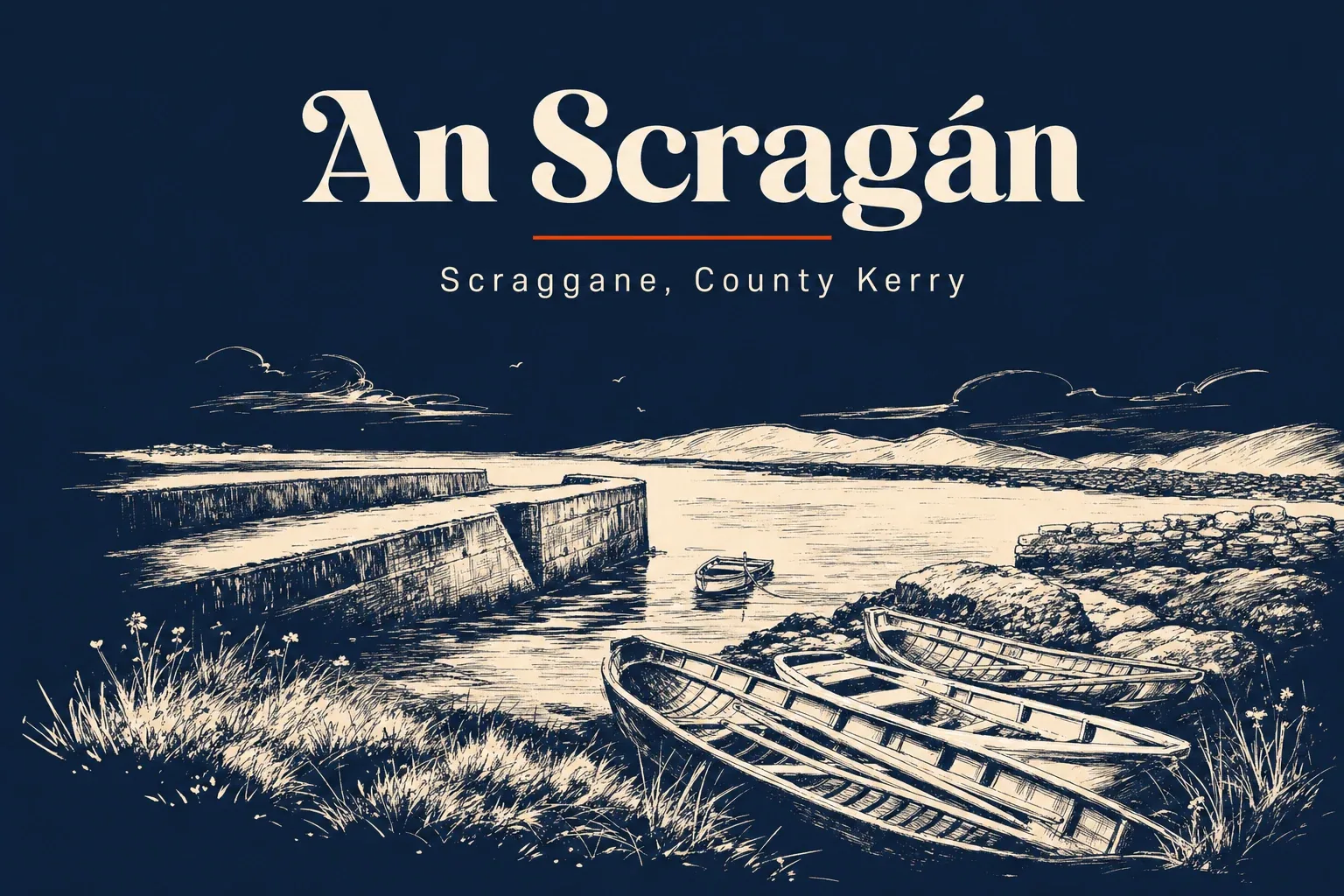
An Scragán · Co. Kerry
A pier, a lobster fleet, and the Atlantic both sides of you.
Scraggane is the kind of place a road runs out at. North of Castlegregory, past the dunes, past Fahamore, and then the tarmac just stops at a pier. There is no village square. There is no shop. There is a harbour, a slipway, a few houses turned to face the wind, and the Atlantic on three sides of you. The Irish name - An Scragán - means 'the rocky place', and it does.
The point of Scraggane is the boats. About twenty trawlers work out of the pier, fishing lobster, brown crab, spider crab and the odd run of mackerel. The currachs you see pulled up on the slips are tenders for the bigger boats, not show pieces. The pier was built in 1900 and the first regatta was held the same December. The Maharees crews have been racing the Brandon crews ever since, and the rivalry has not softened.
Come for the end-of-the-road quality. Walk out onto the pier at six in the morning when the boats are sorting pots. Walk the dunes when the wind is up and the marram grass is laid flat. Look across at the Seven Hogs and wonder who'd put a monastery out there in the seventh century, and why. Then drive the four minutes back to Fahamore for a pint, because Scraggane itself doesn't run to one.