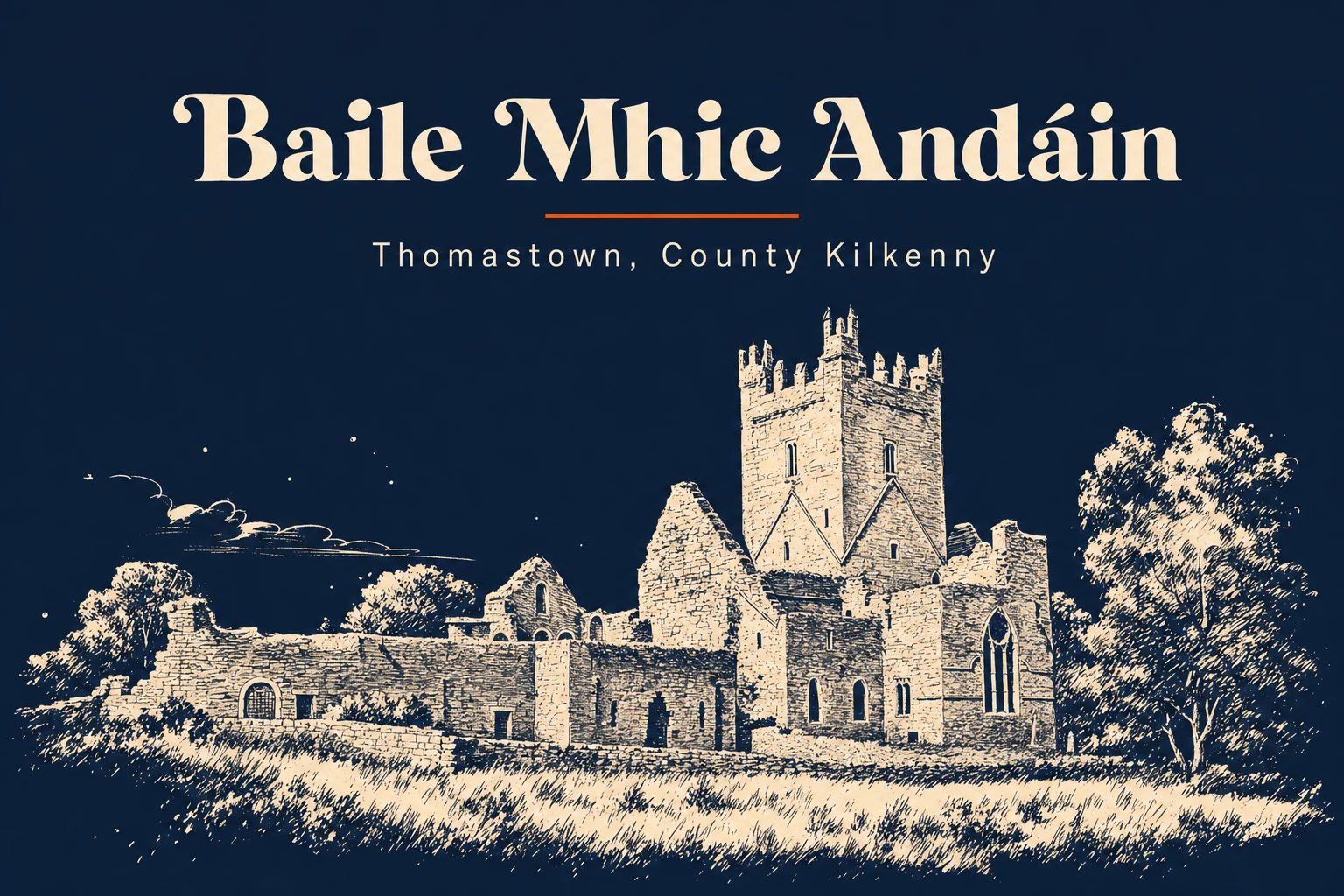
Baile Mhic Andáin · Co. Kilkenny
Medieval market town where the River Nore still turns the wheels.
Thomastown is not famous and does not want to be. It is 18 kilometres south of Kilkenny city, sits on the River Nore, and still works as a market town - not a theme park pretending to be one.
The Cistercians knew what they were doing when they founded Jerpoint Abbey 3 kilometres west in the 12th century. The location, the light, the silence. You can still feel it. The cloister arcade has medieval carved figures - monks at prayer, soldiers at war, a skeleton sharpening his scythe. Each one is a message from eight centuries ago. Most visitors photograph them and move on. Sit there instead. Watch what the light does to the stone.
Mount Juliet Estate sits on the edge of town - a working 5-star hotel with a Michelin-starred restaurant and a Jack Nicklaus golf course. The Irish Open came here multiple times. The town tolerates this gracefully and carries on.
Walk the downstream path from town. Grennan Mill is still there, now a crafts school. The medieval town walls survive in fragments - enough to know what the burgess plots looked like, what the streets held. This is the whole story of Thomastown: ruins that remember being useful, a river that still runs, a town that was important once and is content to be itself now.