County Leitrim Ireland · Co. Leitrim · Dromahair Save · Share
POSTED FROM
DROMAHAIR
CO. LEITRIM · IE

Dromahair

The North Leitrim
STOP 04 / 04
Dromahair · Co. Leitrim

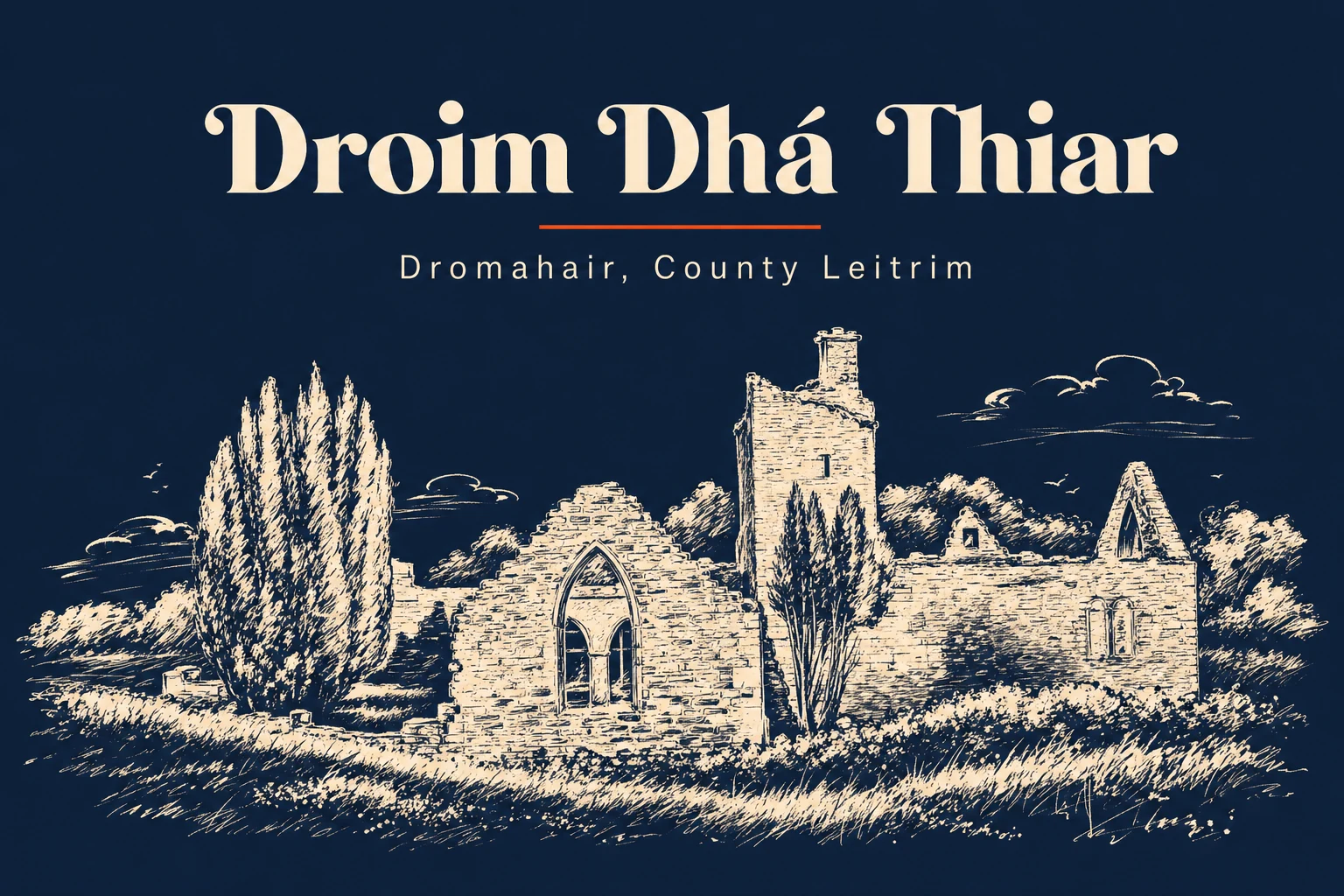
Parke's Castle on Lough Gill, Creevelea Abbey in the trees — a small village with a large medieval footprint.

Dromahair is small — around 300 people — but the landscape speaks. Parke's Castle stands on the eastern shore of Lough Gill, a fortified 17th-century manor on the site of an older O'Rourke stronghold. It is a National Monument, well-preserved, with stone walls still standing and views across the water. Robert Parke built it in the 1620s. The location is beautiful; it was built for defence, not aesthetics.

The River Bonet flows through the village, feeding Lough Gill. The lough is shared between Leitrim and Sligo. Yeats knew it, wrote about it, walked the western shore from Sligo town. Dromahair sits on the quieter eastern side.

Creevelea Abbey stands a short walk from the village — a Franciscan friary founded in 1508, now roofless but intact. The stonework holds. The graveyard is peaceful and mostly unvisited. The O'Rourkes founded it; history ended it.

Population
300
Pubs
2and counting
01 / 04

The pubs.

None of these are themed Irish pubs, because they don't need to be. A few that earn the trip:

Stanford Inn

Quiet, local, ivy on the front
Inn, about 200 years old

The inn that has been here as long as the village has been. A pint and not much else demanded of you.

02 / 04

Stories & lore.

The reason to come back. The things every local will eventually tell you about, usually after the second pint.

English power on an O'Rourke shore

Parke's Castle

Robert Parke built his castle on Lough Gill in the 1620s, on land that had belonged to the O'Rourke chieftains for centuries. The castle is a fortified manor — stone walls, turrets, a bawn. It was a statement of the new order. Today it is a National Monument, maintained and accessible. You can walk the ramparts, read the site boards, look across the water at the Sligo hills. The castle was practical, not decorative; the view it guards is incidental.

Lords of Bréifne

The O'Rourke Kingdom

The O'Rourkes were kings of Bréifne — the territory stretching across what is now Leitrim and Cavan — for centuries before the Plantation. Dromahair was their heartland. The legendary hall of the O'Rourkes, Bríúin na Boínne, stood near here. When the Plantation came in the 17th century, their lands were confiscated and granted to planters like Robert Parke. The O'Rourke name persists in the landscape and in the genealogies of families who stayed.

Franciscan friary, founded 1508

Creevelea Abbey

Creevelea was founded in 1508 by Margaret O'Brien and Owen O'Rourke as a Franciscan house. The church is roofless now but structurally sound — nave, chancel, cloisters mostly intact. It stands in a graveyard that is still in use. The silence is genuine. It is one of the least-visited medieval ruins in the north-west, partly because there is no visitor centre, no car park, no charge. You walk up, look around, and leave.

03 / 04

Things to do outside.

Wear waterproofs. Bring a sandwich. Tell someone where you're going if it's the mountain.

Parke's Castle Shore Walk Easy loop around the castle and along the Lough Gill shore. Good views across the water to the Sligo hills.
1.5 kmdistance
40 minutestime
Lough Gill Shore Path Longer walk south along the lough shore. Mixed terrain. Quiet on weekdays.
5 kmdistance
1.5–2 hourstime
Creevelea Abbey Short walk from the village centre to the abbey. Easy terrain. Allow time to look around the ruins properly.
1 km from villagedistance
30 minutestime
+

Getting there.

By car

N16 from Sligo town (25 km, 30 min). From Carrick-on-Shannon, country roads via Drumkeeran (30 km, 45 min).

By bus

No regular direct service. Bus Éireann runs to Sligo or Manorhamilton; local taxi from there.