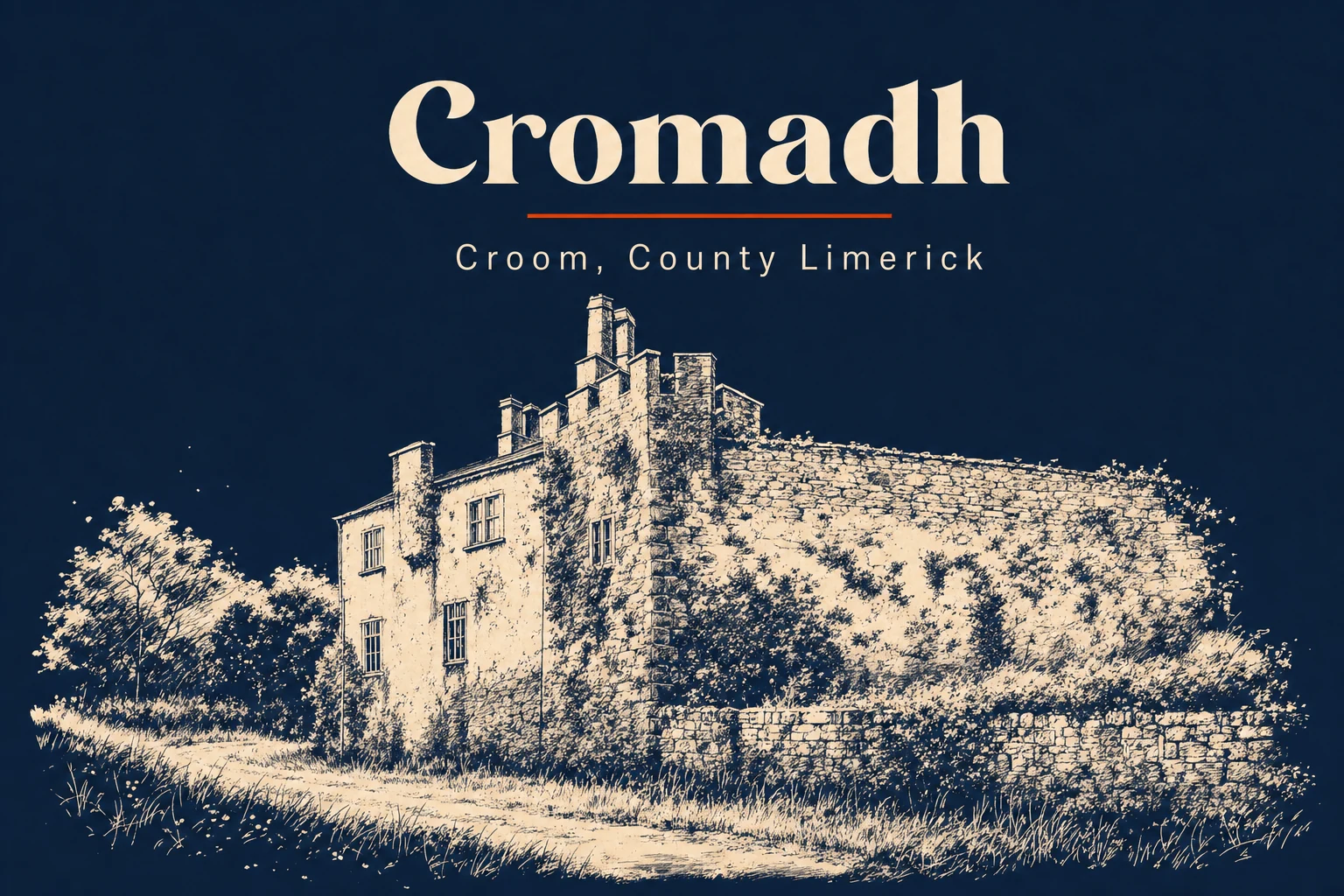
Cromadh · Co. Limerick
Where eighteenth-century poets gathered in a tavern to fence with verses and wit.
Croom sits on a bend in the River Maigue - the name Cromadh comes from that curve. It was a walled town once, built around a castle in 1210 when Dermot O'Donovan decided this bend was worth defending. By the 1700s the castle had passed to the FitzGeralds of Kildare, and their war cry "Crom Abú" echoed off Irish battlefields. But the real story starts later, in a tavern.
In the mid-1700s, Seán Ó Tuama - a local teacher and poet born around 1706 - opened a tavern called An Teach Filíochta: the House of Poetry. It became the gathering place for the Maigue Poets, the Filí na Máighe. Seán Clárach Mac Domhnaill (1691-1754), called the Chief Poet of Munster, met there. So did Andrias Mac Craith, the Merry Huckster, a travelling pedlar who carried stories and verses along the roads of Limerick and Cork. They composed satires, jousted in impromptu verse, staged mock legal trials in rhyme - the famous Cúirt Máighe, the Court of the Maigue. It was all happening in this small town while the Irish language was under siege.
Today you walk the same streets. The castle is a ruin. Croom Mills, built in 1788, sits on the river with its heritage centre and working waterwheel - you can watch grain being ground the way it was two centuries ago. The town park runs 3.2 kilometres along the Maigue. But the Maigue Poets are the angle: this was a place where learning mattered, where Irish language and wit were weapons against erasure, where genius showed up on Tuesday night in a pub. That happened here.