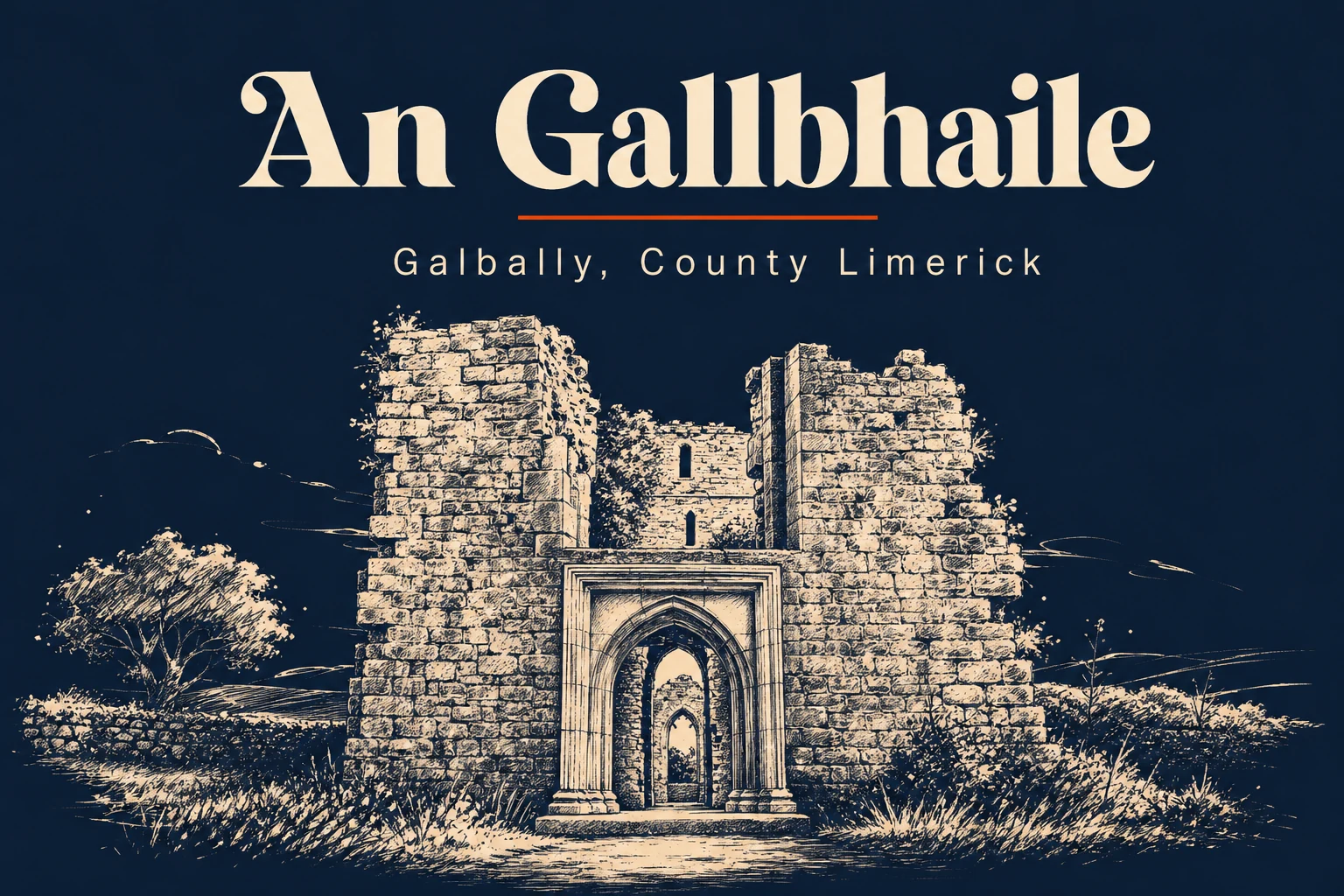
Galbally, An Gallbhaile, Co. Limerick
Small village, big mountains, one lake worth four hours of climbing.
Galbally sits at the foot of the Galtee Mountains in south Limerick, close enough to Tipperary that you can see the border from above. The village itself is the smallest kind of settlement - a pub, a church, a handful of houses where the land starts to climb. The draw is not the village. The draw is what rises behind it.
Lough Muskry defines the walk here. A corrie lake tucked into the upper glacial valley of the Galtees, reached by climbing straight out of the village through rough pasture until the path opens into the upper valley. Four hours out and back, around 300 metres of climbing, and the only building you see is the one you start from. No scrambling. No exposure. Just altitude and silence and the shape of the land beneath your feet.
Bring water and a proper map. The path markers thin as you gain height. Mist comes in fast on the Galtees. The mountain indifference is exactly why it works. No visitors' centre, no railings, no one asking whether you belong. Just the mountains, an hour south of Limerick city and a world away from it.
At a glance.
Three things every local will eventually mention. Read these and you've already understood more than most day-trippers do.
Walk into the highest mountains on Limerick's edge.
The Galtee range rises from the village. Lough Muskry is a corrie lake tucked into the upper glacial valley - four hours out and back, ~300 metres of climbing, and the only building you'll see is the one you start from.
Walks & outings → 02 The borderTipperary is a stone's throw south.
The Limerick-Tipperary border runs along the ridge above the village. The view south from Lough Muskry spans into Tipperary's Golden Vale, all pasture and tree-lined fields.
Getting there → 03 The quietNo gift shop. No car park. No plan.
Galbally is a working village that happens to have mountains. There is a pub, a church, a handful of houses. The walk to Lough Muskry starts and ends here, and the mountain decides the rest.
When to go →The pubs.
None of these are themed Irish pubs, because they don't need to be. A few that earn the trip:
The Village Bar
Local, quietThe village hub. Maps of the Galtees on the wall. A good spot to gather information before walking or refuel afterward. Limited food; a sandwich and a pint is the whole offering.
Things to do outside.
Wear waterproofs. Bring a sandwich. Tell someone where you're going if it's the mountain.
When to go.
There is no bad time. There are different times.
Longer days, clearer paths, lambs on the lower slopes. Still cold at altitude; bring a layer.
The path is driest and the evenings are long, but mist rolls in without warning and the ridge can be exposed.
The locals' season. Clear days, low mist, the light is golden, and the path is worn in.
Short days, boggy ground, and the upper corrie can hold snow that patches are not obvious until you step. Ice axe and crampon skills may be needed.
What to skip.
Honestly? Don't bother.
If a local was sitting beside you, this is the bit where they'd lean in.
You would spend three hours on a bus to spend forty minutes at a viewpoint carpark three villages over. Stay in Galbally and walk the actual mountain for free.
The path starts steep and wet. The bog claims at least one ankle per season. Proper hiking boots and gaiters are not optional.
Getting there.
Limerick city to Galbally is about 55 minutes south on the N20, then east via Kilmallock or Hospital toward the Galtees. The village sits on the side road between Ballylanders and Anglesboro. From Tipperary town: 35 minutes north via Ballyporeen.
No direct service to Galbally. Bus Éireann runs services through nearby Kilmallock and onward toward Tipperary. Check local timetables; the village is not on a main line. A rental car is practical.
No station at Galbally. Limerick Colbert is 55 minutes by car north; Tipperary town station is 35 minutes south. Neither is convenient for a day walk.