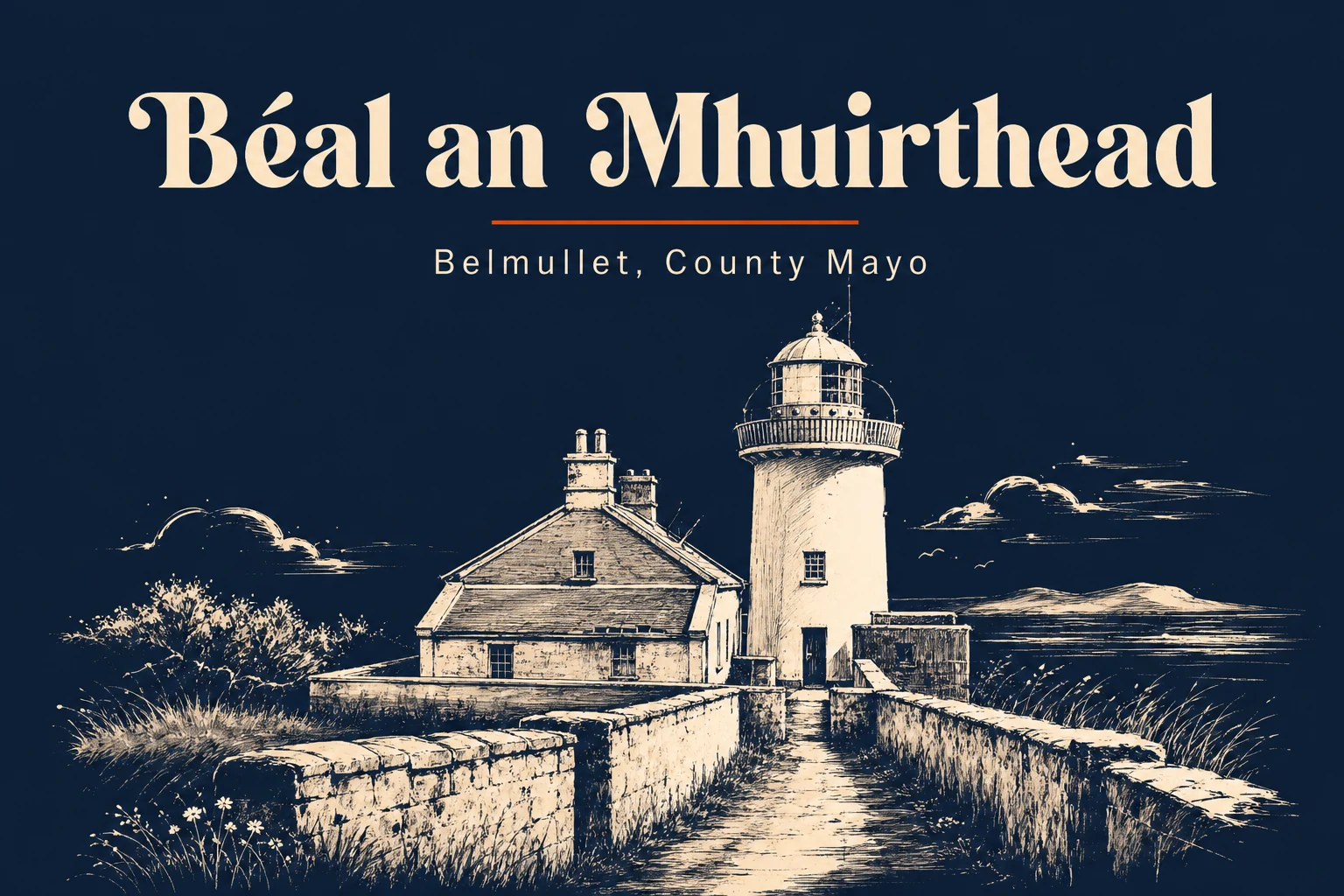
The weather report that changed D-Day
On the night of 3-4 June 1944, Maureen Sweeney - twenty-one years old, working as a meteorological assistant at Blacksod Lighthouse on the southern tip of the Mullet - recorded an unusually deep depression moving in from the Atlantic. The reading was dramatic: falling pressure, strengthening westerlies, sea state deteriorating fast. She phoned it in to Valentia, who passed it up the chain. Within hours it was on a teletype in Eisenhower's headquarters at Southwick House. General Stagg, the chief meteorologist, used it to forecast the storm that was about to hit the English Channel. Operation Overlord was postponed twenty-four hours. The invasion that had been set for June 5th went on June 6th. Military historians have since argued that the original date - with those seas - might have been catastrophic. Maureen Sweeney lived to 99. She received the Met Éireann Gold Medal in 2021. A memorial marks the lighthouse. Blacksod is still remote; the lighthouse is still there; the view of the bay is unchanged.