O'Neill, O'Donnell, and the Plantation
The Castle and the Ford
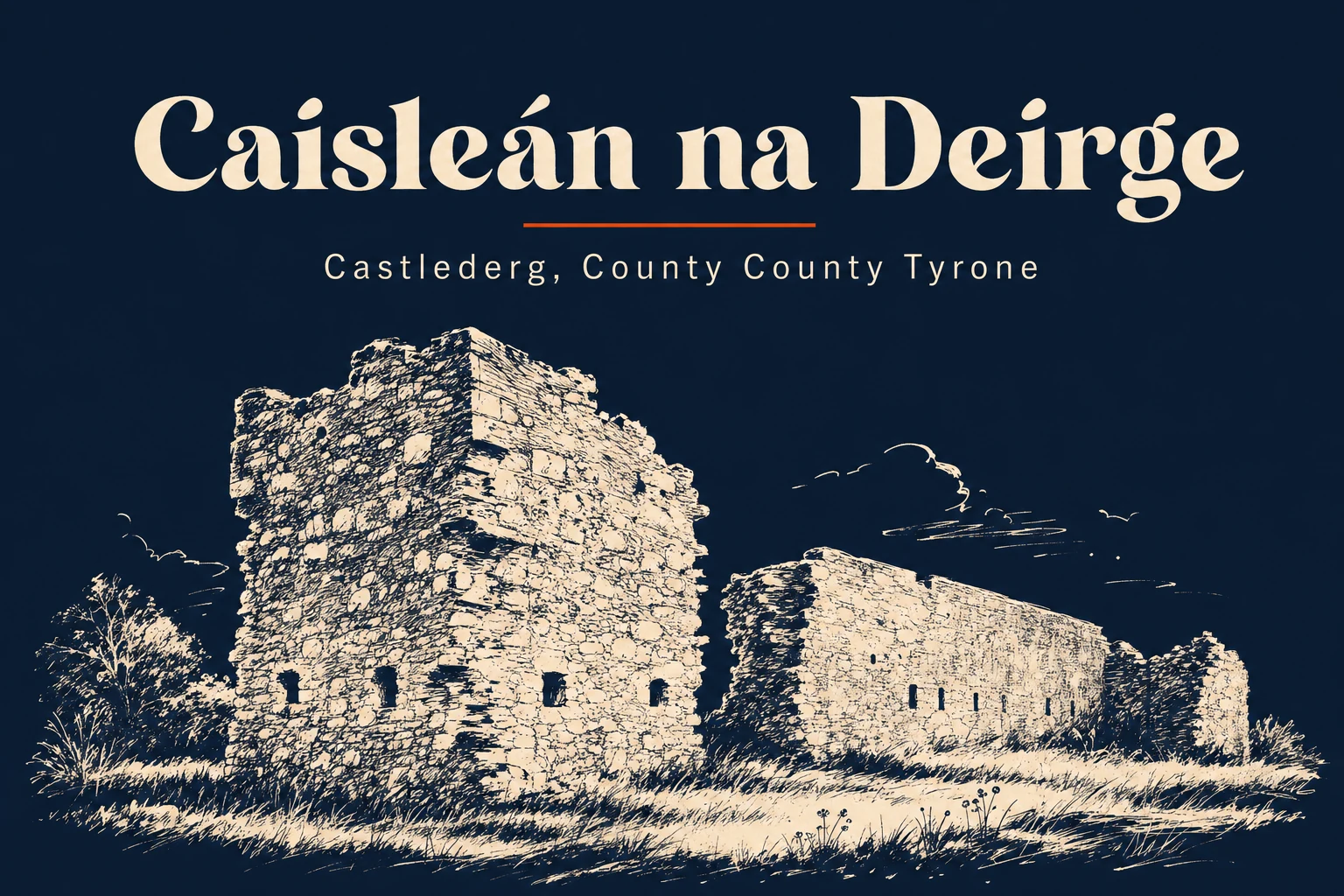
The earliest record of a castle at Castlederg is 1497, when the Annals of Ulster record an O'Donnell castle here being taken by the O'Neills, and retaken in 1505. The ford across the River Derg was a strategic crossing between the O'Neill and O'Donnell lordships - the hinge point between Tyrone and Donegal - and both families understood its value. After the Flight of the Earls in 1607, the area was granted to the English Attorney-General for Ireland, Sir John Davies. The Plantation-era Derg Castle - a rectangular bawn with square corner flankers, built in the early 17th century - replaced whatever came before. Its ruins stand on the north bank of the river today. One flanker was lost to flooding. The rest is scheduled as a monument.
Ulster's most bombed small town
The Troubles in Castlederg
West Tyrone was deeply contested during the Troubles, and Castlederg was among the most affected communities in Northern Ireland for its size. The IRA conducted more than 70 bomb attacks in the area, targeting Protestant-owned businesses, the RUC station, and the UDR camp at Rockwood. Twenty-five people were killed in and around the town, among them UDR soldiers, RUC officers, and Catholic civilians killed by loyalist paramilitaries. The first UDR soldier to be killed in Northern Ireland, and the youngest police officer murdered during the Troubles, were both from Castlederg. The town carries this quietly. There is no memorial trail. There is no reconciliation tourism. There are people who remember, and families who still live here.
Border water, pilgrimage route, angling beat
The River Derg
The Derg rises in the hills of Donegal and flows east through Castlederg before joining the River Finn near Castlefin. Historically it was a boundary - between Tir Eoghain and Tir Chonaill, then between Ulster and Connacht, later between Northern Ireland and the Republic. It was also part of an ancient pilgrimage route toward Station Island on Lough Derg. The river today is an angling beat, a walking corridor, and the reason the castle ruin is still partly standing on its bank. Salmon and trout run through the town.