Bun Machan · Co. Waterford
A copper-mining boomtown that went quiet, then became a geology lesson.
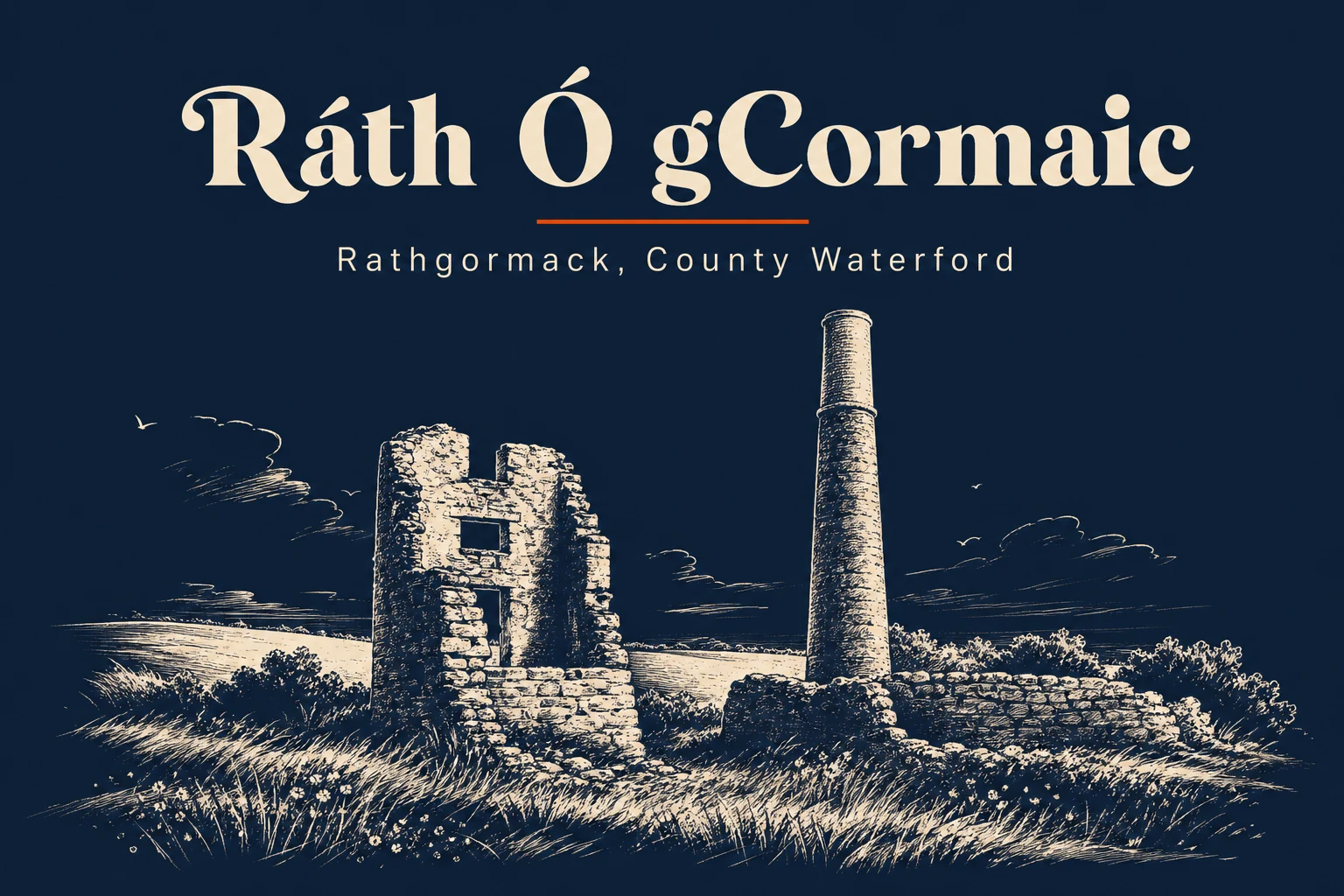
Bunmahon does not look like a place that once had five thousand people in it. It looks like a beach, a green, a handful of houses, a wide cove between two cliffs. Then you walk up onto the headland and you see the chimneys - the engine houses of Knockmahon mine, sticking up out of the gorse, the way a lost tooth sticks up out of a gum. The Mining Company of Ireland came in 1824 and was gone by 1879. The village shrank back to itself.
The good news is the place did not turn into a ghost town. It turned into a geology lesson. The whole twenty-five kilometres of coast between Tramore and Dungarvan are a UNESCO Global Geopark now - copper-bearing volcanic rocks, collapsed sea caves, stacks, beaches no road reaches. The headquarters and visitor centre sit in the old Church of Ireland church on the green at Bunmahon. Walk in, look at the rocks, ask about the mine tour.
Stay an afternoon. Walk the cliff path east toward Stradbally or west toward Annestown. Swim if you can stand the cold. The pub is The Engine House, named for what the place used to be. Then drive the coast road in either direction and watch the cliffs change colour every two kilometres. That is the geology talking.