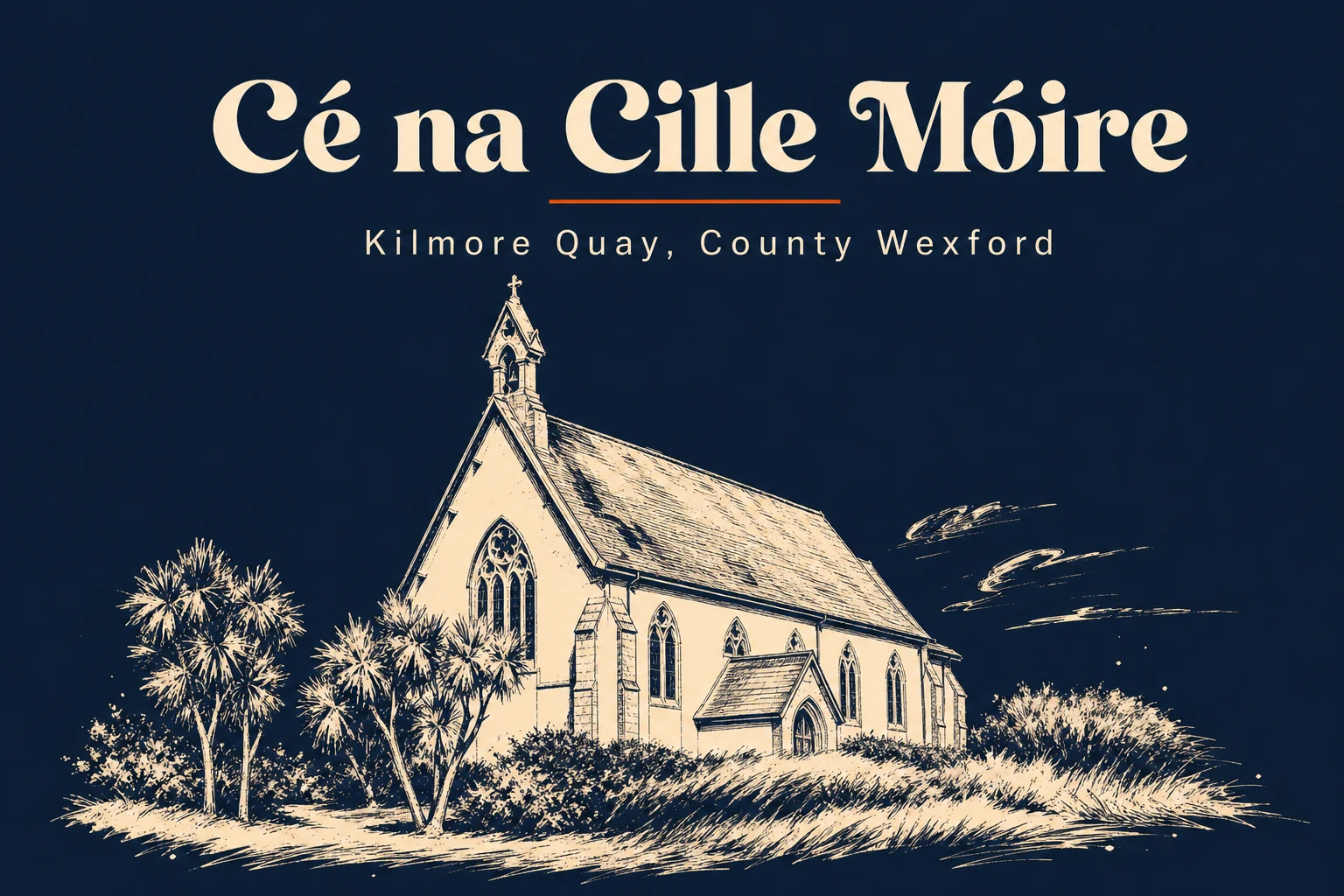
Cé na Cille Móire · Co. Wexford
Working boats, white walls, and the Saltees a half-hour out.
Kilmore Quay is a fishing village on the south Wexford coast that has somehow held its shape. The harbour is a working harbour - trawlers, lobster boats, the ferry to the Saltees - and the front street is a row of low, white, thatched cottages that look like an old picture-postcard because they are an old picture-postcard. About four hundred people live here. In July the population multiplies and then in October it goes back to itself.
The Saltee Islands sit five kilometres offshore. Great Saltee is the bigger one, privately owned by the Neale family since the 1940s, open to day visitors who come for the seabirds - puffins on the cliffs, gannets in the air, razorbills wedged into every ledge. The ferry runs April to September from the marina, weather permitting, which it often isn't. Build a flexible day.
What makes the village more than a postcard is the fishing. The boats unload at the pier and the seafood ends up in three or four kitchens within walking distance. The Seafood Festival in early July has been running for decades. The chowder in Mary Barry's tastes the way it tastes because the langoustines were alive that morning. Stay a night, walk the front, eat fish, look at the sea.
Don't come for two hours on the way to Rosslare. Come for a day. Better, two. The Burrow at Ballyteige is a four-kilometre stretch of dunes and beach behind the village, with wild orchids in May and a memorial garden at Forlorn Point that is one of the more affecting small spaces on this coast.