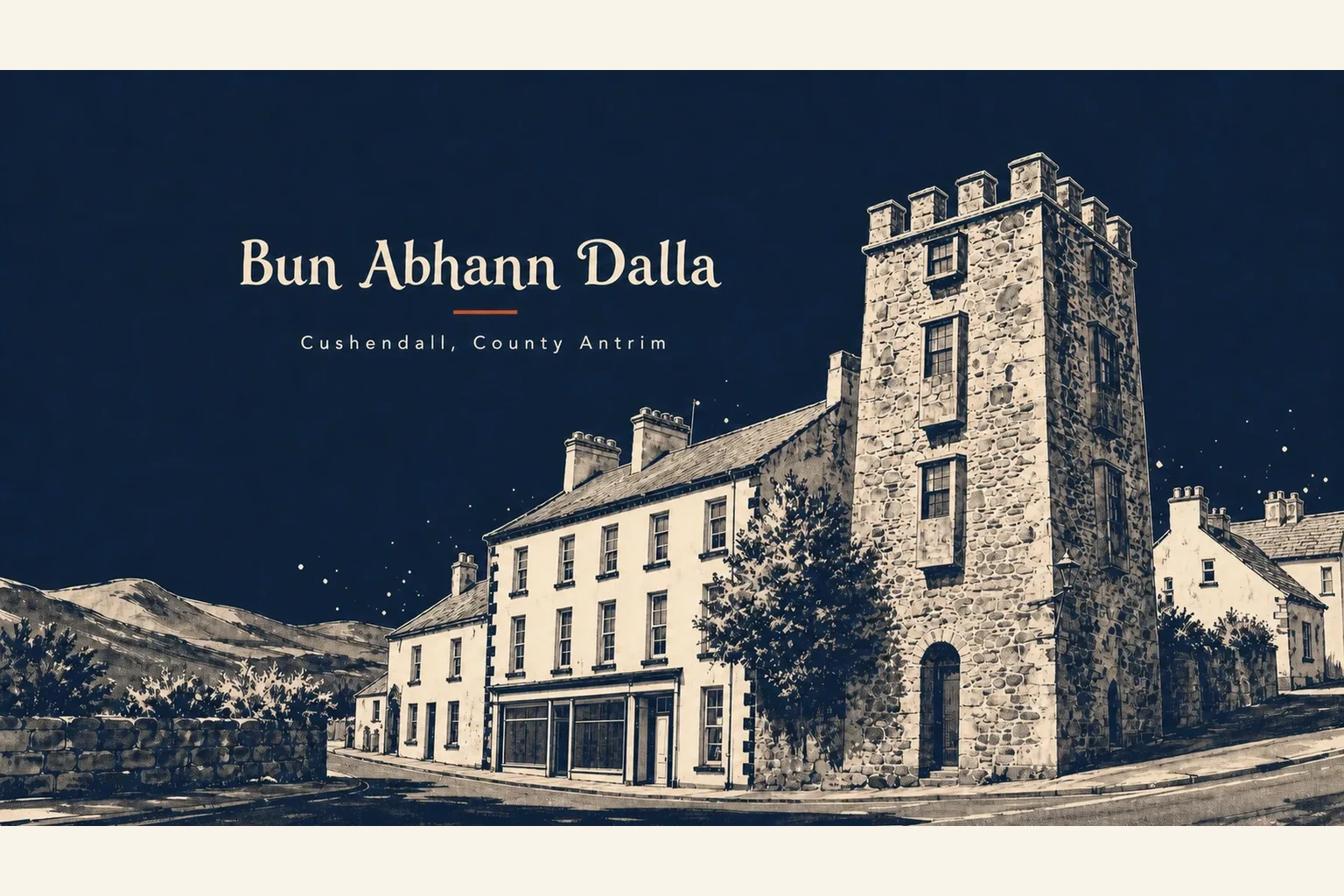
Bun Abhann Dalla · Co. Antrim
Capital of the Glens. Three valleys, one river, a red sandstone tower in the middle of it all.
Cushendall sits at the bottom of three valleys at the foot of a flat-topped mountain on the eastern shoulder of Antrim. The locals call it the Capital of the Glens. They are not really joking. There is one bigger town up the coast and one smaller down it, and Cushendall is the one with the chemist, the butcher, and the GAA pitch.
The village itself is small - four streets meeting at a red sandstone tower - but the country around it is the point. Lurigethan rears up behind the houses with a flat top like a table tipped sideways. Tievebulliagh sits behind that, the same hill that Neolithic people walked up to chip axe-heads off four thousand years ago. Down at the strand, the River Dall comes out of the glens and finds the sea.
Come for a wet weekend in October and the place reveals itself. Hill, glen, beach, pub, and back. The road north to Cushendun is two narrow miles of switchbacks called the Coast Road that the locals would prefer you took slowly. They are right.