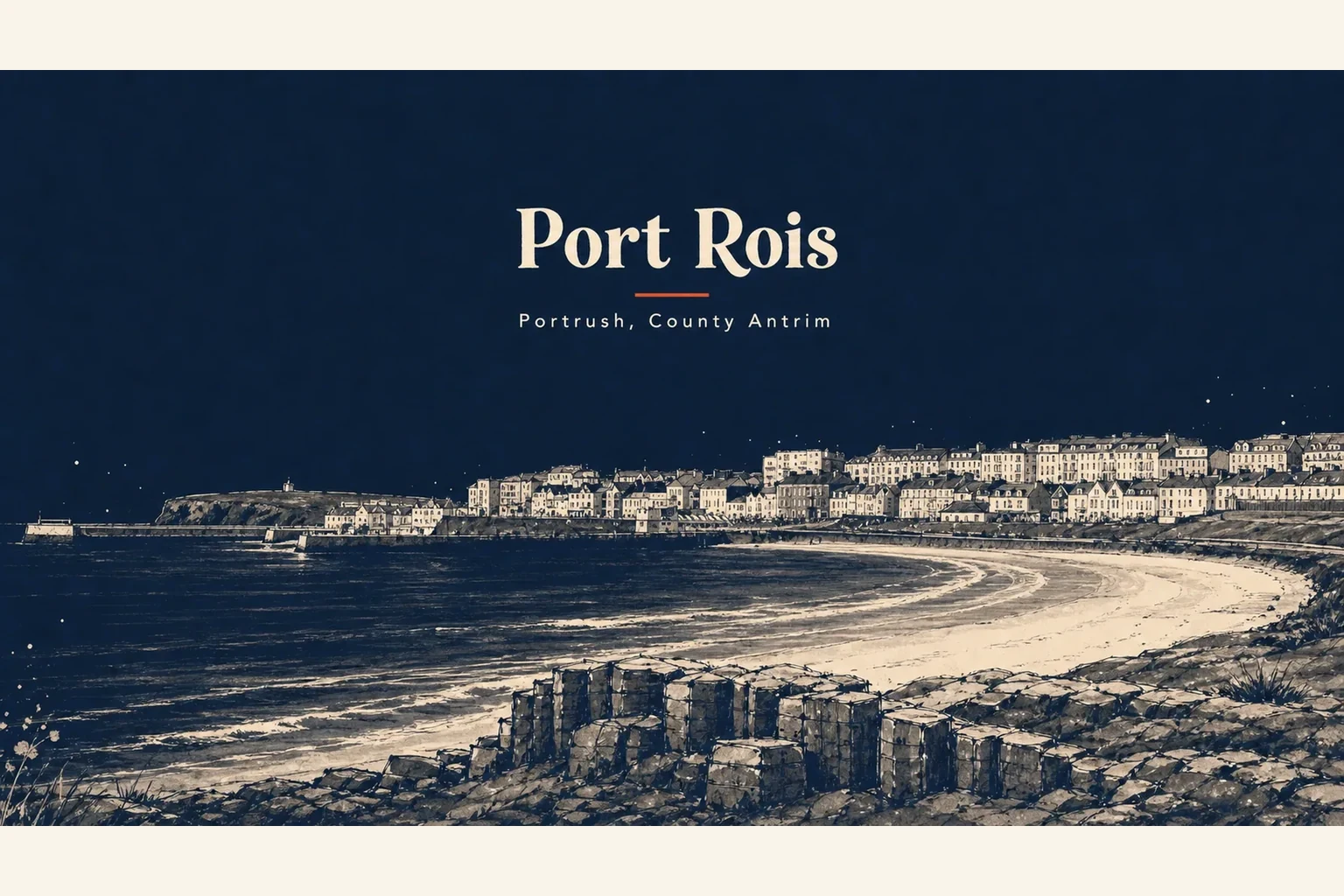
Port Rois · Co. Antrim
A basalt finger pointing at the Atlantic, a links course on either side, chips at the end.
Portrush is a Victorian seaside town that the railway built. The line from Belfast reached the headland in 1855 and the town followed - boarding houses, a promenade, a ballroom or two, and three beaches close enough that you could walk between them in fifteen minutes if the wind let you. The peninsula it all sits on is basalt, the same dark rock that breaks into hexagons up the road at the Causeway. Stand at Ramore Head on a clear day and you can see Donegal one way, Scotland the other, the Skerries half a mile out, and the Atlantic doing whatever the Atlantic feels like doing.
What you need to know: this is a resort town that goes through three lives a year. In summer it fills up - caravans, families, stag parties, queues for chips and Barry's amusements. In winter it empties and turns moody and is, frankly, better for it. And then twice now (2019, 2025) The Open has rolled through and stuffed the place full of marshals, marquees and a quarter of a million golf fans, and the town has produced its best self for a fortnight before settling back. The version of Portrush you get depends on the week you pick.
The honest pitch: come for a long weekend, stay outside July, walk the strands at dawn, eat at the harbour, take the train in from Belfast or Coleraine so you don't have to think about parking. The Causeway is twenty minutes east, Dunluce Castle five minutes west, and there are coastal walks in either direction that make the drive worthwhile on their own. Portrush works as a base. It also works as an end-of-the-line in the literal sense - the railway stops here, so does the headland, and that's not nothing.