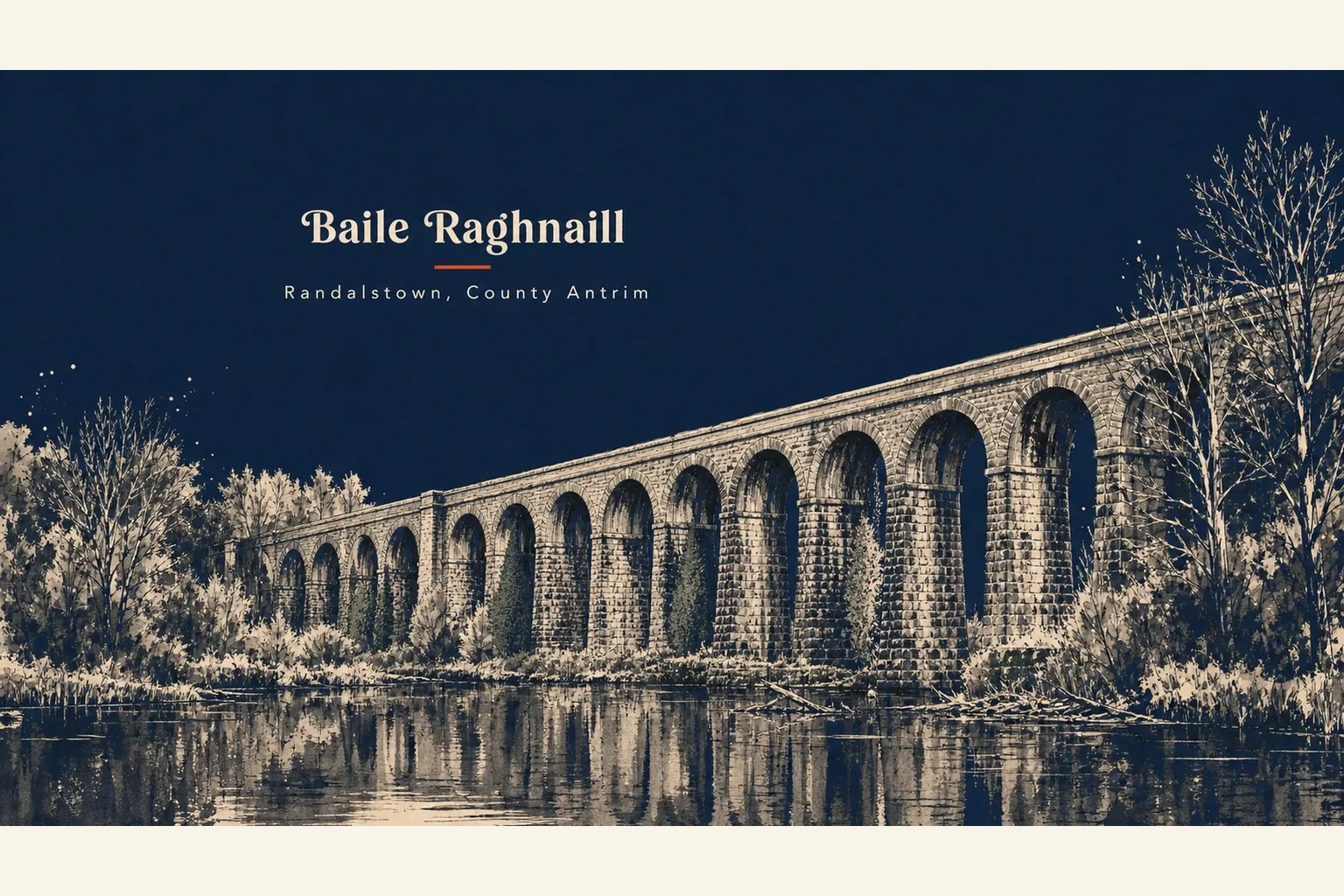
Baile Raghnaill · Co. Antrim
A nine-arched viaduct, a vanished linen mill, and the O'Neills' estate over the wall.
Randalstown is a mid-Antrim town on the River Maine, ten minutes west of Antrim town and a short hop from the north-east shore of Lough Neagh. The townland was originally Dún Mór - the great fort - and got its current name in the mid-17th century from Randal MacDonnell, first Marquess of Antrim. The fort is gone. The name stuck.
Two things shape the place. One is the viaduct: eight arches of dark basalt striding across the river at the edge of town, built for a railway that hasn't run in over sixty years. The other is the wall of Shane's Castle demesne, just down the road, behind which the O'Neills have held land in one form or another since the 14th century. Most towns this size don't have that kind of weight pressing on them. Randalstown does, and mostly carries it lightly.
There's still a working Main Street - pubs that aren't pretending, a couple of cafés, a few old shopfronts that haven't been re-skinned. The linen mills that built the place are mostly gone; the Old Bleach chimney is the most visible bit of what's left. Most people who come here come for the forest, the lough shore, or the viaduct walkway. None of them are wrong.