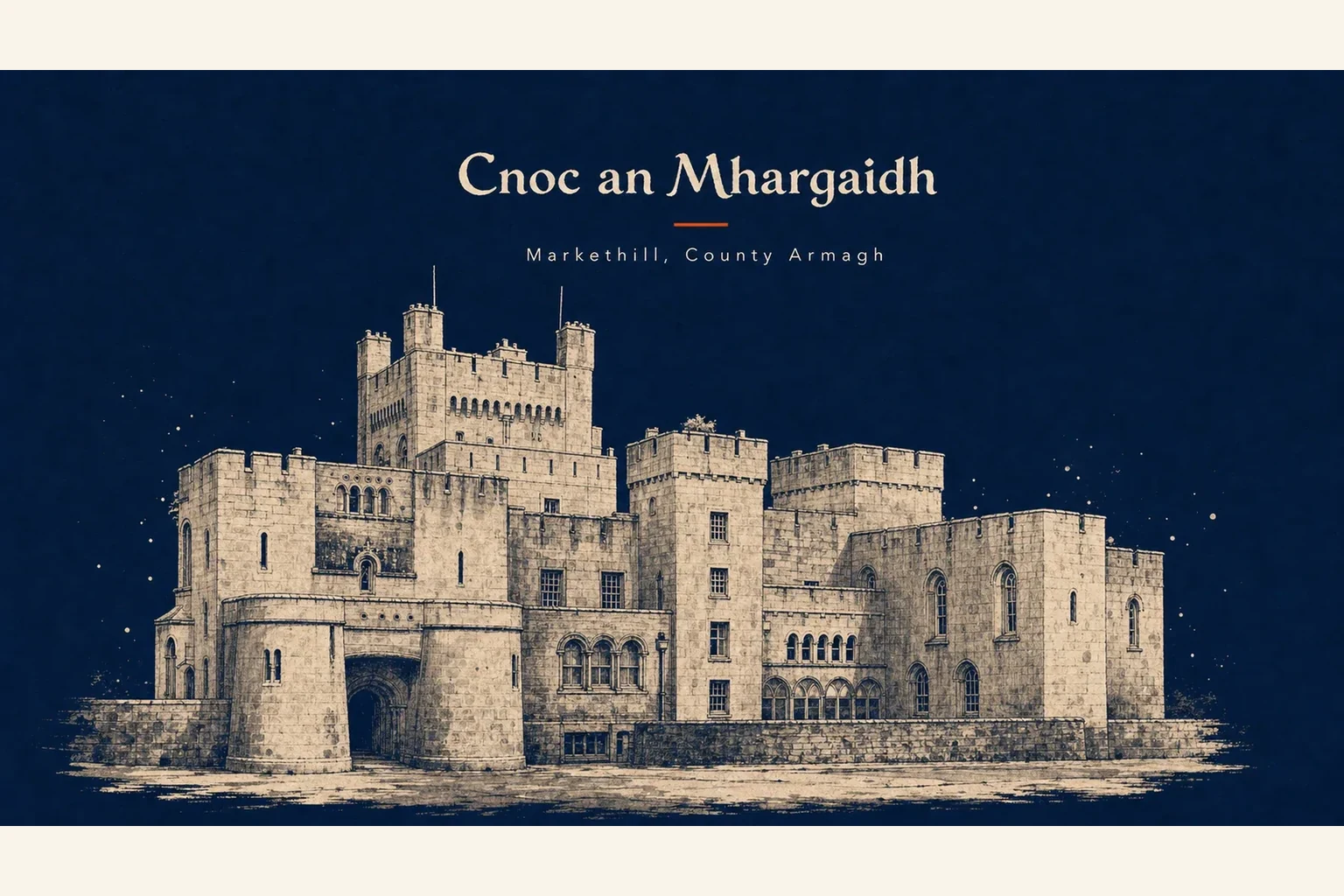
Cnoc an Mhargaidh · Co. Armagh
A Scottish-planted market town with a Norman-revival castle in the back garden.
Markethill is what happens when a Scottish family gets a thousand acres of Armagh in 1610 and decides to plant a town around the cattle market. The Achesons were the family. The market was the point. Four hundred years later the mart's still going three days a week, and the family - by then the Earls of Gosford - left the castle in 1921 and the apartments in it now belong to whoever could afford one.
The thing to understand about Markethill is that the village is small and the demesne behind it is enormous. Gosford Forest Park is 240 acres of drumlin, woodland, walled garden and red deer, and it's all open to the public for a few quid at the gate. The castle in the middle of it is one of the earliest Norman-revival buildings on this scale in Ireland - Thomas Hopper, 1819, granite from Mullaglass quarry up the road. It's been a country seat, a wartime prison camp, a derelict ruin and now a set of private flats. Game of Thrones used the outside as Riverrun. Most of the people walking past the front door don't know that and don't care.
Come for the forest, stay for a bowl of soup in the Village Inn, drive on. Or come on a Saturday in early August when the Vintage Vehicle Club takes over the park with tractors, threshing machines and lawnmower racing. That's the year's big day.