Ráth Tó · Co. Carlow
A crossroads on the Burren River, named for a rath that outlasted everything built after it.
Rathtoe is a small settlement in north Carlow, sitting on the Burren River roughly halfway between Carlow town and Tullow. The 2022 census counted 296 people. There is a church, a credit union in what used to be a school, and the crossroads that most people drive through without stopping. That is an honest description of the place, and it is not a criticism.
The name gives something away. Ráth Tó - the rath of whoever Tó was - means that someone of enough standing to build an earthwork homestead settled here before the Normans rearranged the county. The parish itself is Gilbertstown, named for the Norman incomer who replaced the earlier arrangement. The rath is older than the name on the map. There is still a ringfort within the townland, though what condition it is in depends on which field boundary you are looking at.
The other anchor is Fighting Cocks GAA, established in 1928 and based at Kilcoole, a couple of kilometres west. The club won the Carlow Senior Football Championship in 1938 and has accumulated six junior titles across the decades. For a settlement this size, that record is not nothing. The GAA ground is the kind of place where the car park fills on a Saturday afternoon and the parish assembles in a way it does nowhere else.
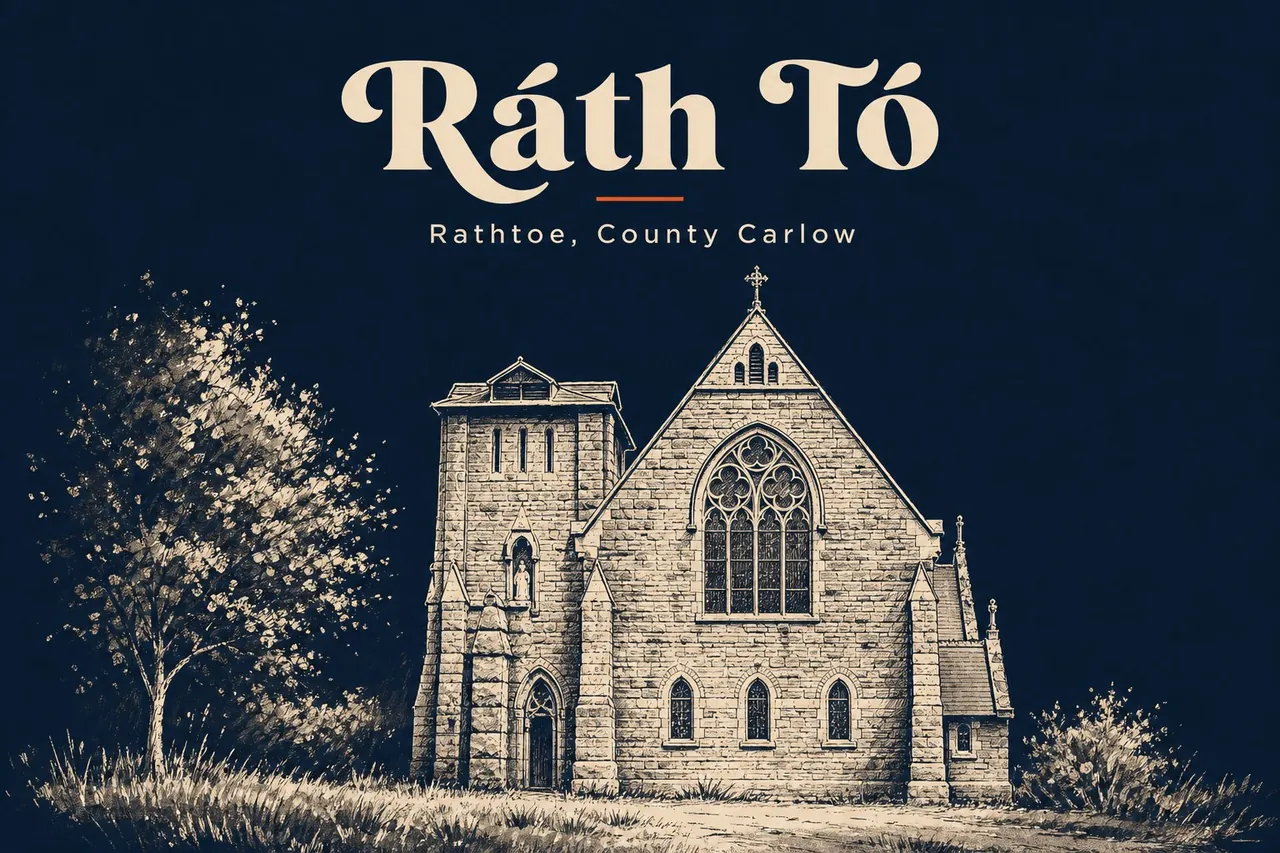
St Patrick's Church dates to around 1890 - Gothic Revival, cruciform plan, a truncated tower that did not quite make it to its intended height. It is on the Record of Protected Structures, which means the county council has noticed it is worth keeping. The credit union building beside it started life as a school in 1837. The same two buildings frame the crossroads now as they have for most of the village's legible history.