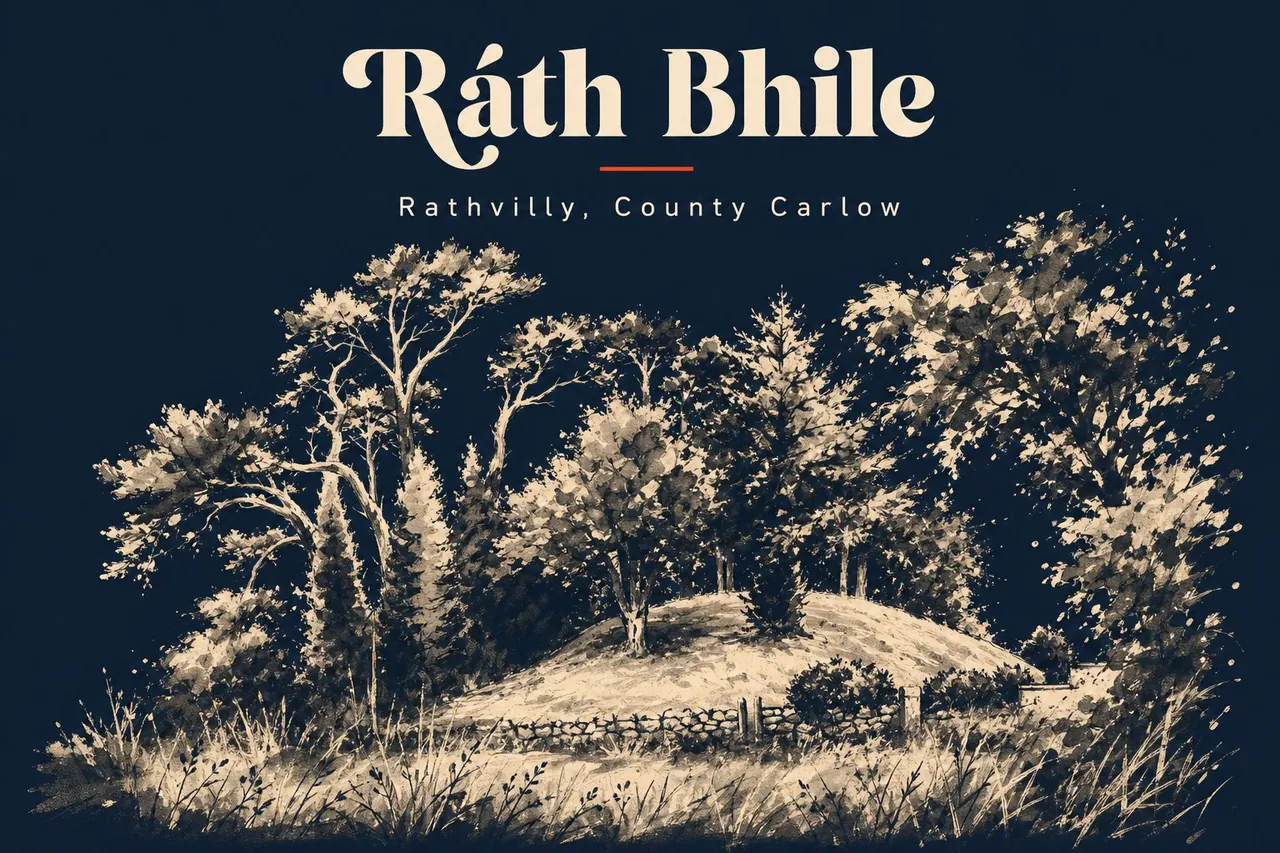
Ráth Bhile · Co. Carlow
Three Tidy Towns wins. One ancient rath. A river that doesn't hurry.
Rathvilly is a north Carlow village on the R727, ten kilometres from Tullow, a bit less from Baltinglass, close enough to the Wicklow border that the hills are always in view. The River Slaney runs through it. About 1,500 people live here. The village green is tidy in a way that is not accidental.
The Tidy Towns wins - 1961, 1963, 1968 - are the thing Rathvilly is known for, and they are worth knowing about properly. A national Tidy Towns win is not a hanging-basket competition. It is a whole-village audit of built environment, natural heritage, waste management, community effort and the quality of welcome. To win it three times in eight years is a statement about how a community is organised. The flower culture that came out of it is still here - the village green, the planters on the main street, the maintained hedges around the heritage sites. You can see who still takes it seriously.
Before any of that, the name says what this place was: Ráth Bhile - the ringfort of the sacred tree. The bile was a tree of special significance, marking a royal or ritual site. This was the seat of Crimthann mac Énnai, King of Leinster in the 5th century, the man St Patrick is said to have baptised at the well that still carries the saint's name in the Patrickswell townland east of the village. The Norman motte on Knockroe, a kilometre out the Hacketstown road, was built over the old royal site and is a National Monument. The layers here go deep.