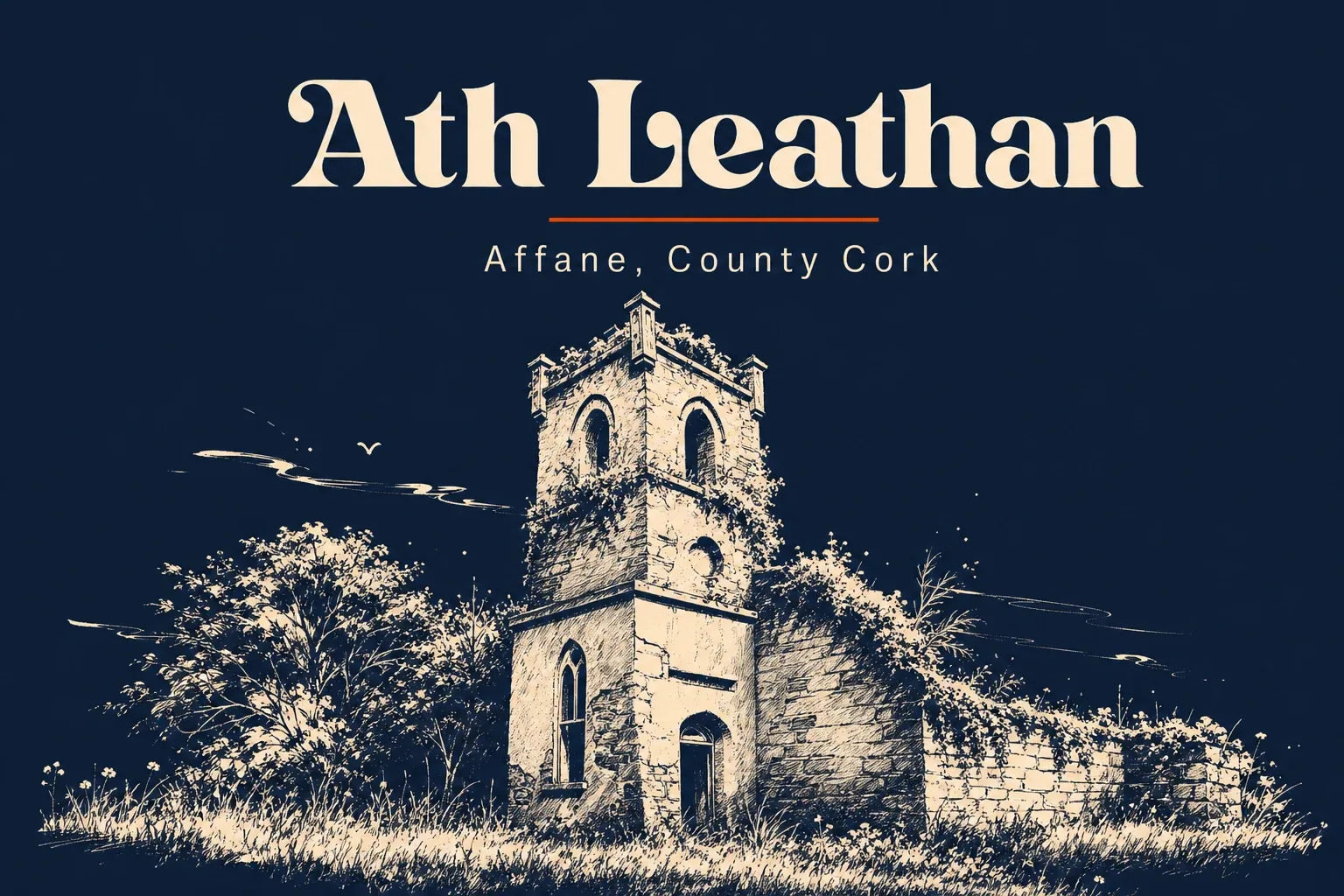
February 1565
The Battle of Affane
The Earl of Desmond met the Earl of Ormond on the banks of the Blackwater with about 400 men each — the two greatest Munster dynasties fighting for supremacy. It was brutal, quick, and decisive. Desmond was wounded and captured. About 400 men died. For the Tudor administration in Dublin, it was the justification they needed: the Irish nobility couldn't govern themselves. They had to be conquered. What followed was a century of conflict that ended with the entire Irish landed class stripped of power. One winter morning, one river, one battle — and the old Ireland was finished.
A line on the map, then and now
The Blackwater boundary
The Blackwater marks the border between Cork and Waterford now — just as it did in 1565. The river flows north from Affane and out towards the Pale, the English-held lands that would eventually become the English Ascendancy. The battle was partly about control of the river itself, the land around it, and what it meant to be on one side or the other. Stand on the bank now and the divide is still there — quiet, green, absolute.
A later arrival
Sir Walter Raleigh
Raleigh is associated with the Blackwater valley — he was granted lands at Youghal, downstream from here. Whether he ever stood at Affane itself is unclear, but the valley was his territory, and Affane was part of the landscape he surveyed, claimed, and — eventually — lost. The Blackwater valley was where English ambition met Irish resistance. Affane was where it turned into conquest.