County Cork Ireland · Co. Cork · Ballincollig Save · Share
POSTED FROM
BALLINCOLLIG
CO. CORK · IE

Ballincollig
Baile Collaigh

The Cork
STOP 06 / 06
Baile Collaigh · Co. Cork

Cork"s western edge. Suburb with a gunpowder past. The mills are the story.

Ballincollig is Cork city"s largest suburb — 23,000 people, basically continuous from the city boundary 10km west. It"s got all the things suburbs have: retail parks, housing estates, schools, coffee chains, the works. That"s not the story. Don"t come for the suburb.

The story is the Royal Gunpowder Mills. For 109 years — 1794 to 1903 — they made gunpowder for the British military. Peak employment was over 500 workers. Magazines, mills, worker housing, kilns — all of it industrial, all of it skilled, all of it dangerous. The site shut down in 1903 when explosives manufacturing moved elsewhere. The ruins stayed. Now it"s a Regional Park: 220 acres, free entry, about 4km of walks through what"s left. Walk the old mill race. Stand in the powder houses. See where 500 people clocked in for a shift that could kill them.

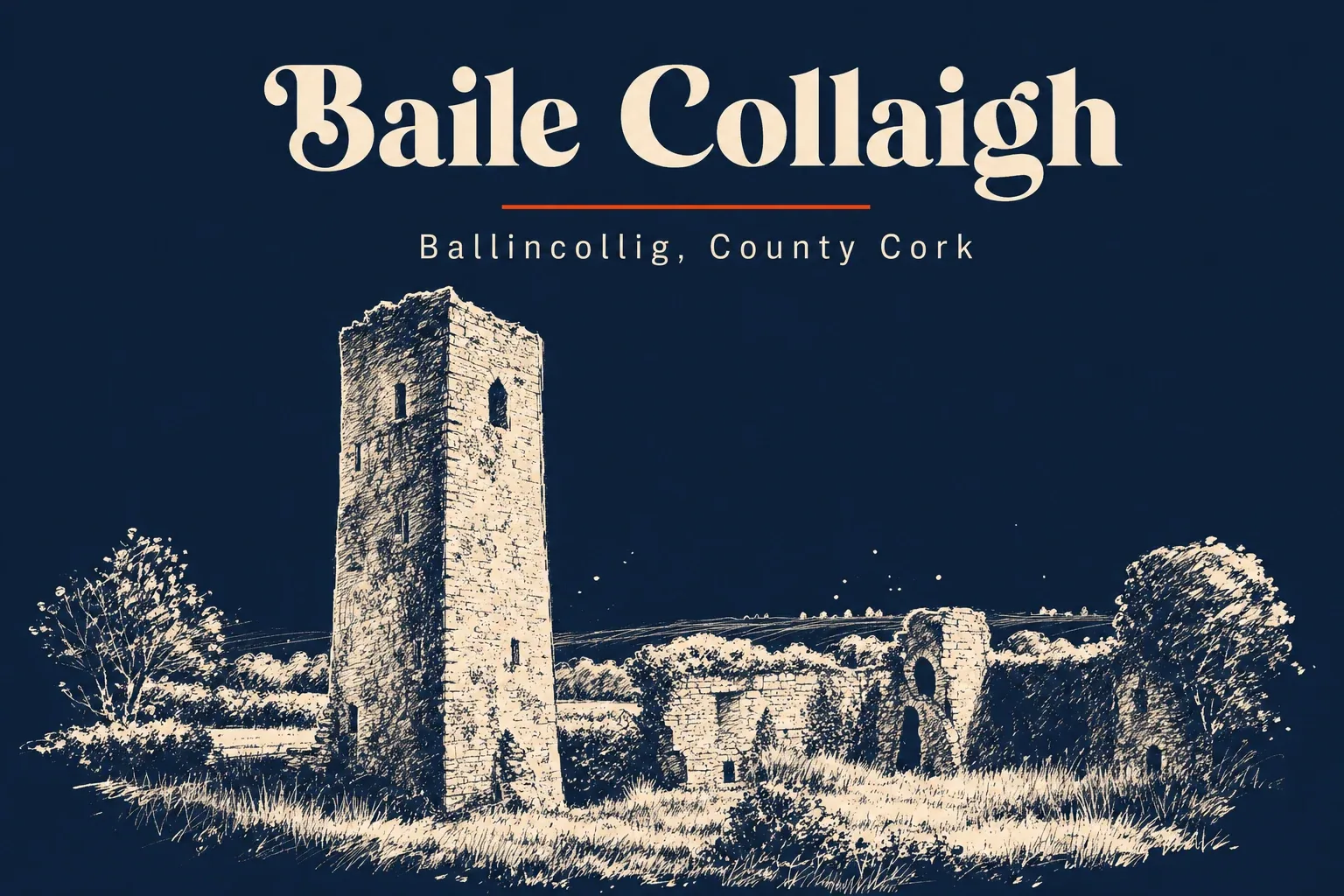
There"s a castle too — Ballincollig Castle, 14th-15th century tower house on the edge of the old village core. Medieval stone. It"s fine. It"s not the story. The mills are the story.

Come for the park and the mills. Come because you"re driving past Cork and have an hour. Don"t come for the town itself. It"s honest — a working suburb — but it"s not why you"re here.

Population
~23,000
Founded
Medieval (castle), Industrial era (mills: 1794)
Coords
51.8833° N, 8.5833° W
01 / 06

At a glance.

Three things every local will eventually mention. Read these and you've already understood more than most day-trippers do.

02 / 06

Stories & lore.

The reason to come back. The things every local will eventually tell you about, usually after the second pint.

Industrial Ireland, 1794–1903

The gunpowder mills

The Royal Gunpowder Mills opened in 1794 to supply the British military. At peak production they employed over 500 workers and were one of Ireland"s most significant industrial sites. The work was dangerous — explosives, water-powered machinery, constant pressure. In 1903 the mills closed when gunpowder manufacture moved to safer, more remote locations. The site stood empty for decades. Now it"s a Regional Park. The structures remain: ruined mill buildings, powder magazines, worker cottages, the old dam and mill race. You can walk through a century of industrial history.

Ballincollig Castle & the core

The old village

Before the mills, there was a medieval settlement around Ballincollig Castle — a 14th-15th century tower house that still stands on the edge of the old village. The castle is small, solid, purposeful. The village core around it has retained some character — narrow lanes, old stone — but it"s been swallowed by modern suburbs. The castle and the mills together tell the story: medieval Ireland became industrial Ireland. Then industrial Ireland moved on.

Western edge, full services

Cork"s suburb

Ballincollig is Cork city"s de facto western limit. It"s functionally part of Cork — the same electric network, the same water system, effectively continuous urban sprawl. But administratively and historically it"s its own place. That matters less than the fact that you can walk into Cork city in about 25 minutes from the old village core, or drive in 15–20 depending on traffic. It"s where you stay if Cork city is full or expensive.

03 / 06

Things to do outside.

Wear waterproofs. Bring a sandwich. Tell someone where you're going if it's the mountain.

Ballincollig Regional Park — the full circuit The main walk through the gunpowder mills site. Loops along the River Lee, passes the old mills, powder magazines, worker housing ruins, the dam and millrace. Well-marked paths. Free. The structure is everywhere — you"re never far from an old building or the evidence of water powering machinery. Go slowly. There"s a lot to see.
4 kmdistance
1 hour to 90 minutes (depending on stops)time
The River Lee walk (western section) The park sits on the River Lee. You can walk the river path west toward Inniscarra, or east toward Cork city. Water, trees, the park combining with the river system. Less industrial, more green.
Variable — 2 km to 6 km depending on directiondistance
45 min to 2 hourstime
Ballincollig Castle circuit Walk the old village core around the castle. Short. Gives you the pre-industrial sense of the place. Most visitors combine this with the mills walk.
1.5 kmdistance
30–40 mintime
04 / 06

When to go.

There is no bad time. There are different times.

Spring
Mar–May

Quiet, the park is green, the river is full. No crowds at the mills.

◉ Go
Summer
Jun–Aug

Busy on weekends. Weekdays are fine. The long evenings are useful.

◉ Go
Autumn
Sep–Oct

Perfect. The light changes how the ruins read. The park is less busy than summer.

◉ Go
Winter
Nov–Feb

Fine anytime. It"s outdoors. Bring a jacket. The structures are more dramatic in grey light.

◉ Go
05 / 06

What to skip.

Honestly? Don't bother.

If a local was sitting beside you, this is the bit where they'd lean in.

×
Ballincollig as a destination on its own

You"re here for the mills and the park. The rest — the suburb itself — is perfectly fine, just not remarkable. Other places have more to offer.

×
The retail parks

It"s Cork suburbs. You can do this anywhere. The mills are unique.

×
Expecting pubs and restaurants as the draw

It"s Cork"s edge. For food and drink, Cork city is 10km away and worth the trip.

+

Getting there.

By car

Cork city to Ballincollig is 10km west on the N22 (Western Road). 15–20 minutes depending on traffic. Direct and straightforward.

By bus

Cork city buses run west to Ballincollig. Local service. Check Cork Bus or local schedules.

By train

No direct rail. Nearest is Cork city (Kent Station). Then bus or car west.

By air

Cork Airport (ORK) is 8km south. Shannon is 90km north. Dublin is 300km.