County Cork Ireland · Co. Cork · Ballingeary Save · Share
POSTED FROM
BALLINGEARY
CO. CORK · IE

Ballingeary
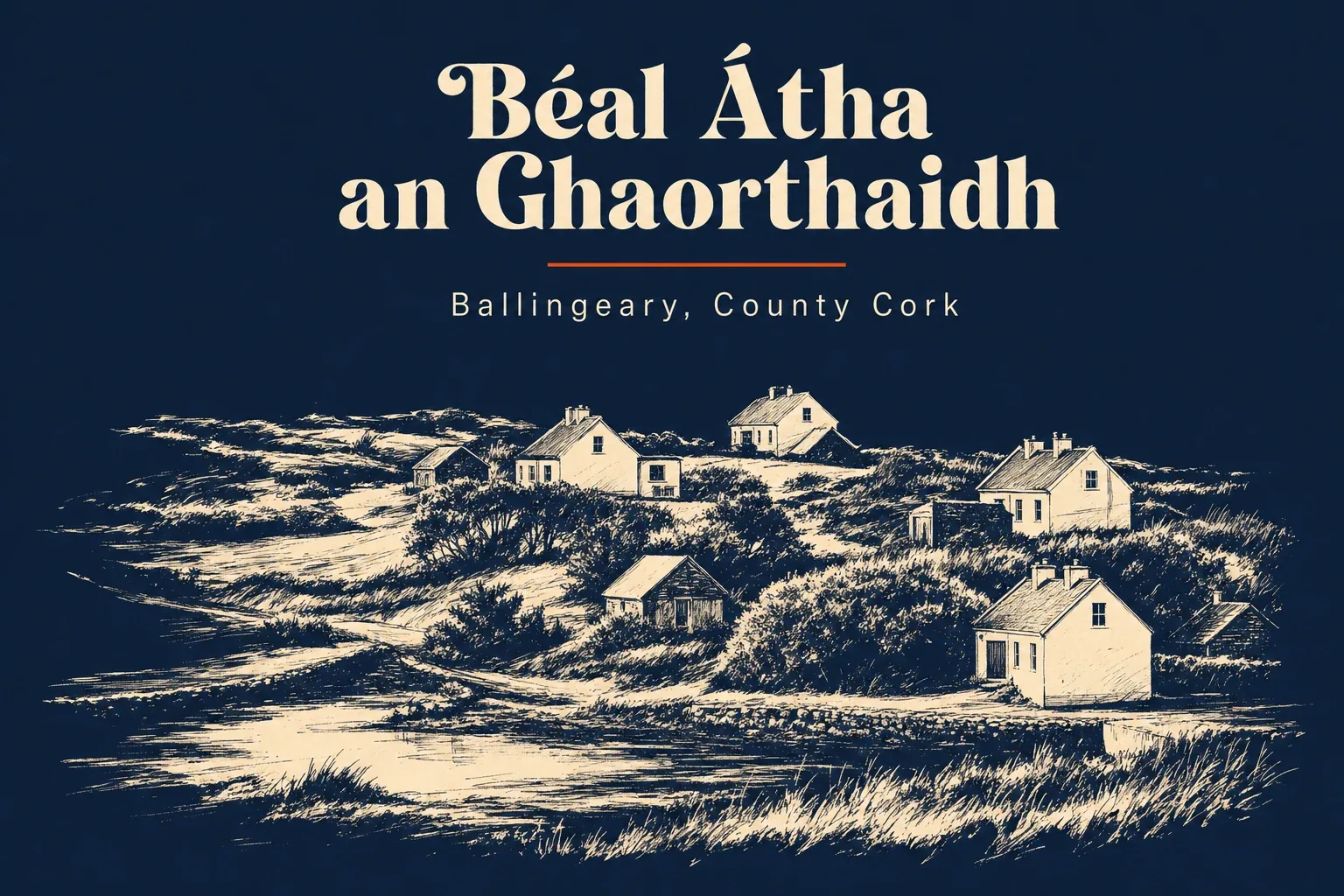
Béal Átha an Ghaorthaidh

The West Cork
STOP 06 / 06
Béal Átha an Ghaorthaidh · Co. Cork

Quiet village where Irish is the working language — and it means it.

Ballingeary's not a stopping point for coaches. It's a place where you go because you're already here — or because you speak Irish and you're going to Coláiste na Mumhan. The village sits in a valley under the Shehy Mountains, and it was built around language the way other villages were built around trade.

Coláiste na Mumhan — the Munster College — was founded in 1904 and it's older than the Irish state. For over a century, it's been the place you sent young Irish teachers to learn how to teach through Irish. Generations of teachers — people who'd go on to teach in classrooms across the country — spent summers here, studying in a language that was meant to be dead. The college is still going. That's the point of Ballingeary.

Seven kilometres south, Gougane Barra sits in a lake under tall cliffs — St Finbarr's hermitage, the island oratory, the lake cold and black as a mirror. You can't miss it if you drive the Pass of Keimaneigh — the dramatic narrow pass between here and Bantry, all rocky gorge and tight turns. The road reminds you why old monks picked lonely places.
Population
~400
Coords
51.8181° N, 9.2269° W
01 / 06

At a glance.

Three things every local will eventually mention. Read these and you've already understood more than most day-trippers do.

02 / 06

Stories & lore.

The reason to come back. The things every local will eventually tell you about, usually after the second pint.

The college that saved Irish

Coláiste na Mumhan

Founded 1904. When Irish was being taught, not spoken, the college brought young teachers here for summers — immersion in a language that wasn't supposed to survive. Generations of Irish teachers trained through Irish. The college is still here. It still runs. That's not nostalgia — it's the reason Ballingeary exists.

Where Irish is still the first language

The Múscraí Gaeltacht

Ballingeary sits in one of the last real Gaeltacht areas — places where Irish is what people actually use. Not on road signs for tourists. Not in the pub for show. At the shop counter, at the petrol station, in the street. Listen and you'll hear more Irish than English. That's what sets this place apart.

The lake, the island, the hermitage

Gougane Barra

St Finbarr founded a hermitage on the island in the 6th century. The current oratory is 19th-century stone. The lake is set in a rocky valley with mountains on three sides — genuinely beautiful, genuinely remote. Forest Park surrounds it now. It's seven kilometres south.

Céim an Fhia — the narrow way

The Pass of Keimaneigh

The mountain pass between Ballingeary and Bantry — a narrow road through a rocky gorge. It's tight, it's scenic, it's the kind of pass that makes you understand why people built things in lonely places. Drive it or walk it. Either way, you'll see why old monks picked this valley.

03 / 06

Things to do outside.

Wear waterproofs. Bring a sandwich. Tell someone where you're going if it's the mountain.

Gougane Barra The island, the oratory, the lake, the mountains. Drive to the car park or walk from Ballingeary — you'll see the valley change as you climb. The water is cold. The setting is cold. Go on a clear day.
14 km round trip (or drive 7km + walk)distance
4–5 hours walking, 45min drive + 1hr walktime
The Pass of Keimaneigh Tight mountain road through a rocky gorge. Walk it if the weather's clear — you'll see stone walls, old tracks, the kind of landscape that made monks want to hide. Drive it if the weather won't hold.
Walk the pass both ways or drive through itdistance
1–2 hours walking, 20min drivetime
Around the village Quiet lanes under the Shehy Mountains. You'll see the college, the valley, the kind of ordinary beauty that makes you understand why people stayed here.
5–8 kmdistance
1.5–2 hourstime
04 / 06

When to go.

There is no bad time. There are different times.

Spring
Mar–May

Quiet, lambs in the fields, the valley green and alive. The Gaeltacht is itself in spring.

◉ Go
Summer
Jun–Aug

Coláiste na Mumhan is busy with students. The college hosts summer schools — the place fills. Good time to feel the educational heartbeat.

◐ Mind yourself
Autumn
Sep–Oct

Clear skies, the Shehy Mountains sharp. Gougane Barra is striking in autumn light.

◉ Go
Winter
Nov–Feb

Cold, quiet, the pass closes sometimes. Beautiful if you're prepared for it. Most aren't.

◐ Mind yourself
05 / 06

What to skip.

Honestly? Don't bother.

If a local was sitting beside you, this is the bit where they'd lean in.

×
Expecting a big town

It's a village of 400 people. The point isn't the amenities. The point is the language and the college.

×
Coming in summer and complaining it's busy

Summer schools fill the college. That's when it's most itself. Go in shoulder season if you want quiet.

×
Driving Gougane Barra without stopping

The whole thing is a postcard waiting to happen. Park. Walk. Sit by the water. That's the time you came for.

+

Getting there.

By car

Cork city to Ballingeary is 1h 15m on the R585 and local roads. Bantry is 40min away. The Pass of Keimaneigh is the scenic way in from the west.

By bus

Limited local bus service. You'll need a car or to arrive by bike.

By train

Nearest station is Cork City. Then a rental car or a very long bike ride.

By air

Cork Airport is 1h 15m away. Shannon is 2 hours.