Béal an Dá Chab · Co. Cork
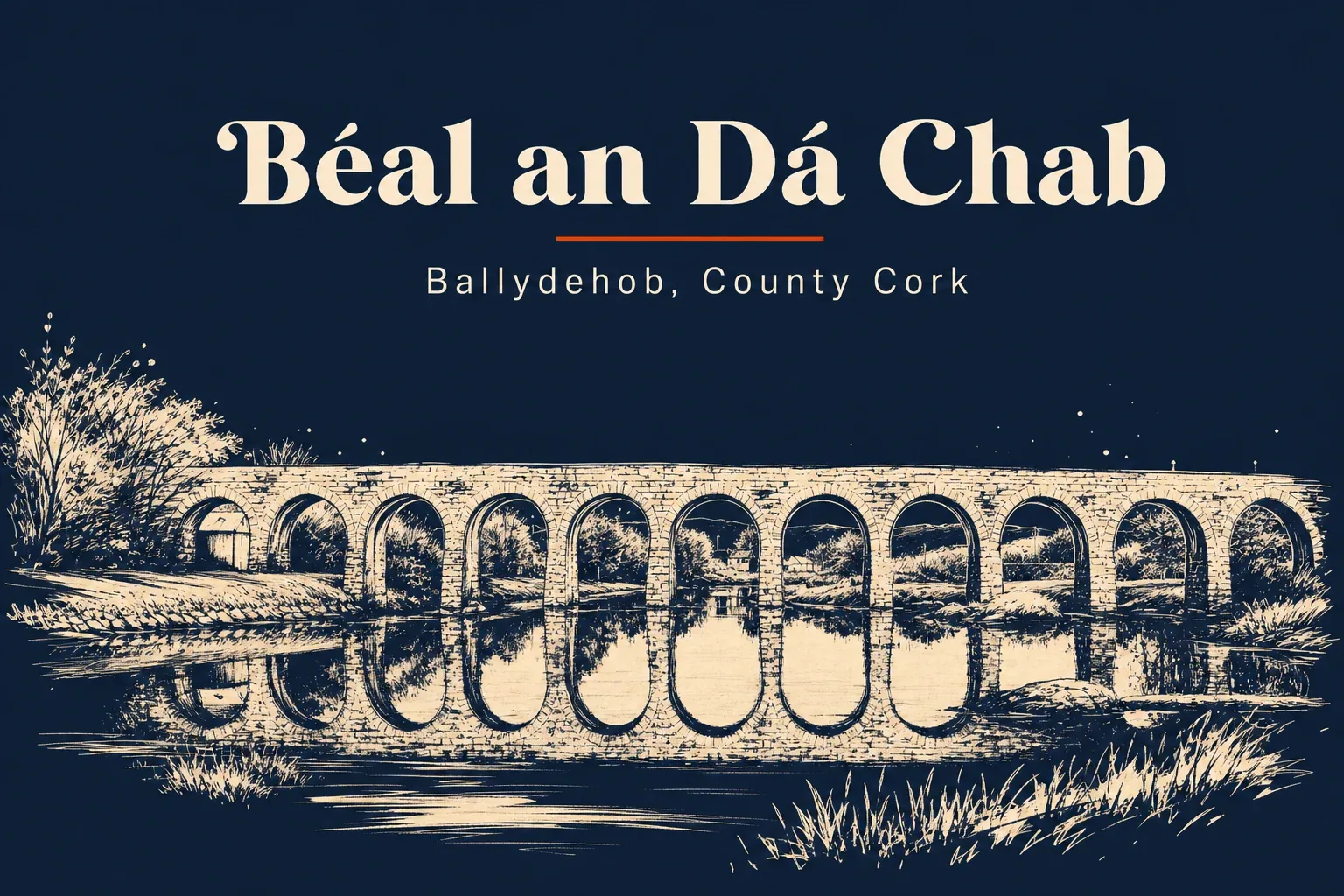
A twelve-arch railway viaduct spanning Roaringwater Bay. And the artists and back-to-the-landers who arrived in the 1970s and never left.
Ballydehob is a small village on the Mizen Peninsula where a railway line once ran and now a viaduct stands over the water like an artifact from an optimistic century. The village is three hundred people, four pubs, and a rooted arts community that came by accident and choice.
The story is the 1970s and onward - when Europe's back-to-the-landers found West Cork. Artists, musicians, people with a skill and nowhere particular to be. They bought land for nothing, fixed old houses, started studios and galleries and small food producers. The village that had been slowly dying got busy again, but differently. Not by tourism or external money, but by people choosing to be here.
This created friction. The old village and the new village had different ideas about noise and what was welcome. Some of that tension never fully settled. But it held. The artists stayed. The pubs stayed. Mount Gabriel looks down from the south with its television masts. Roaringwater Bay is wide and honest to the west. The viaduct is still there, carrying nothing but light.
What you need to know: Ballydehob is not a destination for food or sleep or dramatic activity. It is a place where the alternative scene became real and stayed rooted. The pubs have music. The community has depth. If you come on a Friday night to a session you will hear it - not performed, but lived. The viaduct is the reason to walk out of the village. Everything else is a bonus.