Beanntraí · Co. Cork
A deepwater harbour where a French invasion fleet couldn't land, a stately home overlooking Italy's gardens, and mussels farmed in the bay since the 1980s.
Bantry is a working harbour town that hasn't forgotten it was nearly invaded. The bay is the thing - seventeen kilometres of deep water, the kind of harbour that can hold a fleet. In December 1796, it nearly held the French. Wolfe Tone was on one of those ships. The wind blew them back out to sea, the landing never happened, and the town has been quietly aware of the near-miss ever since. The exhibition centre is in the old stable block of Bantry House, up on the hill overlooking the water.
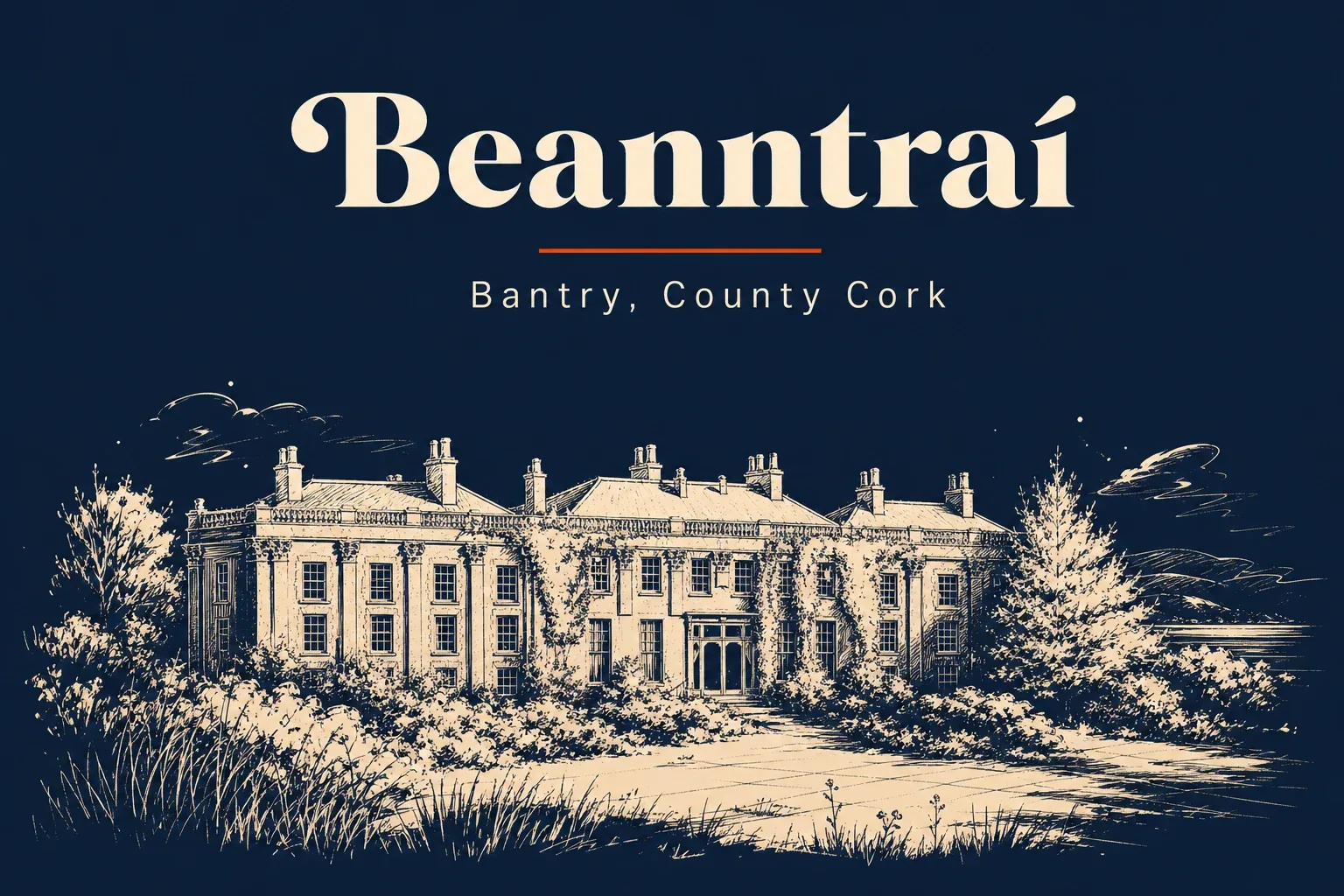
Bantry House is the real draw. The Whites built it in the 1720s for a family that had money and time. The rooms are impossible - plasterwork, paintings, furniture that suggests continental travel. The gardens are more impossible - Italian, planted as if Cork wasn't on the Atlantic coast. You can stay in the house if you book ahead; there's accommodation in the estate too. The tearoom does a decent lunch and the view from the terrace doesn't change.
The town itself is small - a square, two main streets, a Friday market that matters. The bay is farmed for mussels now, commercially, since the 1980s. You can buy them fresh from the shops or order them in the pubs. The real pubs are real - The Anchor Bar and Crowley's are the kind of place that don't change.
What you need to know: it's the start of the Wild Atlantic Way. Most people drive through. A second night is better spent walking the bay, looking at the house, and asking someone about 1796. The mussels are worth staying for.