The 1910s, Italian formality in Cork
Garnish Island: Annan Bryce and Harold Peto create a garden from rock
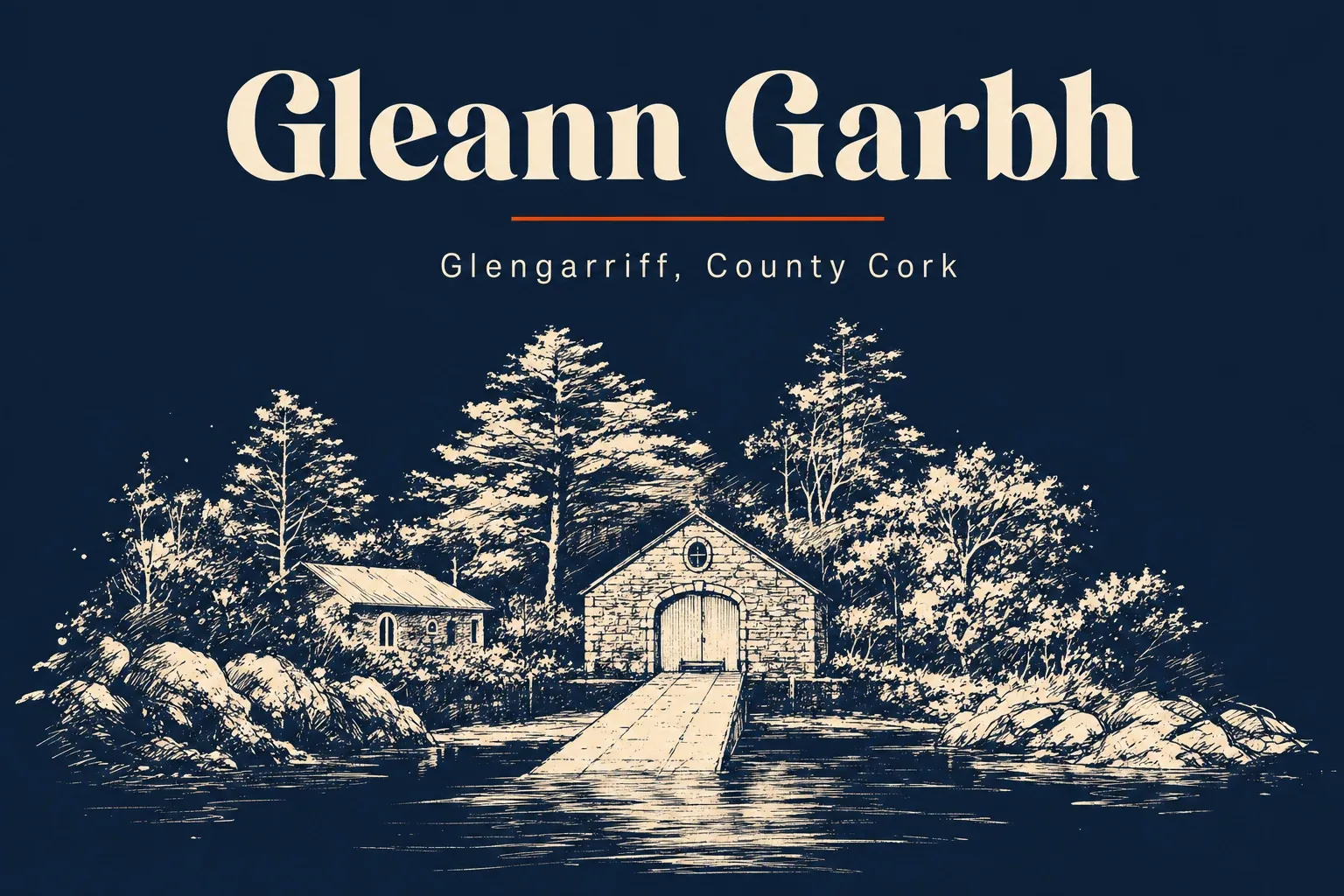
Annan Bryce was a Belfast businessman with money and vision. In 1910 he bought a bare, rocky island in Glengarriff Harbour. He hired Harold Peto, one of the foremost gardeners of the age, to transform it. Peto designed formal Italian gardens — stone terraces, pergolas, a Grecian temple — that would catch sun and frame views of the mountains. The planting was audacious. Camellias, azaleas, Mediterranean heathers, Japanese maples — tender species from milder climates. The Gulf Stream microclimate made it work. By the 1920s the gardens were complete and visitors were arriving by boat. The island changed hands after Bryce's death, was briefly military property in the 1940s, and is now owned by the state and managed as a garden monument. The crossing is ten minutes by boat if the weather permits.
GBS on holiday, 1923
George Bernard Shaw and Saint Joan in Glengarriff
George Bernard Shaw came to Glengarriff in the summer of 1923 to write Saint Joan, his play about Joan of Arc. He stayed at the Eccles Hotel and worked in the grounds — or so the local story goes. He was 67, established as a major writer, and Ireland was still a curiosity to London playwrights. The connection is thin — a plaque in the hotel, a name in the guest book — but it's enough to know Shaw thought the place worth the time. Saint Joan was a success when it premiered in December 1924. Whether the Glengarriff weeks actually contributed to the writing is lost to history. The fact remains: a Nobel Prize winner once worked here.
Warm water from the Caribbean, arriving at the Beara
The Gulf Stream microclimate — why Glengarriff is warmer than it should be
The North Atlantic Drift (an extension of the Gulf Stream) carries warm water from the Caribbean across the Atlantic, passes along the Irish west coast, and has a pronounced effect on local climate in southwest Cork. Glengarriff and the surrounding area experience winter minimums that stay above freezing most years. Growth seasons extend from April through November — unusual for 52 degrees north latitude. Mediterranean and subtropical plants survive outdoors here when they wouldn't in gardens just fifty kilometres inland. The Garnish Island gardens are the proof — camellias flower reliably in winter, azaleas in spring, tender shrubs persist year after year. The warmth isn't total (hard frost still arrives), but it's enough to grow plants that appear misplaced on the Irish coast. Local gardeners know this and plan accordingly.