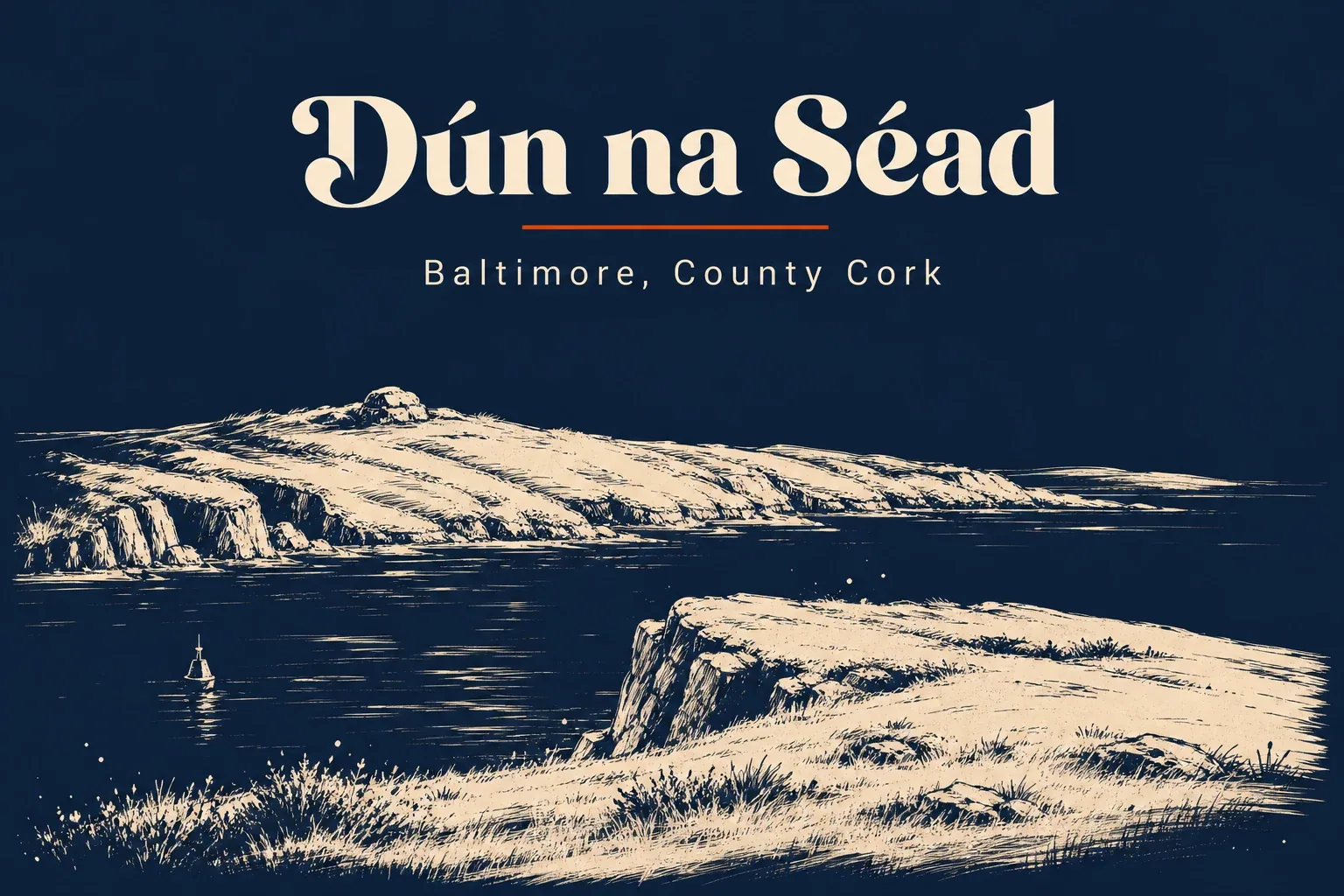
Dún na Séad · Co. Cork
In 1631, Algerian corsairs landed, burned the village, and took 107 souls into slavery - one of history's most dramatic raids.
Baltimore is a fishing village of 300 people at the tip of the Mizen Peninsula - the last corner of West Cork before the Atlantic opens up. The Sack of 1631 is the hinge of its story: a June dawn, a raid from North Africa, 107 captives taken into slavery. Thomas Crooke watched from the water; he'd escaped because he was out in the boat. The village rebuilt slower than it might have. The Algiers Inn - a pub that still stands - was named for the raiders. It's the kind of memory that doesn't fade.
The village today is a working yachting and fishing base. The ferries to Sherkin Island and Cape Clear still leave from the same slip - ten minutes out, another world. The Baltimore Beacon - the white pillar on the headland - marks the harbour mouth the way it has since you could remember. The Fastnet Rock lighthouse sits seventeen miles out on the horizon on clear days, and the town watches it the way sailors do. Bushe's Bar is the kind of place that's been there so long it doesn't feel like it could be anywhere else.
What most visitors miss is that Baltimore is two stories at once: the raid that made it famous and the quiet fishing life that outlasted it. The islands - Sherkin with its abbey ruins, Cape Clear with its language - give you reason to stay beyond an afternoon. The pubs are real. The food is what comes off the boats.