County Cork Ireland · Co. Cork · Skibbereen Save · Share
POSTED FROM
SKIBBEREEN
CO. CORK · IE

Skibbereen
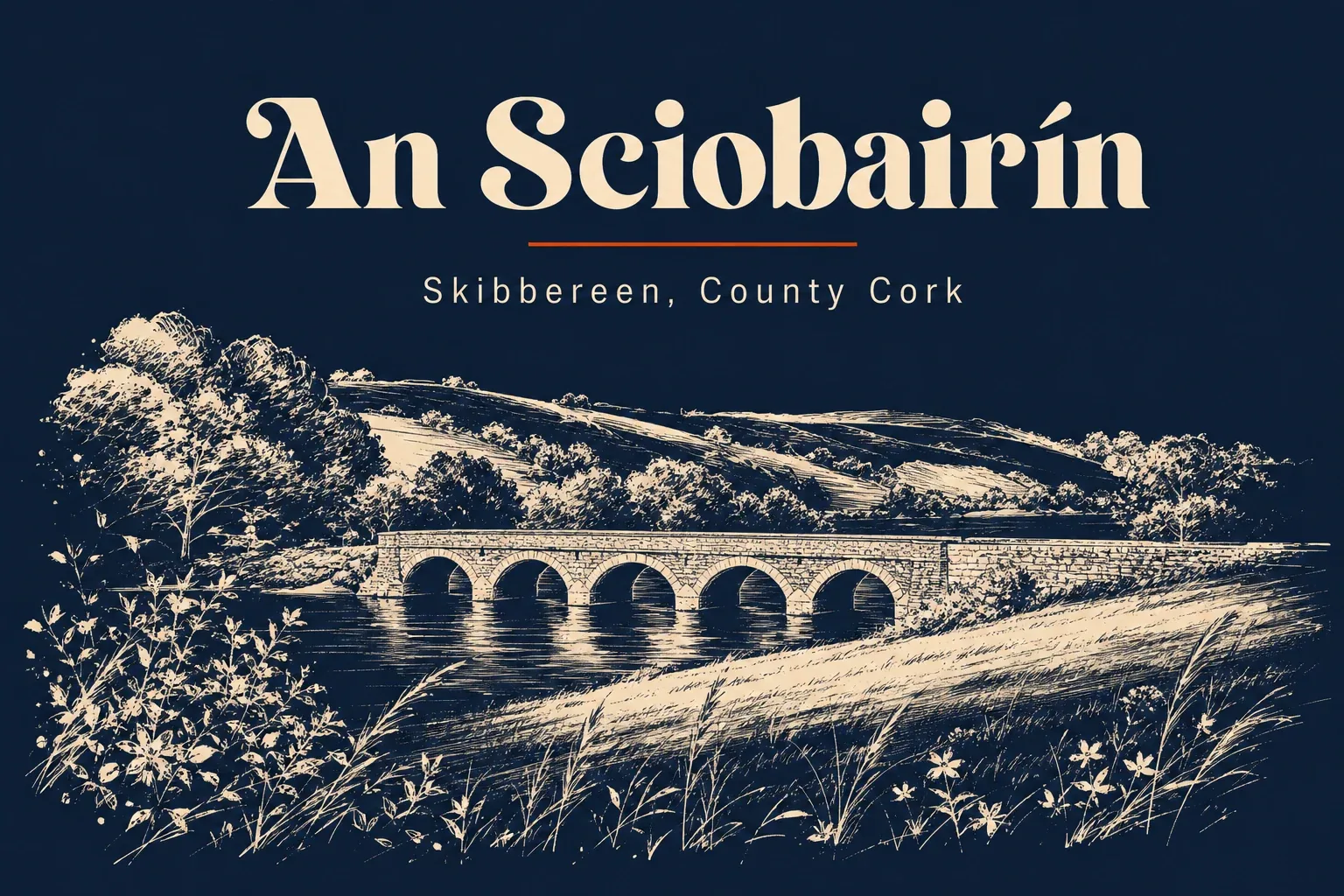
An Sciobairín

The West Cork
West Cork access point
An Sciobairín · Co. Cork

The Eagle's editor told the Tsar we'd keep an eye on him — after 10,000 died here in the Famine.

Skibbereen was a market town that became a byword for Famine death. Between 1847 and 1852, the workhouse and the burial pits at Abbeystrewery took 10,000 people from a catchment of 100,000. The Cork Examiner — later the Irish Examiner — was born partly out of the press need to report what was happening here. The Skibbereen Heritage Centre now sits at the edge of those burial grounds and builds its exhibition around the scale of the loss. It's not a museum people skip lightly.

The town's name went international because of an 1898 editorial in the Skibbereen Eagle — a provincial weekly that announced to Tsar Nicholas I that we'd keep our eye on him. The phrase stuck as a type for absurd provincial overreach, and the Eagle's editor, Frederick Potter, never intended to be funny. The paper's still running. The bar at The Eldon Hotel — where the Eagle was edited — is where locals still gather. It's a small place that knows what happened.

West Cork settles in at Skibbereen. Baltimore and Castletownshend are nearby — the offshore islands and the small harbours start here. The Ilen River runs through, past the Model Railway Village and into the wide, shallow estuary. Lough Hyne — the only hyper-saline lake in the Northern Hemisphere and Ireland's first marine reserve — is half an hour's walk or a short drive. The Arts Festival runs in August. The pubs are real. The place doesn't put on an accent.
Population
~2,700
Pubs
12and counting
Walk score
Main street walked end-to-end in ten minutes
Founded
1630 (market charter)
Coords
51.5506° N, 9.2747° W
01 / 08

At a glance.

Three things every local will eventually mention. Read these and you've already understood more than most day-trippers do.

02 / 08

The pubs.

None of these are themed Irish pubs, because they don't need to be. A few that earn the trip:

The Eldon Hotel bar

The Eagle was edited here
Hotel bar & historical

On Main Street, where the Skibbereen Eagle was written and sent out. The bar is steady, dark-wood, the kind of place that has been there. Not self-conscious about its history.

Rolf's Country House

West Cork casual
Bar with food

A short drive out toward Baltimore, real food, real pints. Quieter than the town bars, the kind of place you end up because someone told you about it.

Liss Ard Estate bar

Country house feel
Estate bar & restaurant

A working estate with a bar and a lake walk. Ten minutes outside town. Food and wine-focused. The grounds are worth an hour on their own.

Mary Ann's Bar

Locals first
Town bar

On Main Street, the kind of bar where the same people have sat in the same seats for years. Quiet daytimes, the crack starts after work.

The Jolly Sailor

Working bar
Pub on Bridge Street

Not the prettiest but real — no music policy, no phone service reliably, and the Guinness is poured right.

03 / 08

Where to eat.

PlaceTypeLocal note
Liss Ard Estate Estate restaurant €€ The restaurant on the working estate. European food, estate vegetables, a lake walk before or after. It feels like you've been invited to dinner at a country house.
Mary Ann's Tea Room Café & light lunch Part of Mary Ann's Bar, upstairs. Soup and sandwiches at lunch, tea and scones in the afternoon. The Apple Tart is serious — ask if they have it.
The Skibbereen Bakehouse Bakery & takeaway On Main Street. Proper bread, real croissants, the kind of place that bakes early. Takeaway sandwiches built on that bread. Opens at 7am.
Café Bríc Café on Main Street Coffee, pastries, a room that gets the light. They run a books section at the back — the local papers, some Penguin classics, Irish history. The coffee is serious.
The Eldon Hotel restaurant Hotel dining €€ The formal room above the bar. Irish food, the service is old-school proper. Dinner Friday and Saturday; book ahead.
04 / 08

Stories & lore.

The reason to come back. The things every local will eventually tell you about, usually after the second pint.

Ten thousand, 1847–52

The Famine pits at Abbeystrewery

The Famine arrived in Skibbereen in 1847. By 1852, 10,000 bodies had been buried in mass graves at Abbeystrewery graveyard — from a catchment population of 100,000. The burials were so fast that graves were reused before the ground settled. The speed was industrial. The Heritage Centre sits at the edge of those pits and builds its exhibition around what that number means — the speed of death, the lack of individual graves, the absence of record. The Cork Examiner sent reporters because they couldn't look away.

1898 editorial

The Skibbereen Eagle's eye on the Tsar

Frederick Potter edited the Skibbereen Eagle from The Eldon Hotel bar on Main Street. In 1898 he wrote an editorial warning Tsar Nicholas I of Russia — a man who had never heard of Skibbereen — that we would keep our eye on him. The phrase was picked up by London papers as a type for provincial overreach, and the Tsar was amused. But it stuck. The Eagle is still published. Potter meant to warn, not to be funny. The bar where he wrote it is still in town.

Emigration 1840s–1900s

The American diaspora traces back here

Tens of thousands emigrated from Skibbereen and the surrounding parishes to Boston, Philadelphia, New York. The exodus was fastest in the Famine years but didn't stop — younger sons, older daughters, entire families left by coffin ship. The Irish-American networks built on Skibbereen emigrants became political and financial capital. Ellis Island records show waves leaving from this one small Cork town. Baltimore, Massachusetts — settled largely by Cork Irish — is named to maintain the memory of Baltimore, Cork.

1999, still running

The West Cork Model Railway Village

On the edge of town, a working model railway with miniature villages in 1:10 scale. Built in 1999 as a tourist attraction, it's become something steadier — the detail is obsessive, the handwork obvious, the kind of thing you spend two hours looking at when you meant to spend thirty minutes. On winter afternoons you're often the only person there.

05 / 08

Things to do outside.

Wear waterproofs. Bring a sandwich. Tell someone where you're going if it's the mountain.

Lough Hyne loop From Skibbereen, south toward Baltimore. Lough Hyne is a hyper-saline lake — the only one in the Northern Hemisphere. It's enclosed by mountains on three sides, has its own ecosystem, and is Ireland's first marine nature reserve. The loop path runs around it. The water is unusually clear.
6 kmdistance
1.5 hourstime
Ilen River walk From the bridge near the Model Railway Village, upstream along the river. Flat, tree-lined, the water wide and shallow. Comes out at a road — turn back from there or road-walk back to town.
4 km returndistance
1 hourtime
Main Street to the Heritage Centre A flat walk through the town center and down to Abbeystrewery. The Heritage Centre is built at the edge of the burial grounds. The path is clear; what you find at the end is not.
1 kmdistance
15 mintime
06 / 08

When to go.

There is no bad time. There are different times.

Spring
Mar–May

The river is high, the town is quiet, the bookshops and cafés are easier to find in. The Heritage Centre is heavy — do it when you can sit afterward without rushing.

◉ Go
Summer
Jun–Aug

Lough Hyne is swimmable if you like clear, cold, saline water. The Arts Festival is in August. The town gets busier but not crowded. Evenings on the Ilen are long.

◉ Go
Autumn
Sep–Oct

The weather turns dramatic. The water reflects the light differently. The town is back to itself. Lough Hyne walks are best on clear days — do them early.

◉ Go
Winter
Nov–Feb

Wet and grey. The cafés are warm. Liss Ard stays open. The Heritage Centre is heaviest in winter — book a walk after for the air.

◐ Mind yourself
07 / 08

What to skip.

Honestly? Don't bother.

If a local was sitting beside you, this is the bit where they'd lean in.

×
Expecting Skibbereen to feel like a holiday village

It's a market town that lost a quarter of its population in the Famine. It knows what happened and doesn't package it. Come for the history and the West Cork access. The lightness is in the pubs and the walks, not in the branding.

×
Visiting the Heritage Centre on a tight schedule

The exhibition is long, the subject is heavy, and you need time after to sit still. Don't fit it between lunch and Baltimore. Give it the afternoon.

×
Driving to Lough Hyne without a clear walk in mind

The car park can be busy on summer Sundays. The walks are good but need planning. Go early or mid-week, or road-walk from town.

×
Main Street on a rainy Tuesday afternoon expecting things to be open

It's a real market town, not a tourist center. Check before you go if a specific shop or café is open. The Bakehouse is reliable; most else close between lunch and evening.

+

Getting there.

By car

Cork city to Skibbereen is 55 km, about 1 hour on the N71. Cork Airport is 50 km. Dublin is 3.5 hours via the M8 and N71. Parking is on-street or a small car park near the bridge.

By bus

Bus Éireann 238 runs from Cork city centre, about 1 hour 20 minutes. Less frequent off-season. Journey time is long because the bus goes through every village.

By train

No train. Cork Kent is the nearest station; bus or taxi from there.

By air

Cork Airport (ORK) is 50 km. Dublin is 300 km. Shannon is 170 km.