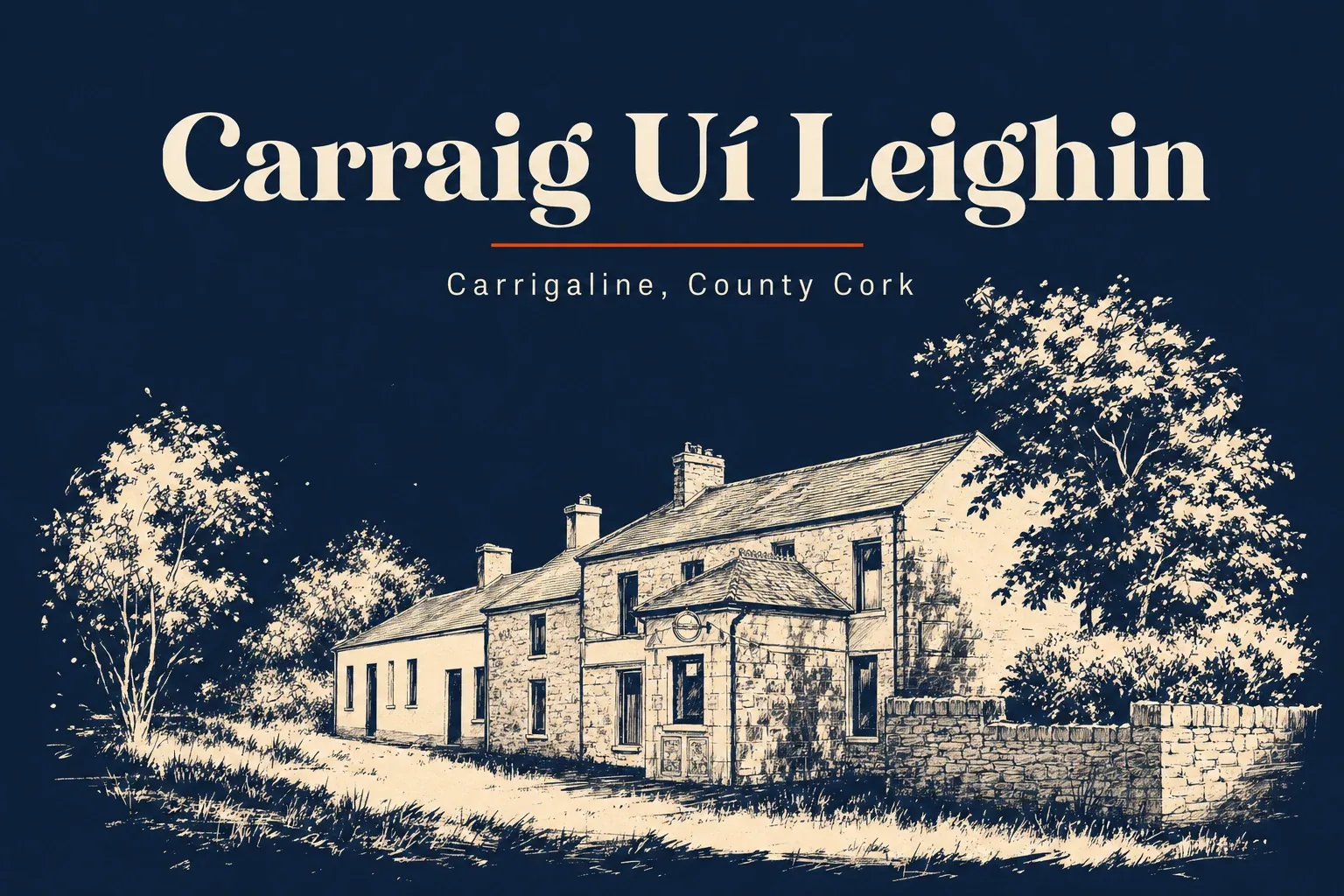
Carraig Uí Leighin · Co. Cork
South Cork's largest commuter town - a bedroom for Cork city that has kept its river and its public house.
Carrigaline sits 13 km south of Cork city on the Owenboy River, a natural harbour that boats have used for centuries. In the last thirty years it has become one of Cork's fastest-growing towns, which is another way of saying it is now a suburb. The painted cottages that gave it character have been buried under bungalows and apartment blocks. The village itself has not vanished - there is a working town centre with pubs and restaurants and a main street that people still use - but the village is now wrapped inside a commuter dormitory that stretches from the river out in every direction.
The real draw is the geography. You are thirteen kilometres from Cork city, which means you are forty-five minutes by road from Kinsale and Crosshaven and the water. The Carrigaline Community Park is the decent green space inside town. The Owenboy River Walk gives you some sense of what the place looked like before the expansion. The Cork Harbour coastline - one of the world's great natural harbours - is close enough to make day trips.
If you are looking for a quiet night with good food and no tourists, Carrigaline delivers. If you are looking for a heritage destination or a reason to tell people you stopped here, you are in the wrong town. This is the town that works - it has the bus connections, the GP surgeries, the supermarkets, and the commuter trains that matter. It also happens to have a decent pint and a river to walk.