County Cork Ireland · Co. Cork · Crosshaven Save · Share
POSTED FROM
CROSSHAVEN
CO. CORK · IE

Crosshaven
Bun an Tábhairne

The South Cork
STOP 08 / 08
Bun an Tábhairne · Co. Cork

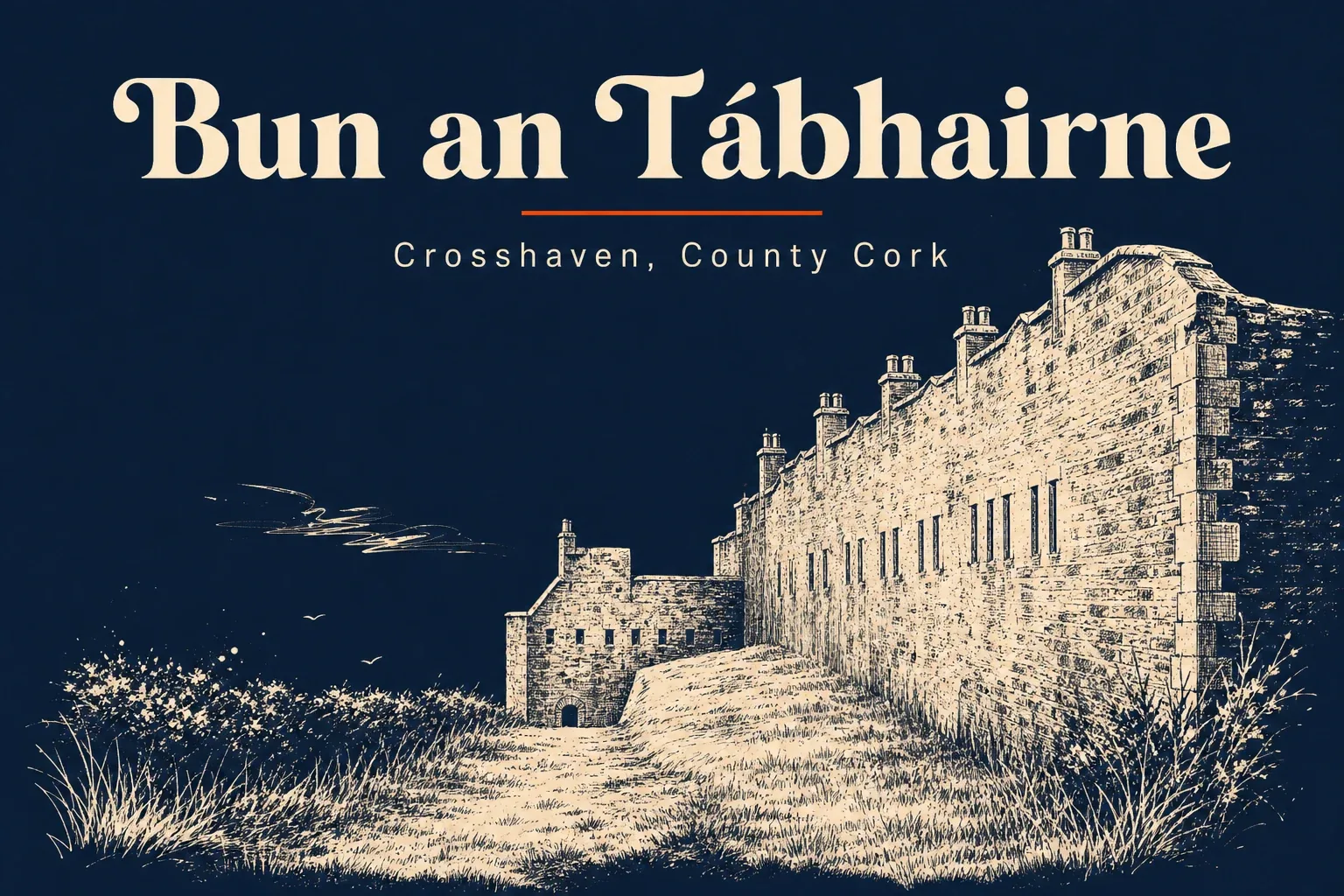
The world's oldest yacht club stands on a fishing village at the mouth of Cork Harbour, where Spike Island sits across the water.

Crosshaven sits at the entrance to Cork Harbour, west side of the mouth. The Royal Cork Yacht Club is what the village wakes up for — founded 1720, the oldest continuously operating yacht club in the world, though it spent its first two centuries at Cobh. The club moved here in 1969 and the village learned to live around the boats. In July and August the harbour fills with racing yachts, the club runs regattas, and the waterfront hums with the kind of energy that comes from people who know how to sail.

The village is working — fishing boats still tie up, the pubs still serve fishermen at seven in the morning, the seafood comes in fresh. Spike Island is visible across the water, a fortress you can't land on but can't stop looking at. Fort Templebreedy is on the headland above, another military structure watching the harbour, steep enough to feel like an expedition if you haven't walked in a while. Myrtleville is close by — a pebble beach where swimmers gather in summer and the water stays calmer than the open coast.

This isn't Kinsale. The restaurants are fewer, the boats are real, the tourists are mostly Cork people on a Saturday. Cronin's is the pub where the sailors congregate when the racing ends. The food is seafood — fresh because it comes off boats you can see from the bar. The village suits a night or two if you're interested in sailing culture, or a long lunch if you're passing through Cork Harbour. The coastal walk to Fort Templebreedy is worth doing in either direction.
Population
~2,400
Walk score
Coastal village, harbour walks easiest
Founded
Royal Cork Yacht Club 1720
Coords
51.8319° N, 8.2875° W
01 / 08

At a glance.

Three things every local will eventually mention. Read these and you've already understood more than most day-trippers do.

02 / 08

The pubs.

None of these are themed Irish pubs, because they don't need to be. A few that earn the trip:

Cronin's Pub

Sailors, locals, reliable
Traditional village pub

The pub in the village. Old, dark, the kind of place that doesn't need a menu because everyone knows what they're having. Draws the racing crowd after regattas; quieter on weekdays. The pint and the people are the point.

The Crosshaven

Views over the harbour
Pub on the waterfront

On the harbour proper, watch the boats from the bar. Less atmospheric than Cronin's but better light and the water in front of you. Good for a long evening.

The Helm Bar

Yacht club adjacent
Nautical themed bar

By the club grounds, pulls the sailing crowd. Lighter, brighter than the old pubs, sandwiches available till late.

03 / 08

Where to eat.

PlaceTypeLocal note
The Crosshaven (Restaurant) Seafood restaurant €€€ Above or beside the pub — depends on how you walk in. The fish came off a boat that morning. Steaks, seafood, the kind of kitchen that knows its harbour. Sunset over the water if you time it right.
Spike Island Seafood Fish & chips counter Fresh catch, proper chips. Sit on the wall or eat walking. They don't batter anything — you see what came off the boat.
O'Donovan's Seafood Family seafood restaurant €€ Local institution. The fish is local, the portions are serious, the noise level on a Saturday night is what a family restaurant should sound like.
Aunt Sally's Café Daytime café Sandwiches, coffee, toast. Open early for the fishermen. People come back.
04 / 08

Stories & lore.

The reason to come back. The things every local will eventually tell you about, usually after the second pint.

The world's oldest, in Cobh first

The Royal Cork Yacht Club, 1720

The Royal Cork Yacht Club was founded in 1720 at Cobh — or Queenstown, as it was called then — making it the oldest continuously operating yacht club in the world. It started with merchants and ship captains racing for the prize of a silver cup. In 1969, the club moved to Crosshaven, to the village where it sits now. The premises are private but the racing calendar is public — watch from the shore in July and August when the regattas run and you'll see why the club moved: the water here is cleaner, the harbour is deeper, the village woke up around the boats.

Two headlands, one fortress island

Cork Harbour entrance

Crosshaven sits at the mouth of Cork Harbour, and the geography is the story. Spike Island lies across the water — a fortress island built to control the harbour mouth, visible from everywhere in the village but off-limits to visitors. The British used it as a naval base, then a prison. Fort Templebreedy is on the headland above — another military structure from the Napoleonic Wars, built to watch the harbour in case the French came. They didn't. The walk to the fort still takes forty minutes, and the view back covers the whole entrance.

Pebble beach, calm water

Myrtleville and Cork swimmers

Myrtleville strand is a fifteen-minute walk from the village — a pebble beach where the water stays calmer than the open coast because the harbour entrance breaks the swell. On a good summer weekend, families from Cork pile in: swimmers, paddlers, people who come for the water and stay for the pubs. The village doesn't depend on these visitors the way Kinsale does, but it benefits from them. It's a Cork weekend without the crowds.

05 / 08

Things to do outside.

Wear waterproofs. Bring a sandwich. Tell someone where you're going if it's the mountain.

The coast path to Fort Templebreedy Starting from near the yacht club, the path climbs out of the village along the headland. Spike Island is on your right the whole way. The fort at the top is Napoleonic, built 1809, now ruined and open. The view back covers the harbour entrance. Bring a torch if you want to explore the interior.
2 km each waydistance
40 min one waytime
Myrtleville loop Down to Myrtleville strand and back along the coast path. The pebble beach is gentle, the water is calm, and in summer it's busy with Cork swimmers. Less dramatic than the fort walk but better for a long afternoon.
3 kmdistance
45 mintime
The harbour shore walk Low tide is best. Walk the shore from Crosshaven towards Kinsale — about an hour gets you far enough to feel like you've gone somewhere. Turn back when you feel like turning back.
Variabledistance
Variabletime
06 / 08

When to go.

There is no bad time. There are different times.

Spring
Mar–May

The racing season is starting. The boats come out of storage. The water is still cold but the village is waking up. Fewer Cork day-trippers than summer.

◉ Go
Summer
Jun–Aug

July and August are regatta season — the harbour is busy, the pubs are full, parking is tight. The sailing is spectacular if you care about sailing. Book accommodation ahead.

◐ Mind yourself
Autumn
Sep–Oct

The racing winds down, the tourists thin out, the water is colder but the walks are better. Myrtleville is quieter.

◉ Go
Winter
Nov–Feb

The club closes or reduces hours. The weather is rough. The village is at its most itself — fishermen, locals, and the walks are quieter. Coastal weather can be dramatic.

◐ Mind yourself
07 / 08

What to skip.

Honestly? Don't bother.

If a local was sitting beside you, this is the bit where they'd lean in.

×
Spike Island — planning to land on it

It's a fortress island, heavily protected, no landing. You can see it from everywhere in the village. That's the point.

×
Expecting Crosshaven to be like Kinsale

It's a working fishing village with a yacht club, not a gourmet destination. The food is good — it's local and fresh — but the restaurants aren't plentiful. Come for the water and the boats, not the meal.

×
Visiting in high summer if you don't care about sailing

The regatta season is June–August and the village fills with racing. If boats don't interest you, come September onwards. Quieter, calmer, the real village shows.

+

Getting there.

By car

Cork city to Crosshaven is 25 minutes on the R600 and local roads. Cork Airport is 30 minutes. Parking is available on the main road and near the harbour. Free parking mostly.

By bus

No direct bus. Cork city bus to Carrigaline is regular; taxi or rental car from there (15 minutes). Not convenient for day-trippers without a car.

By train

No train. Cork Kent is the nearest station.