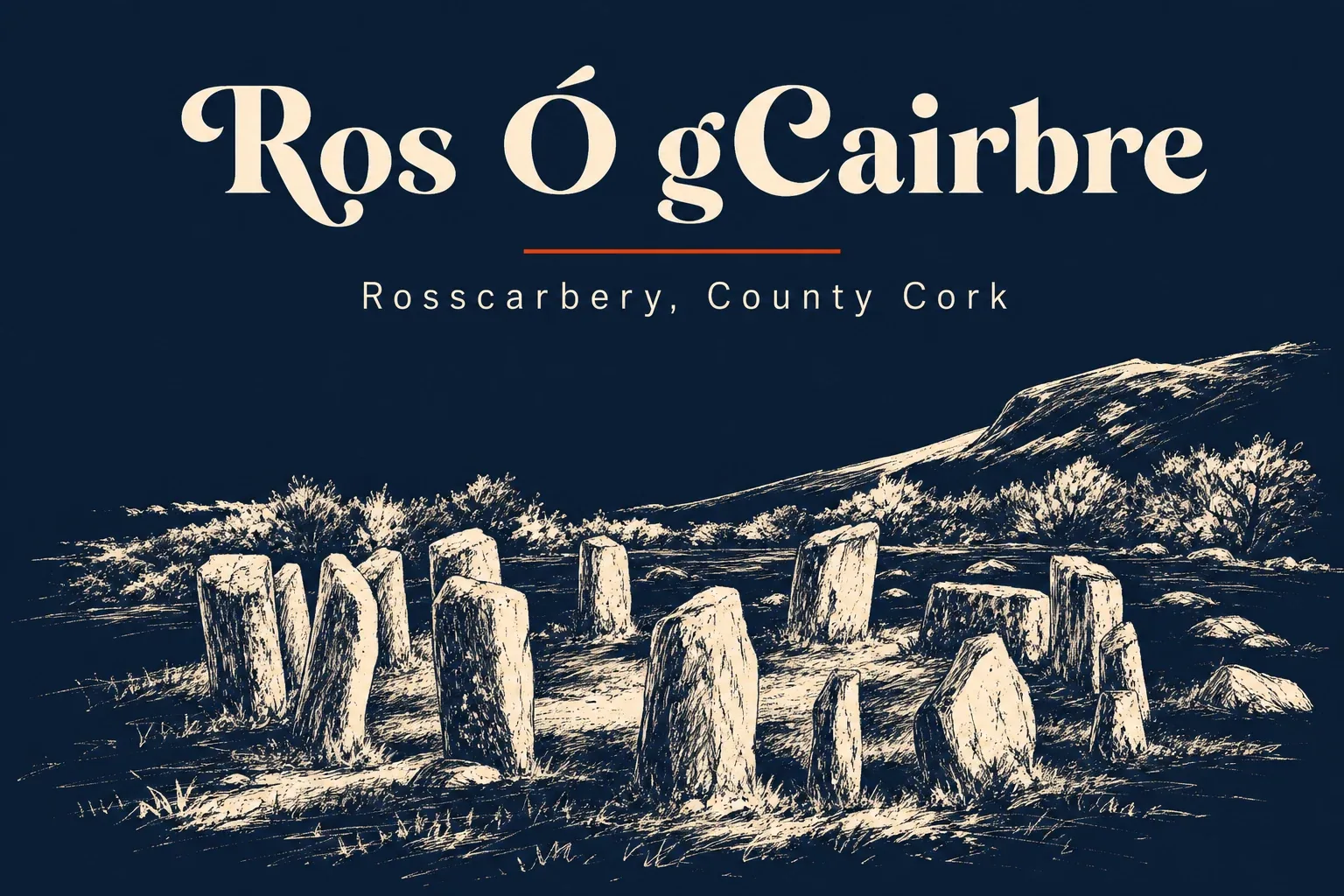
Ros Ó gCairbre · Co. Cork
St Fachtna's monastery built the learning here - the Bronze Age stone circle at Drombeg sits three kilometres out like a riddle the ancients left.
Rosscarbery began as a monastic centre in the 6th century when St Fachtna founded a monastery on this lagoon. He brought the books, the work, and the architecture that turned a tidal inlet into a place of learning. The Church of Ireland cathedral - St Fachtna's - sits on that medieval foundation, rebuilt many times but rooted in the 6th century work. The town itself is small - six hundred people - and built on honest lines. The square is one of the best in West Cork, the kind of place where the buildings still know what they're for and the corners catch the light right.
Three kilometres out the Bronze Age stone circle at Drombeg stands complete - seventeen standing stones in a perfect ring, the kind of monument the locals call the Druid's Altar because the story stuck. Bronze Age fire-pit to the southwest; the circle faces the winter solstice. It's one of the finest megalithic monuments in Ireland and it stands in a field off a quiet road like the Bronze Age people understood that beauty doesn't need to announce itself. The Beara Peninsula rises across the water. The road to Drombeg is narrow and you need to know it's there.
The lagoon - Rosscarbery Lagoon - is a Special Area of Conservation, a tidal inlet where the water empties and fills and holds bird life most of the year. The walk around the lagoon is flat, takes an hour, and teaches you how the ancients saw water as the centre of a place. The square fills this landscape - St Fachtna's cathedral on the north, the old houses tight around it, the pubs opening onto the water view. This is not a resort town. It's a place where the monastery came first and the money came second.