Magh Bhile · Co. Donegal
Where Irish emigrants took their last look at home before crossing the Atlantic.
Moville is a Foyle-side town of about 1,700 people on the Inishowen Peninsula. For 250 years it was something much larger: the last Irish port of call for people leaving. Paddle tenders would ferry passengers from Derry down the lough to waiting Anchor Line and Allan Line steamships. The ships would turn to the Atlantic and the people on them would never see Ireland again. This happened hundreds of times a day during the emigration years. Moville was the hinge between staying and going.
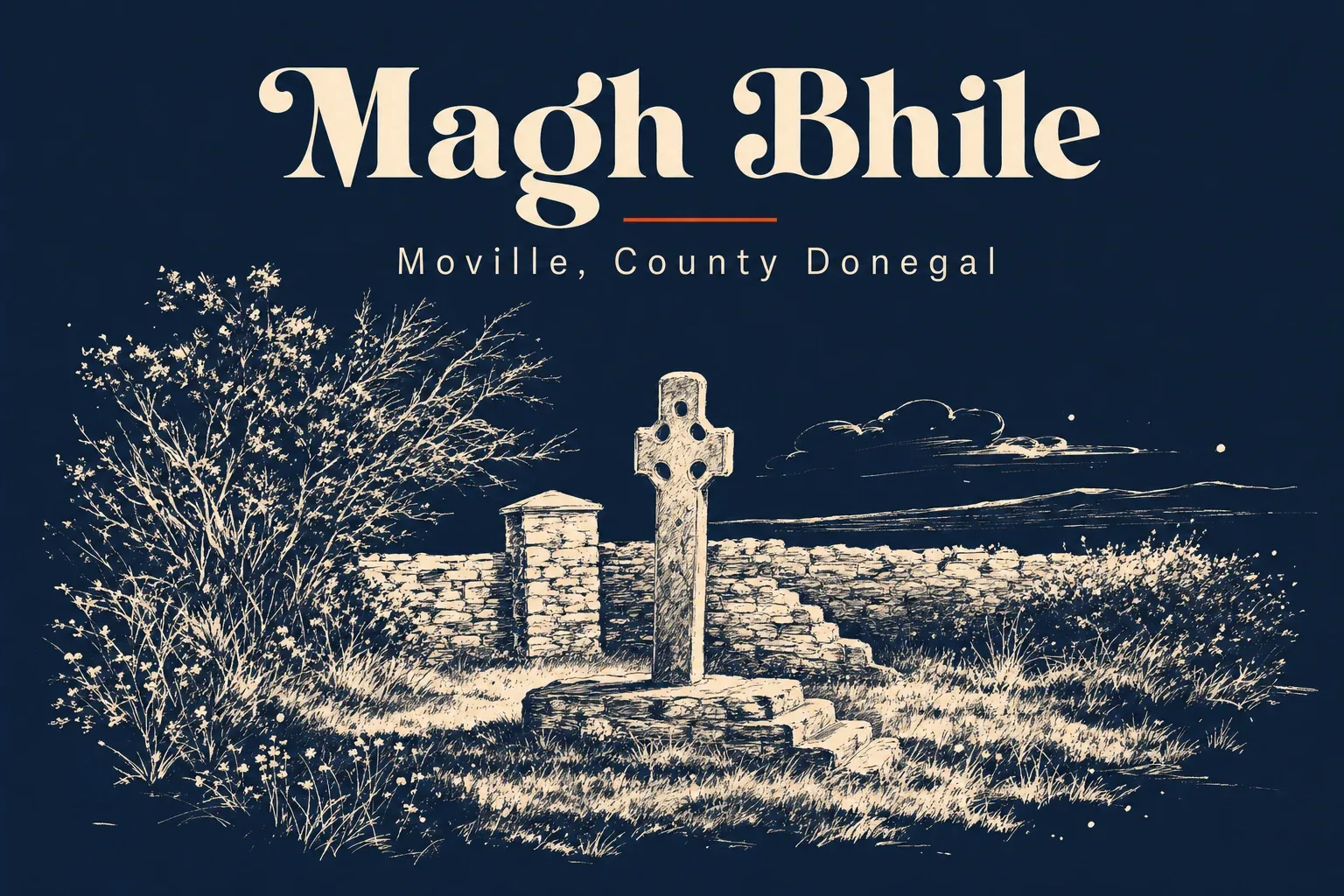
What remains is a working-port town with ten pubs, a strong fishing tradition, and something of that old traffic in its bones. You can walk the promenade and the pier. You can see the Cooley Cross - a 10-foot-tall Early Christian carved stone, c. 900 AD - sitting in the graveyard above what was a major monastery. You can eat fresh fish and stay in a log cabin with a wood-fired hot tub. You can hear traditional music in actual sessions, not performances. And you can feel, if you walk the water, that this place held the weight of goodbye for generations.
The deep waters that brought the liners also protected the monastery for 900 years. Medieval pilgrims came to the Skull House shrine. Fishermen still leave from the pier. The emigrants are gone but Moville remembers them because Moville remembers everything: the sacred bile tree it was named for, the monks, the ships, the people who looked back once and then looked forward forever.