County Donegal Ireland · Co. Donegal · Urris Save · Share
POSTED FROM
URRIS
CO. DONEGAL · IE

Urris
Urris

The Inishowen Peninsula
STOP 04 / 04
Urris · Co. Donegal

Mountains, a gap in them, a lough below, and very few people.

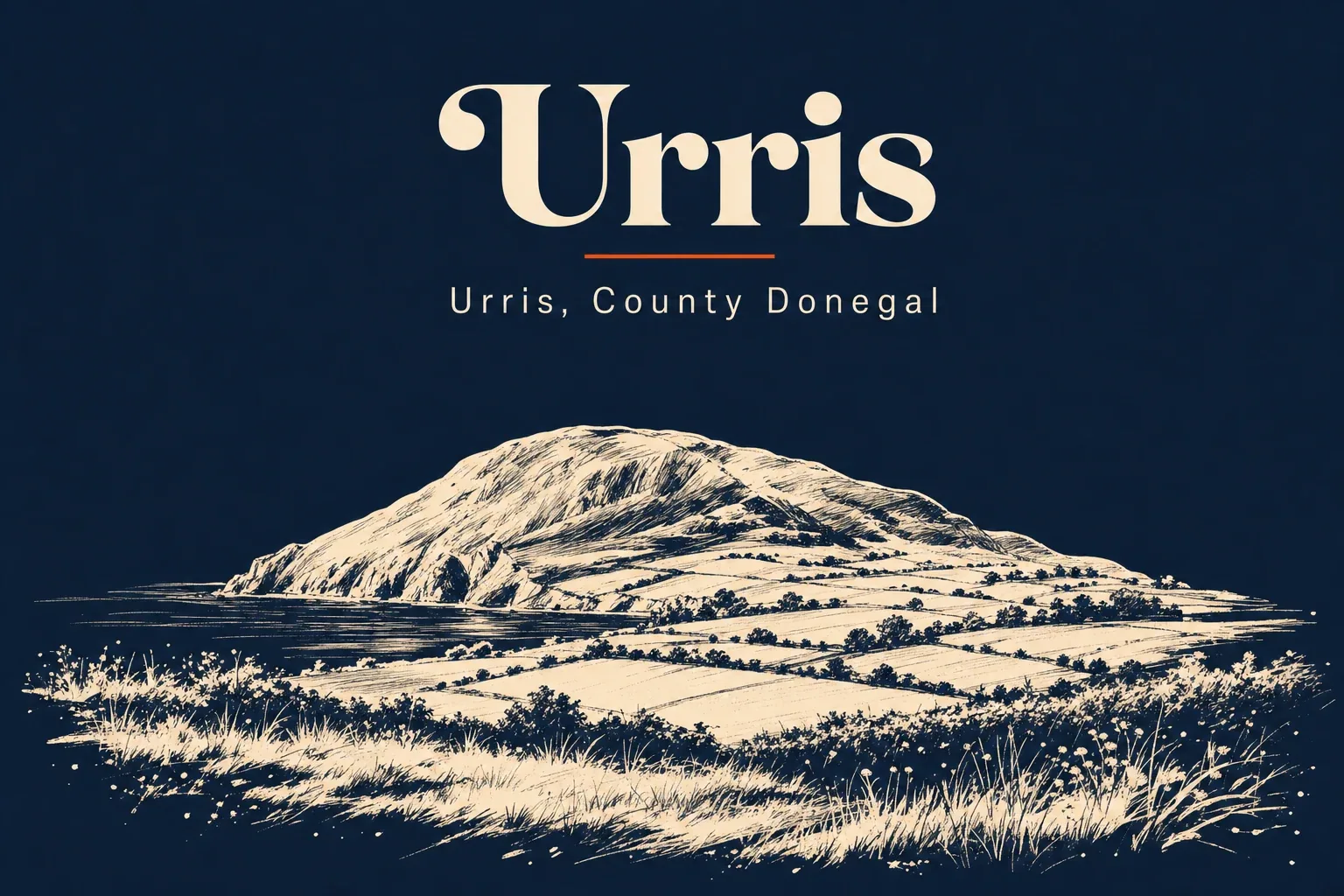
Urris is not a village in any conventional sense. It is the Urris Hills—a high moorland massif on the Inishowen Peninsula—and the Mamore Gap, a dramatic mountain pass that cuts through them. The landscape is sparse, remote, entirely on its own terms. You come here for the land: the open moorland, the views of Lough Swilly below, the ancient drove roads, the sense of being at the edge of things.

The Irish Language College sat here once, in the early 1900s. Sir Roger Casement came to Urris to learn Irish, living at Tiernasligo, learning in a place where the language was still first speech and the mountains still protected the old ways from the modern world. That era is gone. What remains is the landscape itself: the Mamore Gap is a narrow, winding road through stone and height; Lough Swilly spreads out on the eastern side, distant and still; the open hills above are silent except for the wind and the birds. If you come to Urris, come for the walk or the drive. Come for the sky. Do not come expecting a pub.

Coords
55.2278° N, 7.1067° W
01 / 04

At a glance.

Three things every local will eventually mention. Read these and you've already understood more than most day-trippers do.

02 / 04

Stories & lore.

The reason to come back. The things every local will eventually tell you about, usually after the second pint.

Roger Casement came to learn

The Irish Language College

In 1904, Sir Roger Casement—diplomat, activist, and Irish language advocate—spent six months at the Irish Language College in Urris, lodging at Tiernasligo. He came because Urris was one of the last places where Irish was the first language of daily life. He sat in a remote valley, learning verbs and history from speakers for whom the language was not a cause but a fact. Within a decade, that world would begin to vanish. Casement himself would die a political prisoner in 1916. The college would close. The history moved on, but the landscape remained.

Illegal whiskey, legendary quality

The poitín tradition

The isolated valleys above Urris were famous in the 19th century for clandestine whiskey production. The remoteness, the water, the network of hidden bothies and mountain tracks made it ideal for poitín makers. The quality of Urris poitín was legendary—smoother than the whiskey from the lowlands, protected by the community that sheltered the distillers from the revenue men who chased them through the hills. The folklore from this period is still told in pubs down the peninsula, stories of craft and loyalty and the price of making things the law forbade.

03 / 04

Things to do outside.

Wear waterproofs. Bring a sandwich. Tell someone where you're going if it's the mountain.

Mamore Gap drive The iconic route: a narrow, winding road through the Urris Hills at 270m elevation with expansive views of Lough Swilly and Donegal mainland. Take the south route (from Clonmany side) for the best light. Careful drivers only; narrow in places. Stop at viewpoints—they repay the tension.
7 km drivedistance
45 minutes round trip with stopstime
Urris Hills open moorland walk High moorland, faint paths, ancient drove roads. Views of Lough Swilly, the Inishowen coast, and inland Donegal. Terrain is boggy; boots essential. The landscape is entirely on its own terms. Navigation skills required.
10 km loopdistance
4 hourstime
Mamore Gap walk (hiking route) A walking route parallel to the road, climbing to the gap viewpoint. Less trafficked than the drive. Views expand as you gain height. The path is steep in places; come prepared.
6 kmdistance
2–3 hourstime
+

Getting there.

By car

From Buncrana, 30 minutes north via the R238. From Clonmany, 15 minutes north. From Derry, 1 hour via the A2 to Bridgend, then follow signs to Clonmany and Urris.

By bus

Bus services are sparse. A car, taxi, or local transport from Buncrana or Clonmany is essential.

By train

Nearest station is Derry (~50 min drive). The journey via bus to Inishowen, then local taxi, is possible but long.