County Donegal Ireland · Co. Donegal · Clonmany Save · Share
POSTED FROM
CLONMANY
CO. DONEGAL · IE

Clonmany
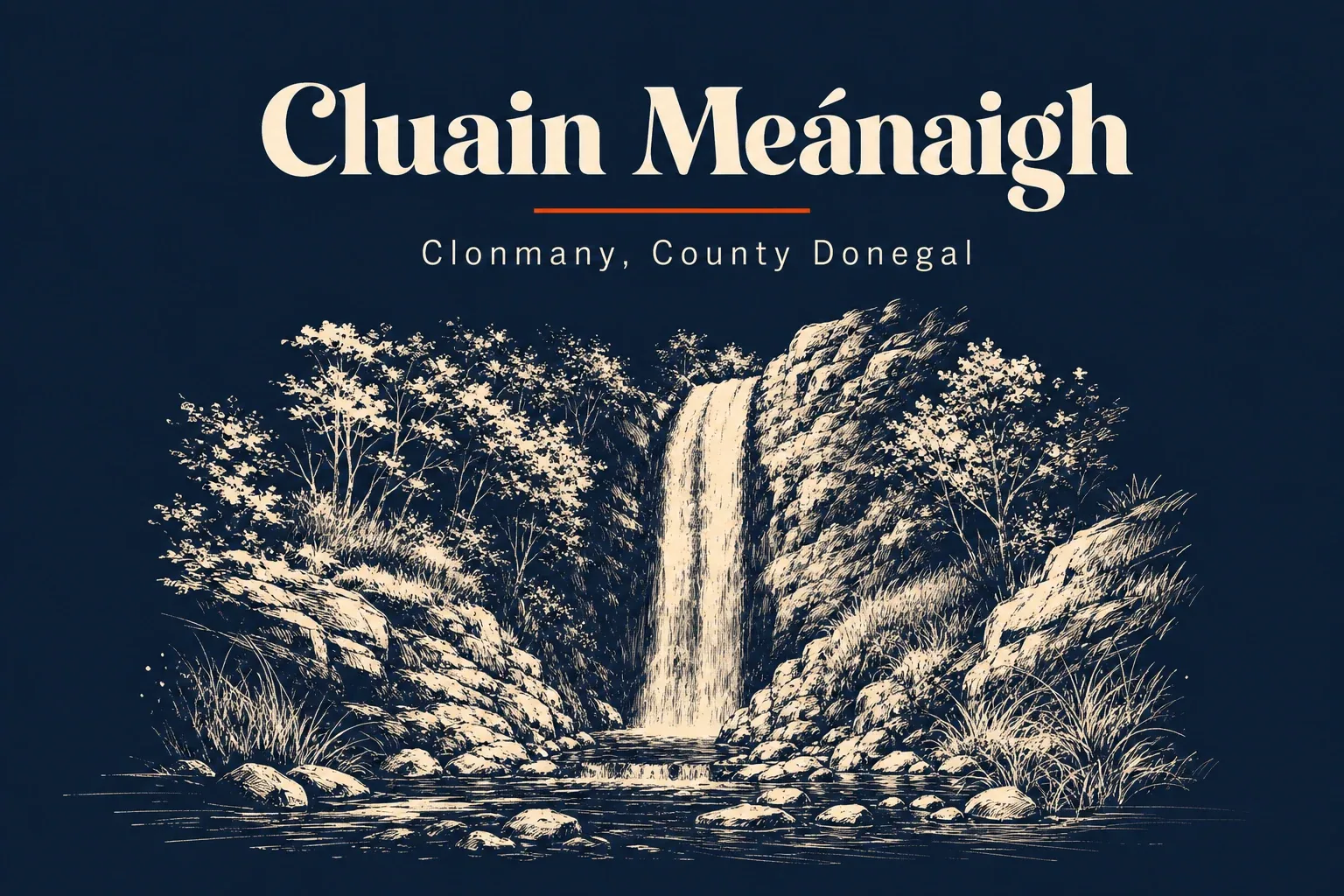
Cluain Meánaigh

The Inishowen Peninsula
STOP 07 / 07
Cluain Meánaigh · Co. Donegal

Eight pubs in a valley between mountains. Agricultural fair, Inishowen 100, the Gap of Mamore close by.

Clonmany sits in a sheltered valley between four peaks—Sliabh Sneacht the tallest at 2,019 feet. The name means 'middle meadow' in Irish, and you'll see why: rich farm land runs between the hills, and the valley protects you from Atlantic weather. Saint Columb established his monastery here in the 6th century. Monks came for the same reasons farmers stayed: water, shelter, good soil.

Today it's a working village—400 people, mostly farming families and commuters to Buncrana or Derry. The eight pubs aren't for tourists; they're where the community gathers. The annual festival (August) brings thousands for eight days of music and cattle shows. The rest of the year, Clonmany is quiet, agricultural, real. It's the kind of place where you walk the Urris Hills in perfect solitude or find a trad session on a Tuesday night and lose an evening to it.

The Inishowen 100 scenic route runs past the village. The Gap of Mamore—a steep mountain pass with panoramic views—is minutes away. Beaches and the Glenevin Waterfall are close. If you want authentic Inishowen without the coach traffic, this is where you start.
Population
~400
Founded
c. 6th century (Saint Columb monastery)
Coords
55.2089° N, 7.0850° W
01 / 07

At a glance.

Three things every local will eventually mention. Read these and you've already understood more than most day-trippers do.

02 / 07

The pubs.

None of these are themed Irish pubs, because they don't need to be. A few that earn the trip:

The Cove Bar & Lounge

Local, family
Pub & lounge

Serves the village center. Food available, warm welcome, regular crowd.

Malin Head Inn

Sessions, trad
Pub

Traditional music when the locals decide. No frills, no agenda—just community.

Muldoon's

Working locals
Pub

The kind of pub that has been the same for forty years. Comfortable chairs, old counters, easy talk.

The Heather House

Relaxed, all ages
Pub & dining

Food and drink. Views toward the hills. Regular music on weekends during season.

03 / 07

Stories & lore.

The reason to come back. The things every local will eventually tell you about, usually after the second pint.

The 6th-century foundation

Saint Columb's monastery

In the 6th century, when Ireland was known as the Land of Saints and Scholars, Saint Columb—the same monk who founded Derry and Iona—established a monastery in this valley. The monks copied manuscripts, taught local children, and maintained the agricultural knowledge that kept the settlement thriving. The site never lost its spiritual significance. The church that stands today sits on the same ground where continuous Christian worship has occurred for over 1,400 years.

The 19th-century clandestine craft

The poitín makers of Urris

The remote Urris valley, just above Clonmany, became famous in the 19th century for illegal poitín distillation. The isolation, mountain streams, and network of hidden locations made it ideal for secret whiskey production. The poitín makers were skilled craftsmen—the quality of Urris poitín was legendary throughout Donegal. Revenue officers chased the distillers through the hills. The community protected its own. The folklore from this period is still told in the pubs.

Urris and Gaelic survival

The last Irish-speaking valley

The Urris valley above Clonmany held the last outpost of Irish as a first language in Inishowen. Well into the 20th century, families here spoke Irish as their primary tongue, maintaining oral traditions and songs that stretched back to pre-Norman Ireland. Charles McGlinchey, a local storyteller (1861–1954), grew up speaking only Irish. His family recordings preserve a vanished world. The mountains protected the language; the community preserved it.

04 / 07

Things to do outside.

Wear waterproofs. Bring a sandwich. Tell someone where you're going if it's the mountain.

The Gap of Mamore A steep, winding mountain pass through the Urris Hills with panoramic views of Inishowen. Road is narrow—careful drivers only. Stop at viewpoints; the views repay the tension.
6 km drivedistance
1 hour round triptime
Sliabh Sneacht ascent Inishowen's highest peak, 2,019 feet. Multiple routes; the Urris valley approach is gentlest. On clear days, views reach Scotland. Cloud can come fast; know the descent.
8 km returndistance
3–4 hourstime
Urris Hills loop walk Open moorland, mountain views, ancient paths. The landscape is remote, quiet, and entirely yours on most days. Bring a map; paths are faint.
12 km loopdistance
4–5 hourstime
Glenevin Waterfall walk A 40-foot cascade through woodland. Well-marked, easy, family-friendly. The stream is cold; resist the temptation to swim in summer.
3 km returndistance
1 hourtime
05 / 07

When to go.

There is no bad time. There are different times.

Spring
Mar–May

Lambs in fields, clear days between showers, light until 9pm. The valleys are green and alive. Fewer visitors.

◉ Go
Summer
Jun–Aug

The festival (August 3–10) brings thousands. Book pubs and accommodation ahead. Long days, warmest weather, but the village fills up. Escape to the hills.

◐ Mind yourself
Autumn
Sep–Oct

The locals' favorite. Storms move in, skies are dramatic, mountain colors shift. Sessions start again. The land is golden.

◉ Go
Winter
Nov–Feb

Half the village shuts. Roads can get treacherous. But the cozy pubs, empty hills, and quiet are their own reward.

◐ Mind yourself
06 / 07

What to skip.

Honestly? Don't bother.

If a local was sitting beside you, this is the bit where they'd lean in.

×
The festival unless you love crowds

August brings thousands. If you want solitude or peace, skip the festival week and come before August 1st or after August 10th.

×
The Gap of Mamore in fog or bad weather

The road is narrow and steep. In cloud, you lose the view entirely and gain the stress. Skip it and come back when the weather clears.

×
Expecting 5-star amenities in the pubs

These are village locals' pubs, not tourist pubs. Come for the company, not the finish. If you need a cocktail menu, go to Derry.

+

Getting there.

By car

From Buncrana, 20 minutes north on the R238. From Derry, 45 minutes via the A2 to Bridgend, then follow signs for Clonmany. From Dublin, 4 hours via the N2 to Derry, then coastal route.

By bus

Bus Éireann services to Buncrana; taxi or local service from there. Having a car makes exploring the hills and coast much easier.

By train

Nearest station is Derry (~45 min drive). Connections to Belfast and Dublin from there.