County Donegal Ireland · Co. Donegal · Raphoe Save · Share
POSTED FROM
RAPHOE
CO. DONEGAL · IE

Raphoe
Ráth Bhoth

The Ireland's Ancient East
STOP 06 / 06
Ráth Bhoth · Co. Donegal

A cathedral town that was important before Derry existed.

Raphoe was a seat of ecclesiastical power before most of Donegal had a town worth naming. The diocese was established in the 12th century but the monastic site goes back to Colmcille in the 6th — the same saint whose shadow falls over Glencolmcille, Iona, and half of early Christian Ireland. That long tail of importance is the reason Raphoe has a cathedral and a bishop's palace ruin and a plantation diamond all within a short walk of each other.

It's a quiet town now. The east Donegal Laggan district runs to farming and small industry. But the built fabric is genuinely old and the town wears its history without making a fuss about it — which is more than you can say for places with heritage centres and admission charges.
Population
1,200
Founded
c. 6th century
Coords
54.8736° N, 7.5961° W
01 / 06

At a glance.

Three things every local will eventually mention. Read these and you've already understood more than most day-trippers do.

02 / 06

Stories & lore.

The reason to come back. The things every local will eventually tell you about, usually after the second pint.

The founding

Saint Colmcille

Colmcille — also known as Columba — is said to have established a monastery at Raphoe in the 6th century. The same man went on to found the abbey on Iona in Scotland, spreading Christianity through northern Britain. Whether he spent much time in Raphoe or simply passed through is disputed, but the diocese bearing the name has existed since at least 1111.

Built to resist, failed anyway

The Bishop's Palace

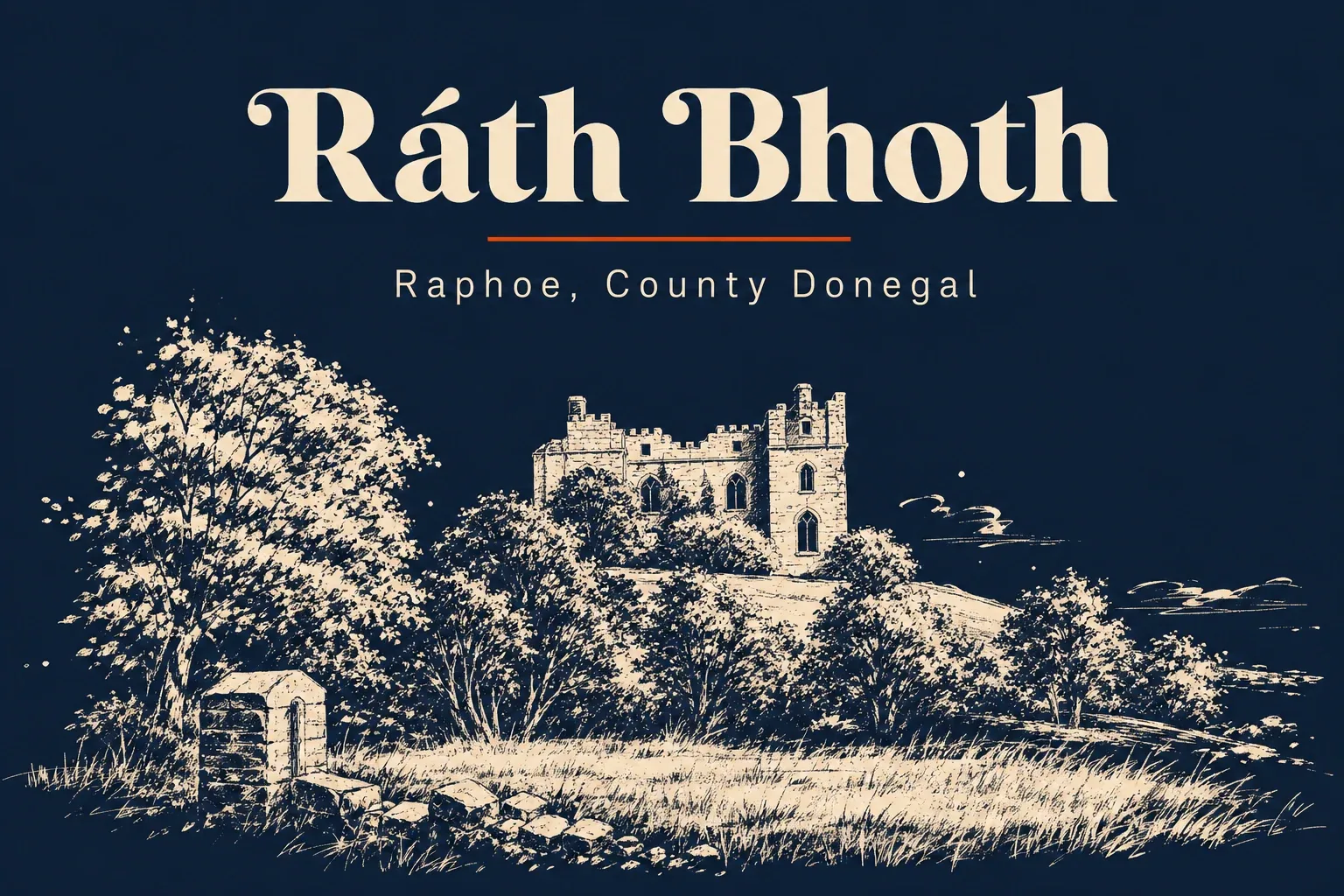
Bishop John Leslie built a fortified palace beside the cathedral in the 1630s — a statement of power in a county that was still being settled. It was damaged during the Williamite wars in 1689 and then gutted by fire in 1838. The shell remains next to the cathedral: four walls, no roof, a fine piece of ruin in the middle of a working town.

Geometry as ideology

The Plantation Diamond

Raphoe was one of dozens of Ulster towns laid out to a standard Plantation template in the early 17th century: a central diamond, a church, a market. The point was to create loyal Protestant settler communities across a landscape the English crown had just seized. Raphoe got a bishop's palace instead of a castle, but the plan was the same. The Diamond still functions as the town centre.

03 / 06

Things to do outside.

Wear waterproofs. Bring a sandwich. Tell someone where you're going if it's the mountain.

Cathedral & Palace Walk Cathedral grounds, the ruined palace walls, the old graveyard. Everything within a few minutes of the Diamond. Go on a weekday when it's quiet.
1 kmdistance
30 mintime
04 / 06

When to go.

There is no bad time. There are different times.

Spring
Mar–May

Quiet, the cathedral grounds are pleasant, no crowds.

◉ Go
Summer
Jun–Aug

Fine for a half-day stop. Not a summer resort town — that's the point.

◉ Go
Autumn
Sep–Oct

Good light on the old stonework. Harvest country around it.

◉ Go
Winter
Nov–Feb

Little reason to come unless you're passing through the Laggan.

◐ Mind yourself
05 / 06

What to skip.

Honestly? Don't bother.

If a local was sitting beside you, this is the bit where they'd lean in.

×
Expecting a visitor infrastructure

Raphoe has no heritage centre, no guided tours, no café attached to the cathedral. What it has is the actual place. That's the deal.

×
Driving through without stopping

The cathedral and palace take twenty minutes. If you're already in east Donegal, stopping is the obvious call.

×
Confusing it with Rathmullan

Different town, different history. Raphoe is inland plantation east Donegal. Rathmullan is Lough Swilly and the Flight of the Earls. Both are worth your time.

+

Getting there.

By car

Letterkenny to Raphoe is 20 minutes on the R236. Lifford is 15 minutes south.

By bus

Local Link services connect Raphoe to Letterkenny.

By train

No train. Nearest stations are Derry or Sligo, both over an hour.