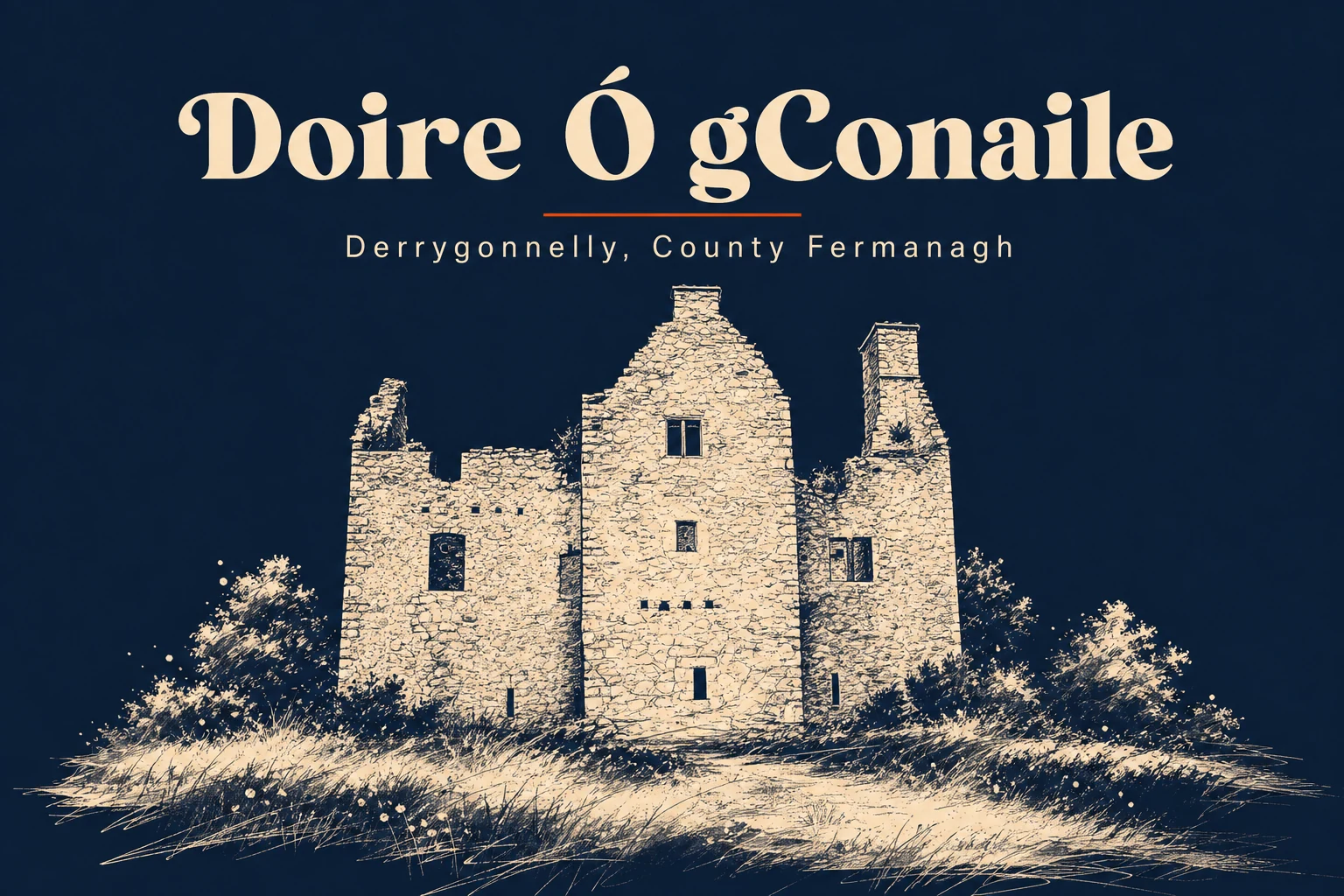
Doire Ó gConaile · Co. Fermanagh
Two pubs, one October festival, and a clifftop view that stops conversation dead.
Derrygonnelly is a small village at the southwestern edge of Fermanagh, on the road between Enniskillen and Garrison. The name translates from Irish as the oak grove of the O'Connellys - the family whose inauguration site this was before any planter ever set foot here. The plantations arrived in the early 1600s and left their mark in ruined castles and roofless churches scattered around the townland.
The village itself is compact and largely unchanged. Two pubs on or near the main street. A primary school. The old creamery converted into an environmental education centre. What draws people in is what surrounds it: the lakes, the forest, and the limestone escarpment of the Magho Cliffs. You come for the landscape and find yourself staying for a pint.
Every October, on the second weekend of the month, the village holds the Eddie Duffy and Mick Hoy Traditional Music Festival. Both men were Derrygonnelly musicians and, by all accounts, central figures in the county's trad scene. The festival spreads across the village's pubs and draws players from across Ireland. For most of the year the village is quiet. For that weekend it is not.
Tully Castle is a short drive northwest, on Blaney Bay on the south shore of Lower Lough Erne. What remains is a roofless tower house and the foundations of the bawn. The site is in State Care and open to visitors. The story attached to it - a Christmas Day massacre in 1641, a surrendered garrison, a safe conduct that was not honoured - is one of the grimmer episodes in a grim era. Worth reading before you visit.