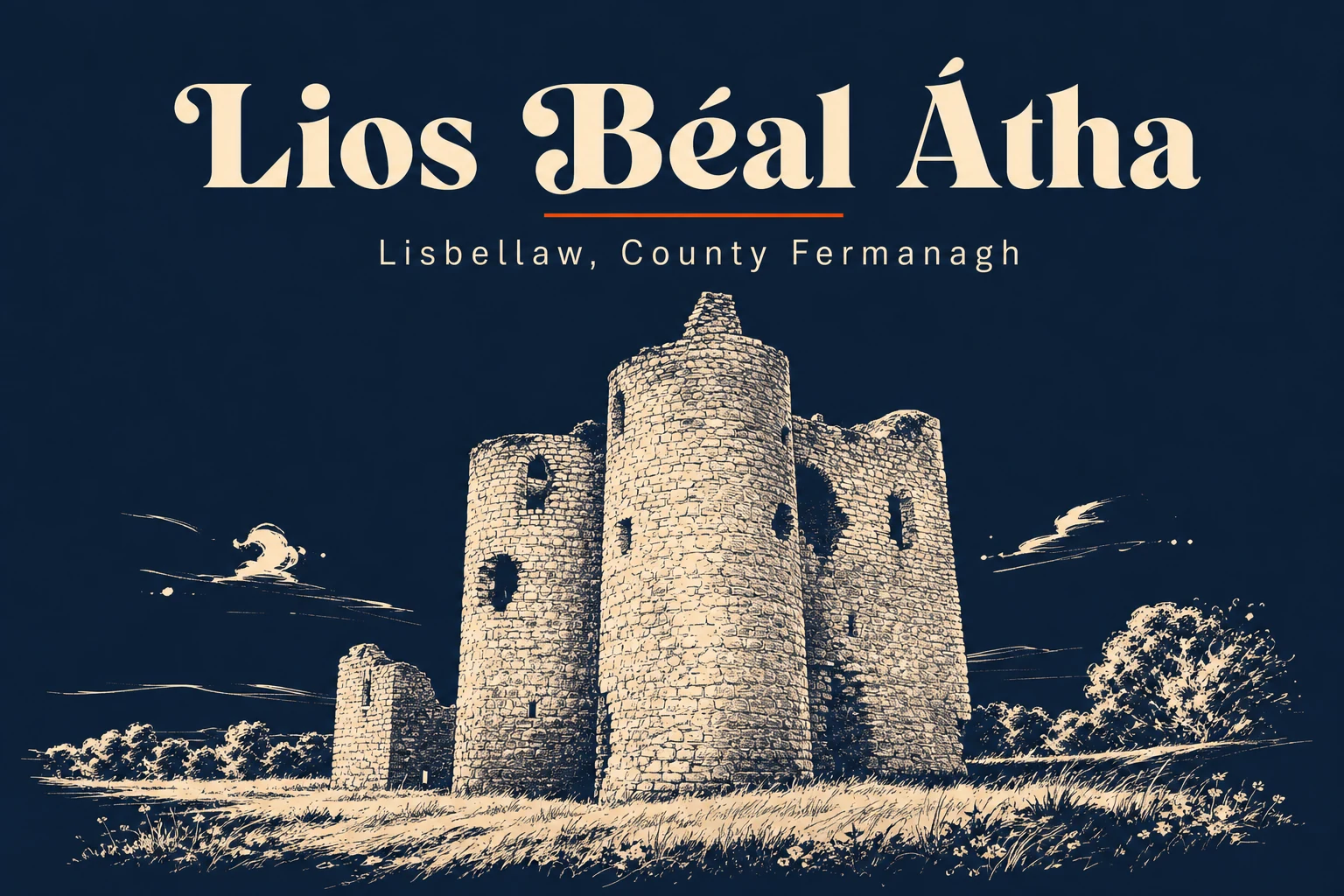
Lios Béal Átha · Co. Fermanagh
The A4 passes through it. The bus stops. Most people don't.
Lisbellaw is a village the A4 passes through. There is a steep main street, a Church of Ireland that sits high above the houses, a scatter of homes and farms, and a pub that has, somewhat improbably, been named the best in Northern Ireland. Two years running.
The village's name tells you something. Lios Béal Átha - the fort at the ford-mouth - speaks to a time when the crossing of a river mattered enough to build a stronghold beside it. That fort is gone. The name persisted through the Plantation, through the linen-weaving era, through the years when every house had a spinning wheel. What persists now is quieter: the church on the hill, the GAA club training on winter evenings, the farms that have been in the same families for generations.
Do not arrive expecting entertainment. Arrive willing to look at what is here. A pub that was opened by a former pharmacist and her husband who came back to Fermanagh with a plan to make whiskey. A hurling club that has kept alive a sport that, were it not for Lisbellaw, would have no senior foothold in the whole county. A road between two towns that most people drive in twelve minutes and never think about again.