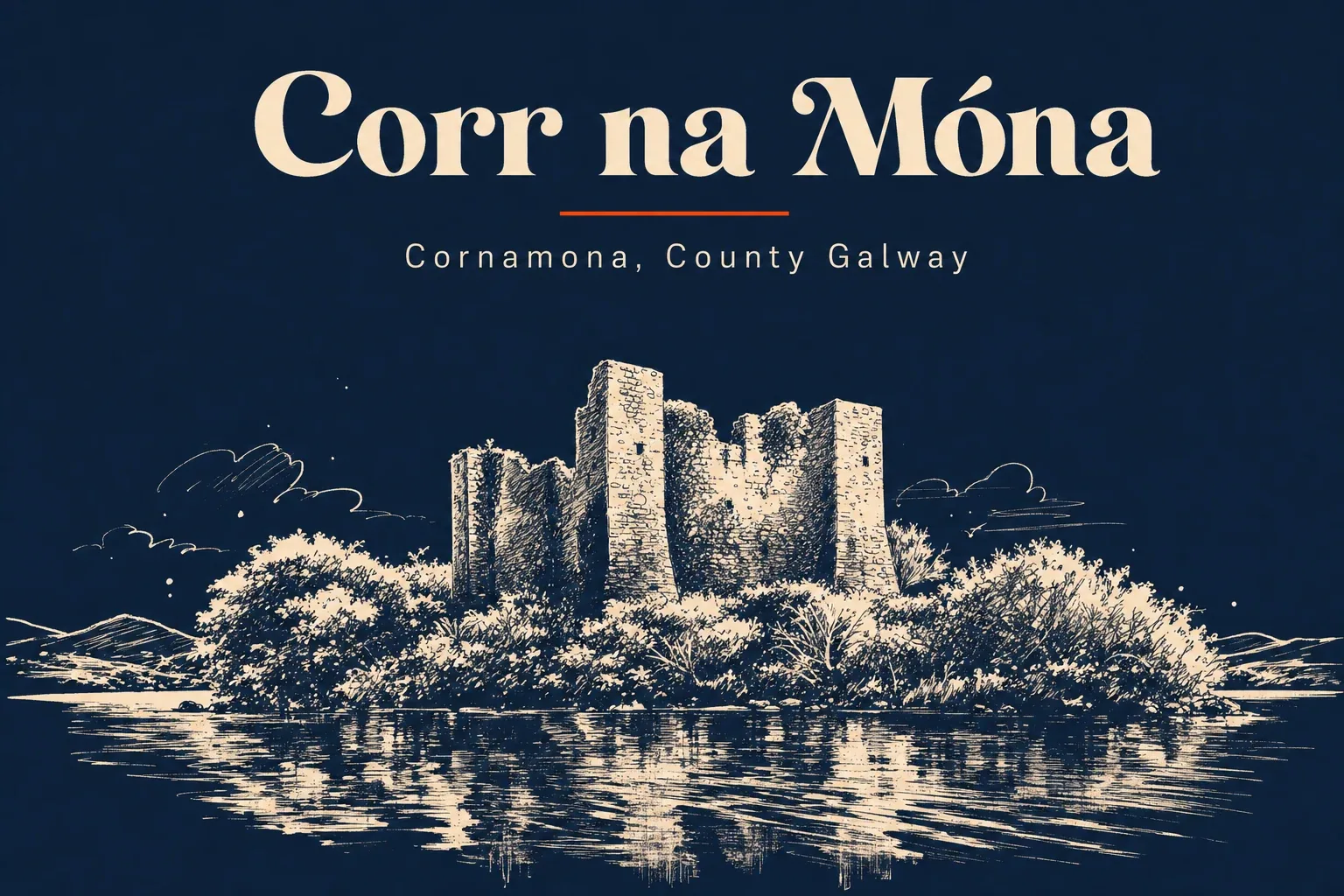
The Underground River
Lough Mask and Lough Corrib are separated by a few kilometres of low ground. They should be separate bodies of water. They are not. The rock is limestone - karst - porous and honeycomb. Water from Mask finds its way underground through the porous rock and emerges in springs that feed the Corrib. The Cong Canal, dug in the 1840s as famine-relief work, tried to connect them above ground with a proper Victorian channel and lock system. It drained straight back into the ground through the porous limestone before a single boat ever launched. The canal is a monument to the attempt - three kilometres of empty stone lining, waiting for water that will not come. Here, at Cornamona, the same geology that defeated the canal is the geography that matters: the hidden river, the karst springs, the water finding its own routes beneath the surface.