16 October 2003. The day the mountain moved.
The 2003 landslide
Construction of the wind farm required peat excavation and drainage on the unstable bog. On 16 October 2003, the accumulated stress released. A section of bog, saturated and destabilized by construction work, slid downslope. The movement was massive—over 450,000 cubic metres of peat in motion. The Owendalulleegh River was choked with black peat. The water ran dark for days. Fish kills were catastrophic. Wetland habitats downstream were buried. The disaster was the worst environmental incident caused by wind farm construction in Irish history. It brought scrutiny to all such developments. It remains, for people here, the defining moment—the day the mountain reminded everyone that human plans count for nothing when the landscape refuses.
Thirty-four turbines. Still operating.
The Derrybrien wind farm
The Derrybrien wind farm was approved and constructed in the early 2000s. Thirty-four turbines were installed on the ridge. They remain, visible from the Clare side of the mountains, turning when wind allows. The farm predates major environmental scrutiny of such developments. After the 2003 disaster, the farm became a symbol of the tension between renewable energy infrastructure and landscape stability. It continues to operate and generate power. Some locals see it as a necessary clean-energy installation. Others see it as a monument to carelessness. Most acknowledge that it is there and will stay.
The mountain as it was, as it remains.
Slieve Aughty landscape
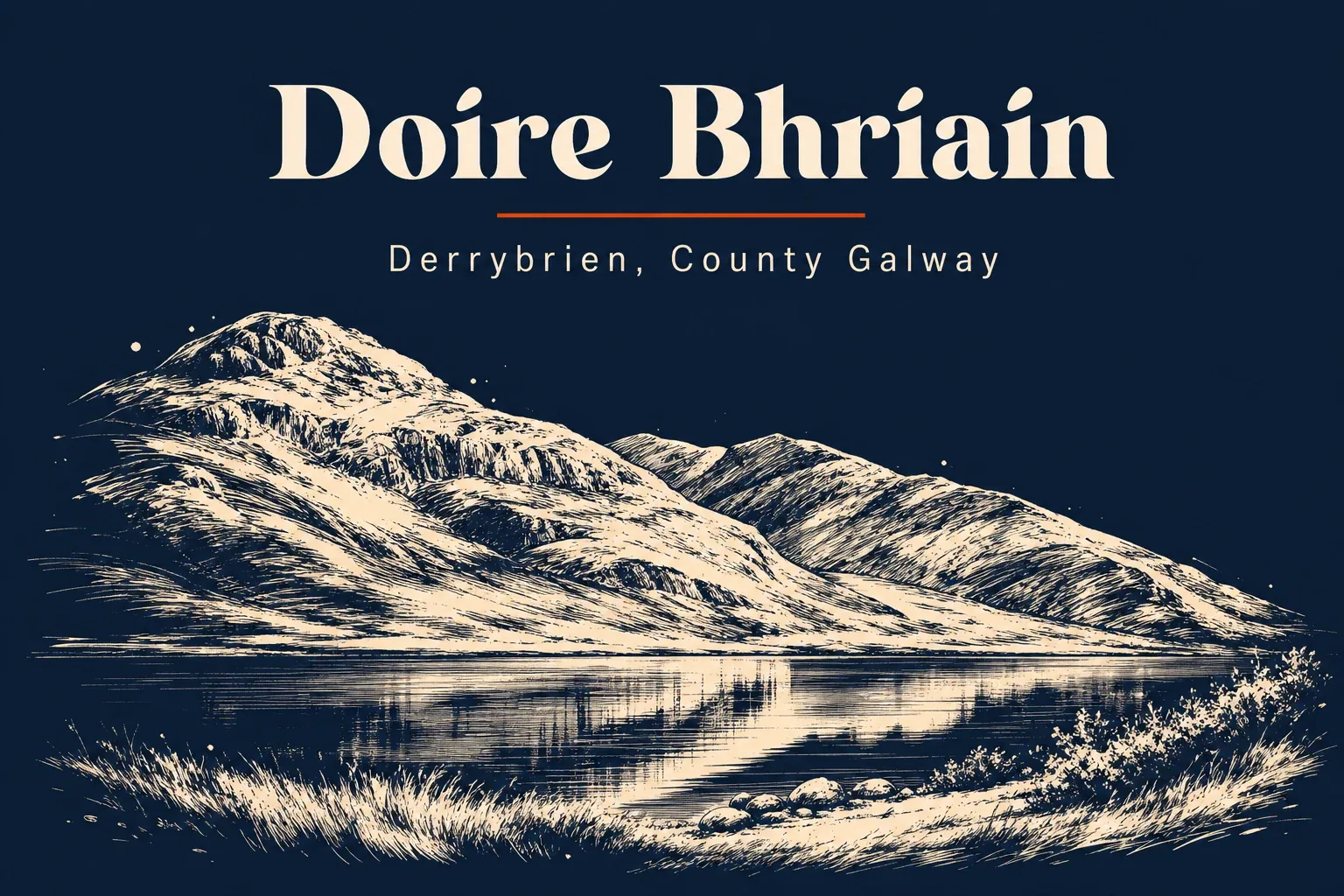
Slieve Aughty is a range of mountains running north to south between Galway and Clare. The range is characterized by bog, heather, thin soils, and unstable ground in places. Altitude is modest by mountain standards—peaks around 570 metres. The terrain is open moorland, often misty, requiring navigation care. The landscape has been shaped by ice age geology, by human bog-cutting over centuries, by recent drainage works and industrial development. The 2003 landslide revealed the fragility of the peat—material that can be solid and stable for centuries until conditions change. Walking here means accepting the landscape as it is, not as you might wish it to be.