County Galway Ireland · Co. Galway · Portumna Save · Share
POSTED FROM
PORTUMNA
CO. GALWAY · IE

Portumna
Póirceannmhna

The East Galway / Shannon Valley
STOP 06 / 06
Póirceannmhna · Co. Galway

A Renaissance castle overlooks the lough. The forest sprawls behind it. The Shannon flows through.

Portumna sits at the northern tip of Lough Derg, where the River Shannon opens into the lough. It's a quiet town of about 1,400 people, positioned at the join of water and forest. The two big things here are the castle and the forest park, but neither is shouting about itself.

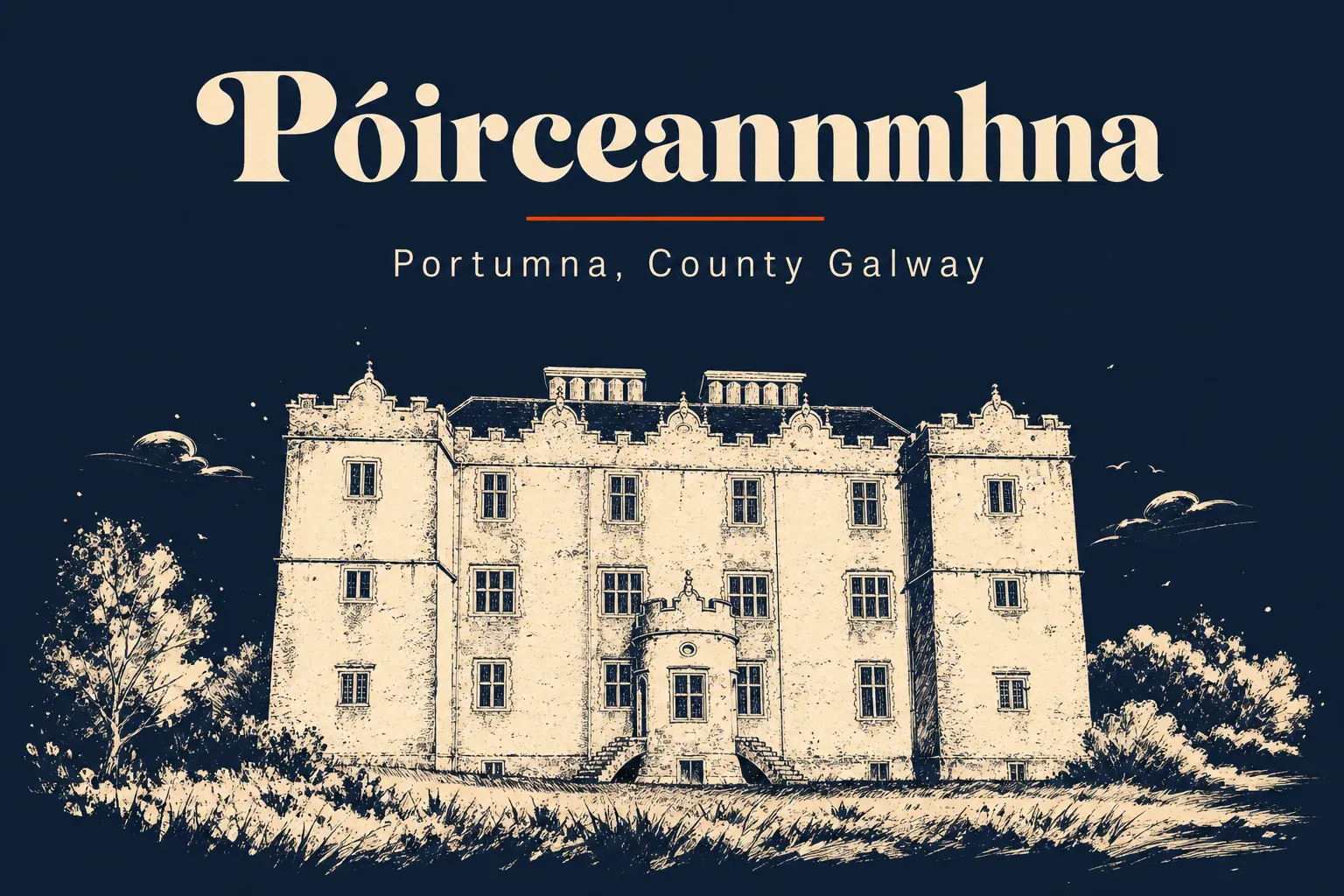
Portumna Castle is why you came. Built around 1618 by Richard Burke, 4th Earl of Clanricarde, it's a Renaissance-era semi-fortified house—the kind of building that represented a moment when Irish gentry were confident enough to build for display rather than purely for defence. The OPW manages it and opens it to visitors. The gardens are under restoration, which means there's the satisfying pleasure of watching something being put back together.

The forest park wraps the lough shore and spreads back into woodland. A thousand hectares of mixed forest, walking trails, and spaces where you can sit and watch the water. The place doesn't announce itself. That's deliberate. The Shannon cruisers pass through—the marina serves boat traffic headed south—but it's not a scene. It's a stop.

Population
1,400
Walk score
Castle and forest in 2 hours
Founded
c. 1618
Coords
52.8514° N, 8.2069° W
01 / 06

At a glance.

Three things every local will eventually mention. Read these and you've already understood more than most day-trippers do.

02 / 06

Stories & lore.

The reason to come back. The things every local will eventually tell you about, usually after the second pint.

c.1618

Portumna Castle

Richard Burke, 4th Earl of Clanricarde, built Portumna Castle around 1618. It's a semi-fortified house, meaning it was built for show and comfort as much as for defence. The architecture is early Renaissance, one of the finest examples of that era in Ireland. The castle was damaged in the 1650s during the English Civil War and later restored. The OPW now manages it as a heritage site. The gardens, originally formal and extensive, are slowly being restored to something approaching their original state.

The lough itself

Lough Derg

Lough Derg is the third-largest lake in Ireland, shared between Galway, Tipperary, and Offaly. Its name comes from the Irish "Doire Dheirg"—the red oak. The northern tip, where Portumna sits, is a quieter part of the lake. Brown trout and pike fishing. Sailing and cruising traffic. The water is serious and cold. Respect it.

1,000+ hectares

The forest park

Portumna Forest Park was established in the 1950s. It covers over a thousand hectares of mixed deciduous woodland, coniferous plantation, and open grassland, all bordering the lough shore. Walking trails range from short strolls to longer forest hikes. Cycling routes exist. The place is designed for people who want to move quietly through green space without an itinerary.

03 / 06

Things to do outside.

Wear waterproofs. Bring a sandwich. Tell someone where you're going if it's the mountain.

Portumna Forest Park main loop The signature walk. Lough shore on one side, forest on the other. Well-marked, suitable for all levels. Start near the visitor centre. The view across the lough toward Tipperary doesn't change and doesn't get old.
6–8 kmdistance
2–2.5 hourstime
Portumna Demesne walk Shorter circuit around the castle grounds and immediate forest. Good if you're combining it with the castle visit. The formal gardens are roped off during restoration, but you can see the work happening.
2 kmdistance
40 mintime
Lough Derg shore walk Following the water's edge north from the park. Quieter than the main loop. You'll see fishermen, occasionally boats. The shoreline changes with water level and season.
4 kmdistance
1.5 hourstime
04 / 06

When to go.

There is no bad time. There are different times.

Spring
Mar–May

Forest is greening, the lough is bright. The castle gardens are beginning restoration work—interesting to watch.

◉ Go
Summer
Jun–Aug

Warmest time for walking. Cruiser traffic is heaviest. Long evenings. The forest is dense and cool.

◉ Go
Autumn
Sep–Oct

The locals' season. Forest colours. Quieter than summer. The lake is still walkable, still beautiful.

◉ Go
Winter
Nov–Feb

Cold. The forest is bare. The lough is grey. Come if you're after that specific kind of silence and don't mind wet paths.

◐ Mind yourself
05 / 06

What to skip.

Honestly? Don't bother.

If a local was sitting beside you, this is the bit where they'd lean in.

×
Visiting the castle on a rainy afternoon

It's an outdoor heritage site with limited shelter. Choose a clear day or the gardens aren't worth seeing.

×
A rushed visit

You need at least three hours—castle, forest walk, coffee. Don't try to squeeze it into a lunch stop.

×
The forest park on a crowded bank holiday

It's popular with Dublin and Cork weekenders. Go midweek. Go in October. Go when it's quiet.

+

Getting there.

By car

From Galway city, 90 km south on the M6 and R446. About 1h 15min. From Athenry, about 1 hour. From Loughrea, about 45 minutes.

By bus

Bus Éireann services connect to Galway and Athenry. Not frequent—check ahead.

By train

The railway closed decades ago. Nearest station is Ballinasloe, 35 km away. Then taxi or car.

By air

Shannon Airport (SNN) is 80 km, about 1h 15min. Cork is 2 hours.