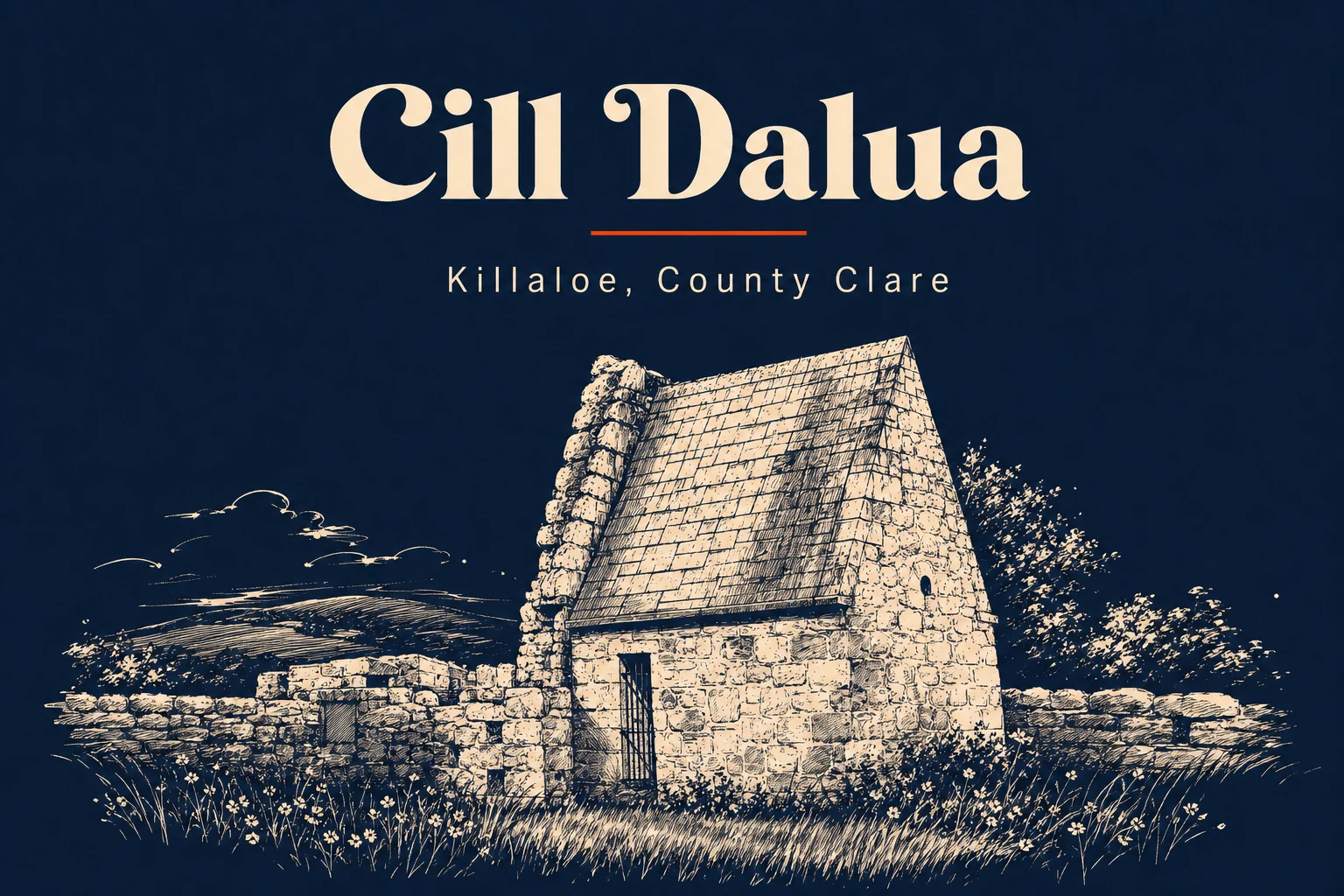
Cill Dalua · Co. Clare
Brian Boru's town. The Shannon squeezes through here on its way out of Lough Derg.
Killaloe sits at the southern tip of Lough Derg, where the lake gives up and becomes the Shannon again. Saint Molua founded a monastery here in the sixth century. Brian Boru - the last person to convincingly call himself High King of all Ireland - made it his capital in 1002. For twelve years, this was the closest thing Ireland had to a seat of power. Then Brian died at Clontarf in 1014 and the whole project died with him.
What's left is a cathedral, a Viking stone, a ring of hills, and a lake that goes on for forty kilometres behind you. The town is small - a main street, a bridge, a marina, a few pubs. Ballina on the Tipperary side adds a bit more: restaurants, the old hotel, the sense that the two halves are still negotiating which one gets to be the real town.
The water is the thing. Lough Derg Water Sports and My Next Adventure both operate from the town. Kayaking the reach north of the bridge puts Brian Boru's fort to your left - an earthwork on a spur of land jutting into the lake, commanding the exact bottleneck where the lake narrows. If you squint you can see what he was thinking.
Come for the heritage, stay for the river. The Historic Town Trail takes an hour. The Béal Ború walk takes two. There's a session in the Piper's Inn if the timing's right. This is a town that doesn't perform for visitors - it just goes about its business on a river that's been going about its own business for longer than most of the counties around it.