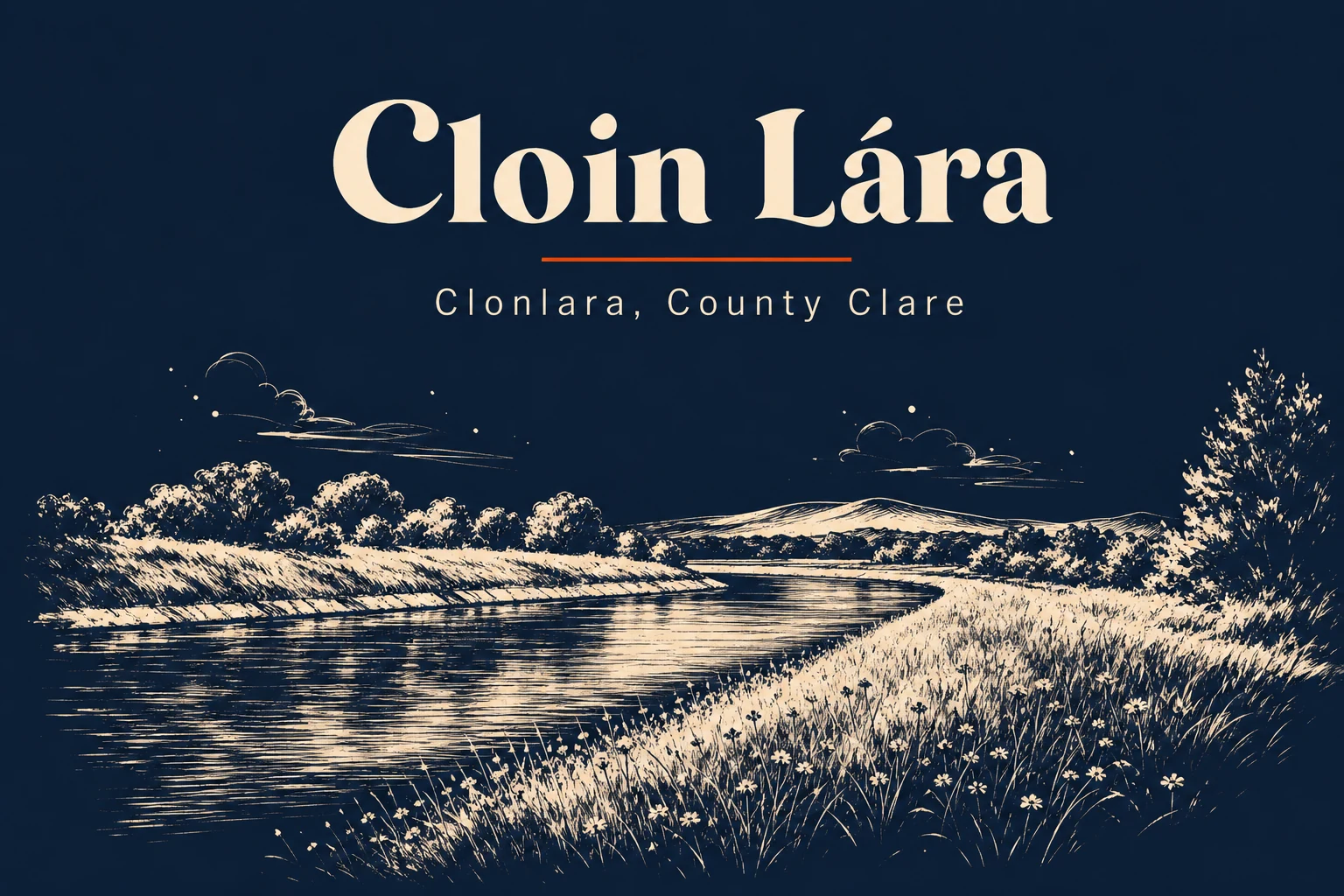
Cloin Lára · Co. Clare
A canal village on the Shannon, ten minutes from Limerick and a world from it.
Clonlara is a village on the R463 between Ardnacrusha and Killaloe, set on the long straight cut of the Shannon headrace canal. Seven hundred people, a primary school, a soccer pitch, a church, and a clubhouse on the water. From the village green you are ten minutes from the Limerick suburbs and ten minutes from Killaloe, and somehow neither of them.
The whole place is shaped by water. The headrace was the largest construction project in the new state - Siemens-Schuckert dug it between 1925 and 1929 with thousands of labourers, a temporary railway, and German foremen who lived in huts along the cut. When it opened in 1929 it ran the lights of Dublin. The older Errina Canal it replaced is still there in pieces, half-swallowed by the new one. Walk the towpath and you are walking on top of the 18th century.
Don't come for a checklist. Come for an hour on the canal walk in slanting evening light, a pint in The Anchor Inn after, and a look at the dinghies coming off the water. Clonlara is not a destination. It is a place that knows what it is, sitting beside something the country built once and never built again.