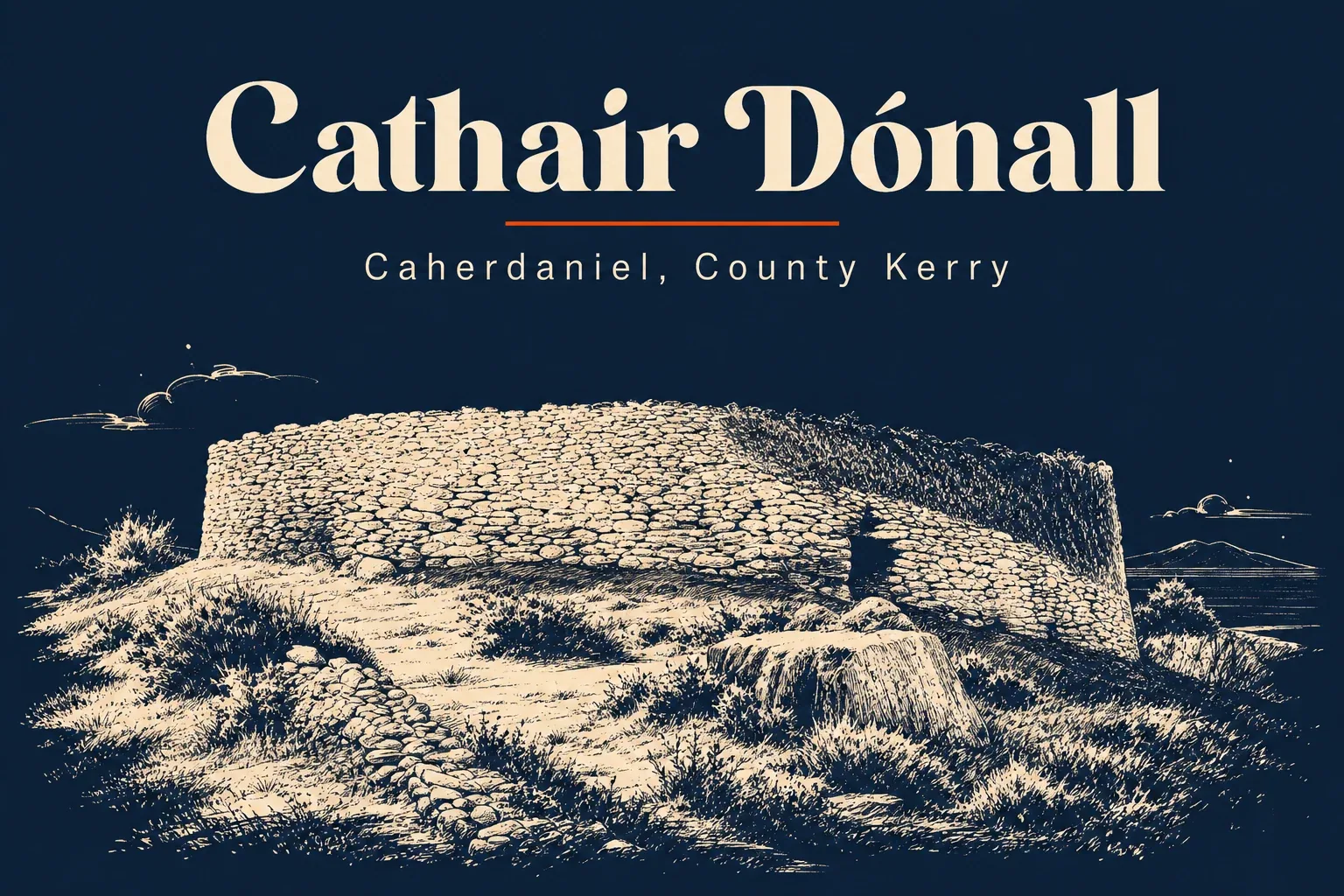
Cathair Dónall · Co. Kerry
Daniel O'Connell's home village - and the best beach in Kerry, a kilometre downhill.
Caherdaniel is a T-junction with a view. Two pubs, a shop, a handful of houses on the slope above Derrynane Bay, and the N70 bending through it on its way around the Ring of Kerry. The village gave its name from Cathair Dónall - Dónall's stone fort - and Dónall is long gone, but another Daniel left a deeper mark a thousand years later.
Derrynane House sits a kilometre down the hill, behind its own gates and its own woods. This was Daniel O'Connell's home. Not a holiday house - the place he ran the country from when Westminster wasn't sitting, the place he wrote his letters from, the place he buried his wife. He was born up the road in Cahirciveen in 1775, raised here by an uncle, and carried the village's name into a House of Commons that had spent two hundred years keeping Catholics out of it. The house is OPW now. You can walk his library. The chapel he built in 1844 is still standing.
What you do here: walk down to Derrynane Beach. Cross the causeway at low tide to Abbey Island. Drive five minutes up to Loher Stone Fort and stand inside a wall built before Christ. Eat a bowl of chowder in The Blind Piper. Stay the night, because the day-trippers will not. By half six the road is empty and the bay turns the colour of beaten pewter and you understand why the Liberator kept coming home.