An Siopa Dubh · Co. Kerry
A 2,500-year-old stone fort, three kilometres up a steep side-road off the Ring of Kerry.
Castlecove is a bend in the road. Eighty people, two pubs, a shop, a beach, and the N70 carving through it on its way around the Ring of Kerry. The village exists because the coast road exists - the Irish name, An Siopa Dubh, means 'The Black Shop', and the 1897 Ordnance Survey maps just call the place Blackshop. A pub-and-shop crossroads that grew a few houses around it.
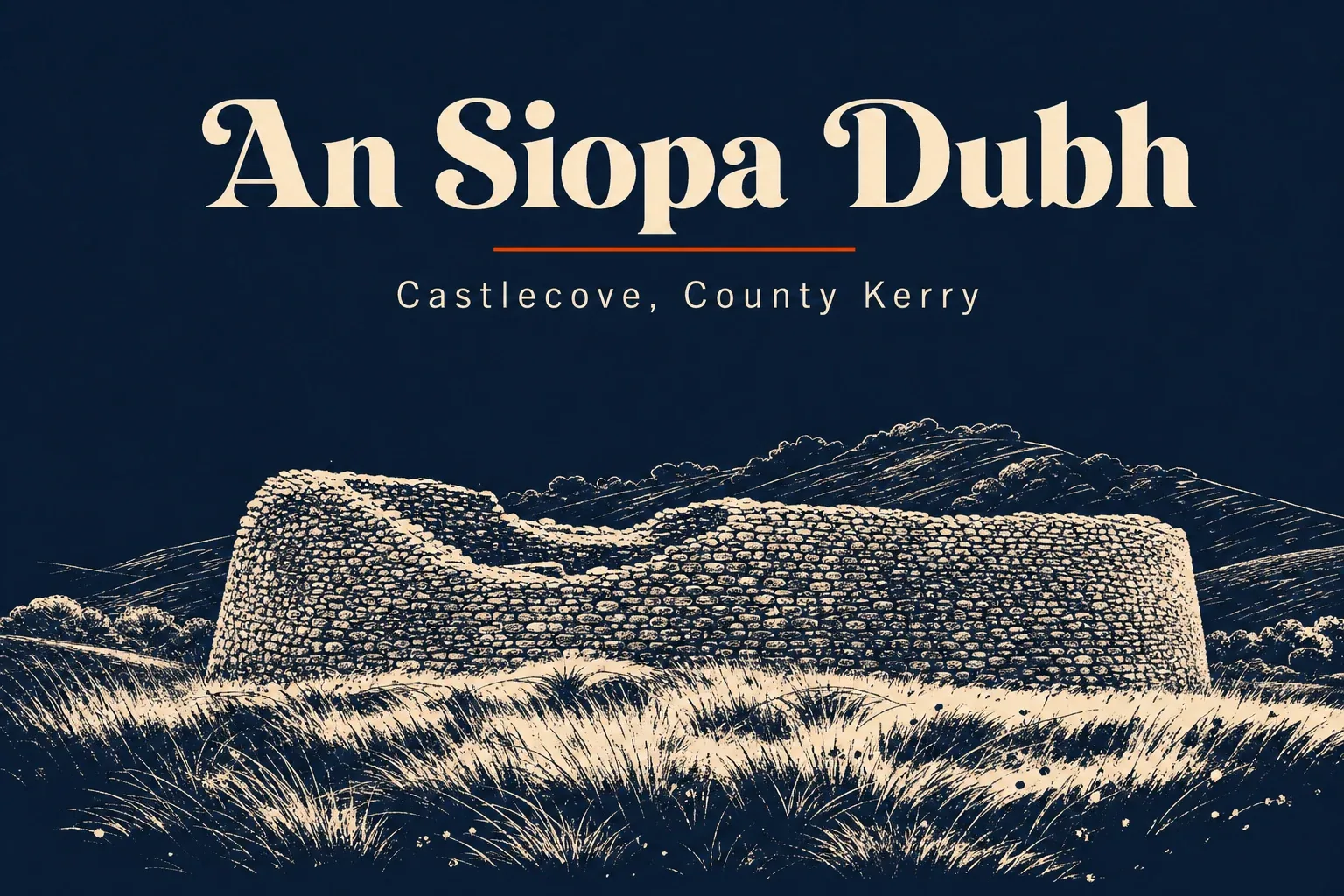
The reason to stop is not in the village. It is three kilometres up a steep, signposted side-road behind it. Staigue Fort is one of the largest and most complete prehistoric stone ringforts in Ireland - drystone walls five and a half metres high, four metres thick at the base, twenty-seven metres across, built around 100 BC by people whose names we will never know. No mortar. No cement. A ring of cut sandstone holding itself up against two thousand years of Atlantic weather. There are internal stairs. There are corbelled cells in the wall. The OPW haven't put a turnstile on it because there is no one to staff one. You park at a small lot, walk up through a sheep field, and the wall is just there.
What you do here: drive up to Staigue at last light when the coaches are gone. Eat at Helen's. Walk down to the cove. Stay a night somewhere along the road and let the day-trippers do their forty-five-minute version of the Ring while you do the proper one. The village does not need you to do much. It does not have much. That is the point.