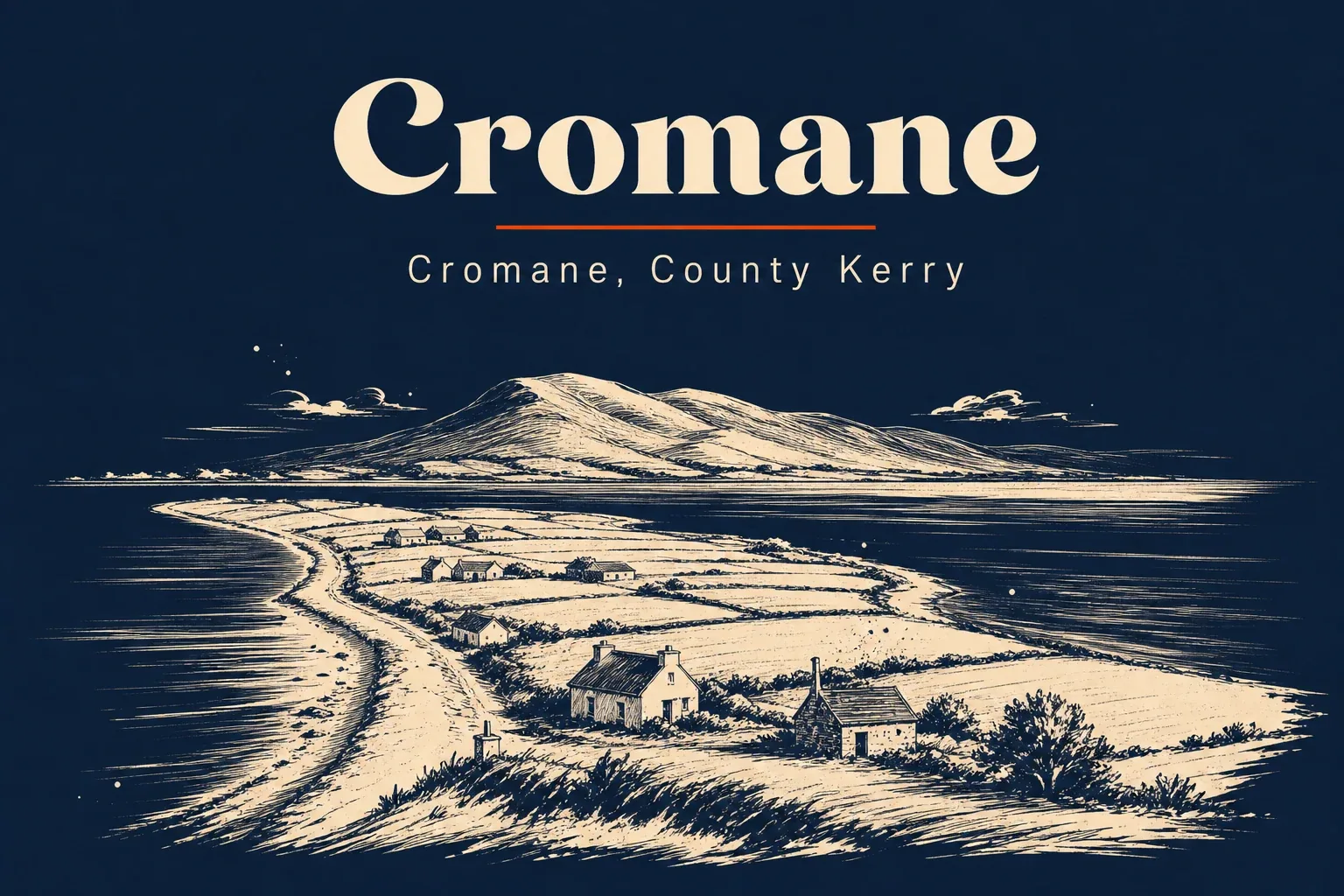
Cromane · Co. Kerry
A mussel-and-oyster village on a spit, where the food chain starts before lunch.
Cromane is a small fishing village on a spit of land in Castlemaine Harbour, ten minutes off the Ring of Kerry and the kind of place you only end up in if you mean to. Two hundred-odd people, one road in, one pier at the end of it, and a harbour full of mussel ropes that feed half the good restaurants in the county.
The Wild Atlantic Way passes through, technically, but most cars don't notice the turn. That is the point. The boats still go out. The shellfish still come in. the Keary family have been fishing this water for generations, and the catch most days ends up on a plate at their restaurant before the day is done. Sit at the bar there and look out at the water the oysters came from. There is a closed loop running through this village that not many places still have.
There is a causeway built in the 1830s connecting the village to the spit beyond. There is a beach the swimmers come down to at six in the morning. There is a pub or two and a church and a GAA pitch and that is more or less the inventory. Don't come for a list of things to do. Come for an evening, eat what came out of the water at lunchtime, and watch the sun set behind Slea Head while the boats tie up.