A ballad, then a festival
The Rose
The Rose of Tralee began as a nineteenth-century ballad — William Pembroke Mulchinock, local merchant's son, in love with Mary O'Connor, a maid in his family's house. Different class, no future, and she died of tuberculosis before he came home from India. The song outlived them both. In 1959 a group of local businessmen turned it into a festival. Every August since, Roses from the Irish diaspora arrive in town for a week of interviews on a televised stage. It is sentimental and it is genuine and the town goes properly mad for it.
Ireland's national folk theatre
Siamsa Tíre
Siamsa began in the 1960s as a parish drama project in the village of Finuge, west of Tralee. Father Pat Ahern wanted to put the rhythms of farm work — threshing, churning, footing turf — on stage with music and dance. It worked. By 1991 it had a purpose-built theatre in Tralee Town Park and the title of national folk theatre. The summer season runs Tuesday to Saturday and the cast is half local, half graduates of the company's own training programme.
The windmill and the famine ships
Blennerville
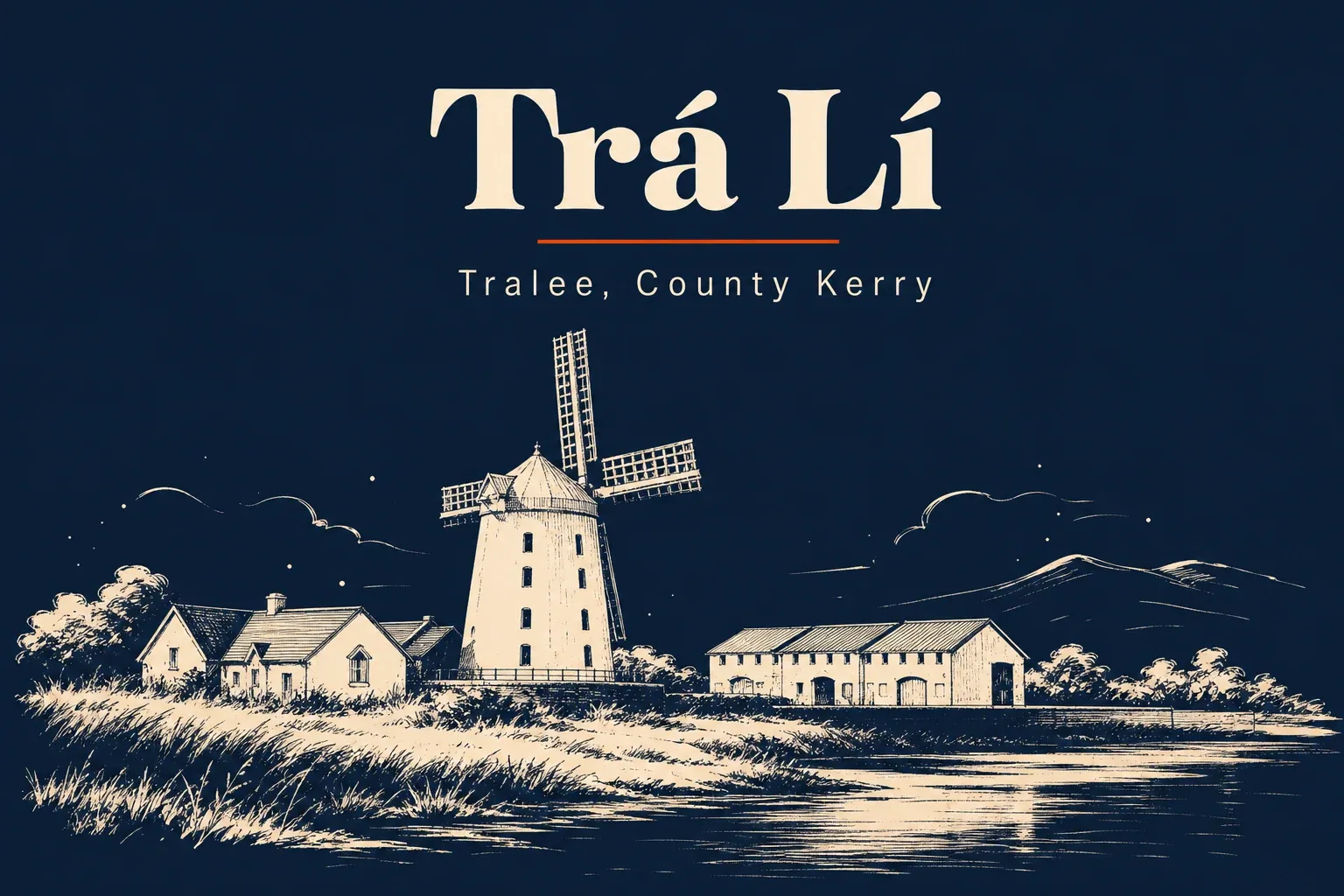
Blennerville Windmill went up in 1800 — twenty-one metres of stone, built by Sir Rowland Blennerhassett to grind corn for export. The Tralee Ship Canal opened in 1846 and ran straight past the mill to the bay. In the years that followed, tens of thousands of people boarded coffin ships from this stretch of water and sailed for Boston, Quebec, New York. The Jeanie Johnston, replicated and now docked in Dublin, was one of them — six years of famine voyages and not a passenger lost. The mill was derelict by the 1970s; it was restored in 1990 and grinds wheat again.